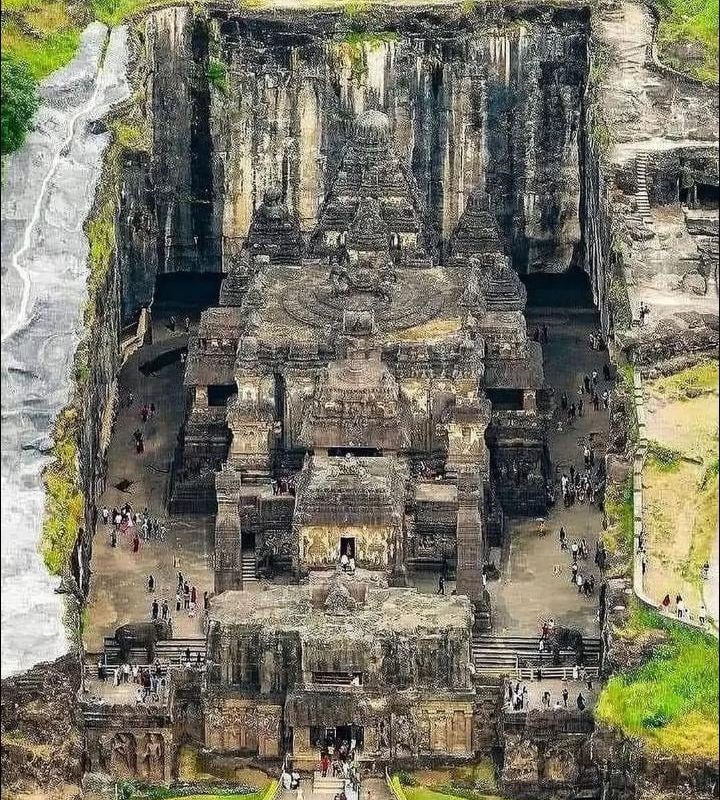
Kailasa Temple, carved out of one single huge rock is a rock cut Hindu temple which dates back to 8th century. Situated in Maharashtra, India
Meta Description: Discover the awe-inspiring Kailasa Temple, a monolithic Hindu wonder carved from a single rock in 8th-century India. Explore its history, architecture, and spiritual significance in this SEO-optimized guide.
Kailasa Temple: The 8th-Century Monolithic Marvel of Maharashtra, India
The Kailasa Temple (Kailash Temple) stands as one of humanity’s most astonishing architectural feats. Hewn entirely from a single, massive basalt cliff in the 8th century CE, this rock-cut Hindu temple in Maharashtra, India, defies imagination with its intricate grandeur. Nestled within the UNESCO-listed Ellora Caves (Cave 16), it’s a testament to ancient engineering genius and devotion to Lord Shiva.
Unearthing History: A Legacy Carved in Stone
The Kailasa Temple was commissioned by King Krishna I of the Rashtrakuta dynasty around 757–783 CE. Its purpose? To embody Mount Kailash, the sacred Himalayan abode of Lord Shiva. Legends claim its construction took just 18 years—a marvel considering its sheer scale—but modern estimates suggest decades of meticulous labor by 7,000 workers. Remarkably, the temple was carved top-down, like sculptors freeing a form trapped in stone.
Myth & Mystery
Folklore tells of Queen Elu, afflicted by illness, whose cure depended on Shiva’s blessing. Her husband vowed to build a temple if she recovered and fast until its completion. Architects, pressed for time, carved the temple from the mountaintop downward, allowing the king to witness rapid progress and end his fast.
Architectural Genius: A Temple Born from a Single Rock
The Kailasa Temple covers an area twice the size of the Parthenon in Athens and stands 98 feet (30 meters) tall. Constructed without scaffolding, workers removed 200,000+ tons of rock to reveal a complex of courtyards, pillars, shrines, and galleries—all monolithic.
Key Features:
- Three-Tiered Design: Mimicking Mount Kailash’s sacred peaks.
- Gigantic Carvings: Walls adorned with scenes from Hindu epics like the Ramayana and Mahabharata.
- Nandi Mandapa: A free-standing pavilion housing a colossal statue of Shiva’s bull, Nandi.
- Lions & Elephants: Guardian sculptures symbolizing royal power and divinity.
- “Flying Bridges”: Rock-hewn connections between upper floors, now collapsed.
Engineering Secrets: How Was It Built?
Vertical excavation made Kailasa unique among rock-cut temples. Unlike others carved from cave entrances inward, workers dug deep trenches downward to isolate a central rock block, then chiseled the temple from top to bottom. This method prevented collapses but required precise planning—errors were irreversible.
Spiritual Significance: Abode of Shiva
As a pilgrimage site, the temple symbolizes spiritual liberation (moksha). Pilgrims circumambulate the sanctum, mirroring Shiva’s cosmic dance. Despite centuries of shifts in religious dominance, Kailasa remains a beacon of Hindu devotion.
Visiting the Kailasa Temple: Tips & Insights
- Location: Ellora Caves, Aurangabad district, Maharashtra.
- Best Time to Visit: October–March (mild weather). Monsoon (June–September) offers lush views but slippery paths.
- Entry Fee: ₹40 for Indians; ₹600 for foreigners (includes all Ellora Caves).
- Pro Tip: Hire a guide to decode the temple’s stories. Combine with visits to Ajanta Caves (100 km away) or Daulatabad Fort.
Why Kailasa Endures: A Wonder for the Ages
Kailasa Temple challenges modern perceptions of ancient innovation. It predates European Gothic masterpieces by centuries, yet its artistry rivals them. As a UNESCO World Heritage Site and Indian cultural icon, it draws historians, architects, and spiritual seekers alike.
Final Thoughts
More than just stone, Kailasa embodies human aspiration—where faith, artistry, and perseverance met to create eternity. Whether you’re drawn to history, engineering, or spirituality, this monolithic wonder promises to leave you awestruck.
Keywords for SEO: Kailasa Temple, Ellora Caves, monolithic temple in India, rock-cut architecture Maharashtra, 8th-century Hindu temple, Rashtrakuta dynasty, UNESCO World Heritage Site India, Mount Kailash Maharashtra, ancient Indian engineering, Lord Shiva temple.