Removing paint from the outside of my home
Title: The Homeowner’s Guide to Removing Exterior Paint Safely and Effectively
Meta Description: Learn expert-approved methods to safely strip old, peeling, or damaged paint from your home’s exterior. Discover DIY techniques, tools, and eco-friendly solutions.
Introduction
Curb appeal matters, and peeling or chipped exterior paint can make your home look neglected. Whether you’re prepping for a fresh coat of paint or restoring original siding, removing old paint is a critical first step. But tackling this project improperly can damage your home’s exterior or waste time and money. In this guide, we’ll cover safe, effective paint-removal methods for every type of siding, plus tips to protect your home and the environment.
Why Remove Old Exterior Paint?
- Poor adhesion: New paint won’t bond well to flaking layers.
- Moisture damage: Trapped moisture under cracked paint causes rot, mold, or structural issues.
- Aesthetics: Smooth, clean surfaces ensure a professional-looking finish.
- Safety: Lead-based paint (common in pre-1978 homes) requires careful handling.
Always test older paint for lead before starting. DIY kits are available at hardware stores, but hire a certified pro if you have lead paint.
Top Methods for Removing Exterior Paint
Choose the method that suits your siding material (wood, vinyl, brick, stucco), budget, and effort level.
1. Hand Scraping & Sanding
Best for: Small areas, intricate trim, or delicate surfaces.
Tools Needed:
- Paint scrapers (sharp, angled edge)
- Putty knife
- Medium-grit sandpaper (80–120 grit) or orbital sander
- Safety goggles & dust mask
Pros: Affordable, precise, low risk of damage.
Cons: Labor-intensive; avoid excessive sanding on softwoods like cedar.
Tip: Use a heat gun (on low setting) to soften stubborn paint before scraping.
2. Chemical Paint Strippers
Best for: Large, heavily layered areas or ornate details.
Types:
- Solvent-based strippers: Powerful but toxic (use outdoors with ventilation).
- Eco-friendly gels: Biodegradable options like CitriStrip® or Dumond Smart Strip™.
Steps:
- Apply thickly with a brush.
- Cover with plastic wrap to slow drying.
- Scrape softened paint after 1–24 hours (per product instructions).
- Neutralize residue with water or manufacturer-recommended solution.
Pros: Effective on multiple layers; less physical effort.
Cons: Messy, fumes require PPE (gloves, respirator), may harm plants.
3. Pressure Washing
Best for: Loose paint on durable surfaces like brick, concrete, or hardy wood.
Tools Needed:
- Pressure washer (1,500–3,000 PSI)
- Wide-angle nozzle (40° tip)
- Optional: Paint-stripping detergent
Use Caution: High pressure can gouge wood or force water behind siding. Hold the nozzle 12+ inches away and test on a hidden spot first.
Pros: Fast, no chemicals; ideal for initial cleanup.
Cons: Won’t remove all paint; risks water intrusion or surface damage.
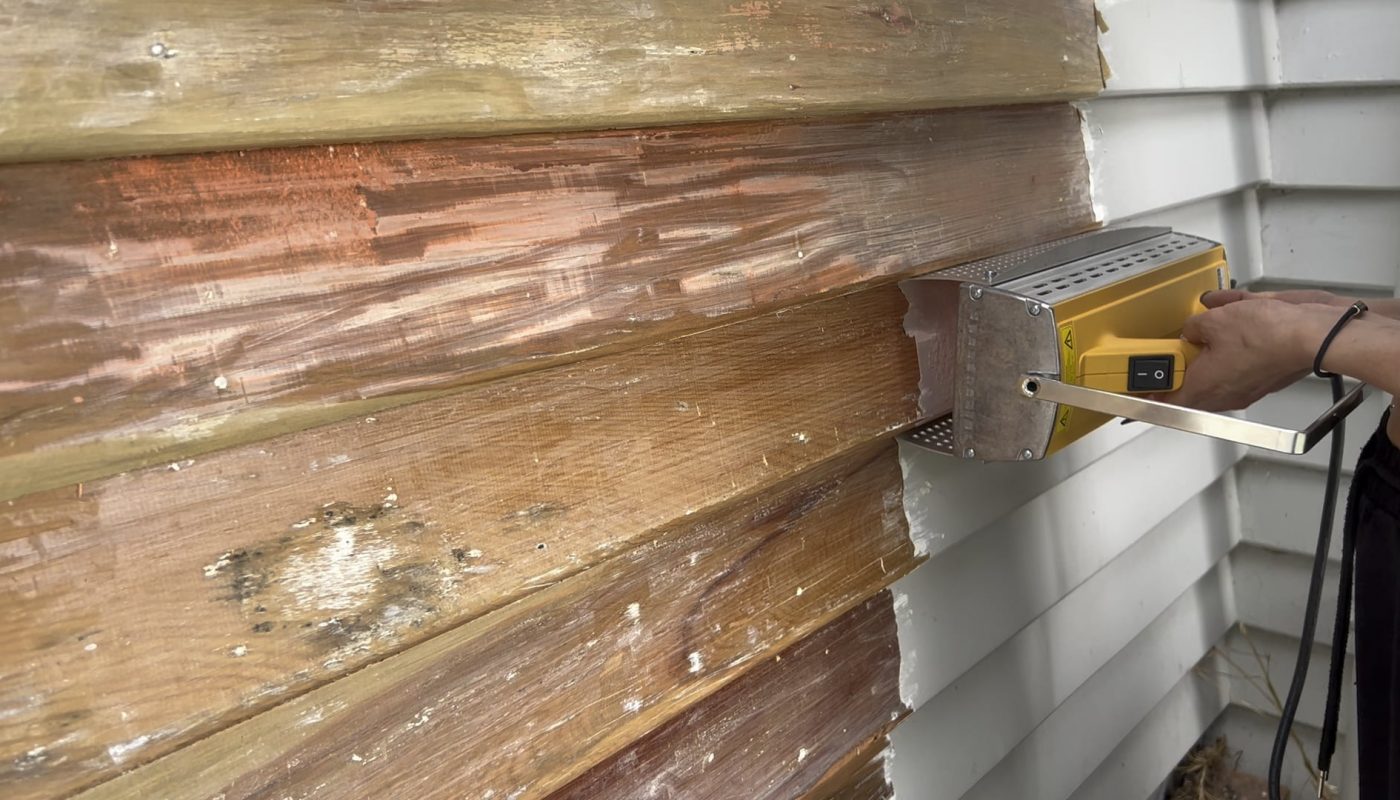
4. Infrared Paint Removers
Best for: Eco-conscious homeowners dealing with lead paint.
How It Works: Infrared heat gently loosens paint without creating toxic dust or fumes. Specialized tools like the Speedheater™ Cobra are available for rent.
Pros: Safe on lead paint, protects wood fibers.
Cons: Expensive upfront; slower than sanding.
Safety First: Protect Yourself & Your Property
- Wear PPE: Gloves, N95 mask, goggles, and long sleeves.
- Tarp nearby plants/soil: Collect paint chips and chemical runoff.
- Check for hazards: Electrical outlets, pipes, or weak siding before starting.
- Dispose of waste properly: Seal lead paint chips in heavy-duty bags; follow local regulations.
Post-Removal Tips for a Flawless Finish
- Clean the surface: Use TSP (trisodium phosphate) to remove dust and residues.
- Repair damage: Fill cracks with wood filler; replace rotten siding.
- Prime bare spots: Apply stain-blocking primer before repainting.
- Choose quality paint: Opt for weather-resistant exterior-grade paint.
FAQ: Quick Answers to Common Questions
Q: Can I paint over existing exterior paint?
A: Only if it’s firmly adhered. Scrape loose areas, sand glossy spots, and prime first.
Q: How do I remove paint from brick or stucco?
A: Use a chemical stripper formulated for masonry or a lower-PSI pressure washer. Avoid sanding—it erodes surfaces.
Q: Is soda blasting effective?
A: Yes! This eco-friendly abrasive method uses baking soda and is safe for most surfaces, but often requires a pro.
Conclusion
Removing exterior paint is laborious but rewarding—your home’s refreshed look and protected structure are worth the effort. For large jobs or lead paint, always consult a professional. Otherwise, arm yourself with the right tools, prioritize safety, and restore your home’s beauty with confidence!
Need more help? Bookmark this guide or share your project questions in the comments below!
Target Keywords: remove exterior house paint, paint stripping methods, eco-friendly paint removal, pressure wash old paint, lead paint removal.
Internal Links (optional):
- How to Prep Your Home for Exterior Painting
- Top Exterior Paint Brands for Every Budget
- DIY Siding Repair Guide
Boost Your SEO: Pair this article with high-quality images of paint removal in progress, safety gear, and “before/after” shots. Embed a tutorial video for increased engagement!