Mental imagination reconstructed from Brain activity using fMRI
Title: Mental Imagery Reconstructed from Brain Activity Using fMRI: The Future of Mind Reading?
Meta Description: Discover how scientists are using fMRI and AI to decode brain activity and reconstruct mental imagery. Explore the groundbreaking studies, implications, and ethical considerations of “mind-reading” technology.
Introduction
What if a machine could “see” the images in your mind? Thanks to advancements in neuroscience and artificial intelligence (AI), scientists are now decoding brain activity using functional magnetic resonance imaging (fMRI) to reconstruct mental imagination. This breakthrough blends sci-fi with reality, offering unprecedented insights into how our brains visualize memories, dreams, and creative thoughts. In this article, we’ll explore how fMRI-based reconstruction works, its groundbreaking applications, and the ethical questions it raises.
What Is fMRI and How Does It Capture Brain Activity?
Functional magnetic resonance imaging (fMRI) is a non-invasive brain-scanning technique that measures blood flow changes in the brain. When a brain region becomes active—like when you imagine a sunset or recall a memory—it consumes more oxygen, causing a detectable signal (the BOLD signal). fMRI captures these patterns in 3D, creating a dynamic map of brain activity.
Unlike EEG or PET scans, fMRI offers high spatial resolution, making it ideal for pinpointing where thoughts and imagery originate. But can it truly “read minds”? Not exactly—yet the latest research suggests we’re closer than ever.
How Scientists Reconstruct Mental Imagery
Reconstructing mental imagination from fMRI data involves three key steps:
- Data Collection: Participants are scanned while viewing or imagining images (e.g., faces, landscapes, or abstract shapes). The fMRI records their neural responses.
- Training AI Models: Deep learning algorithms, like generative adversarial networks (GANs), analyze the fMRI data paired with the original images to learn how brain activity correlates with visual features (colors, edges, textures).
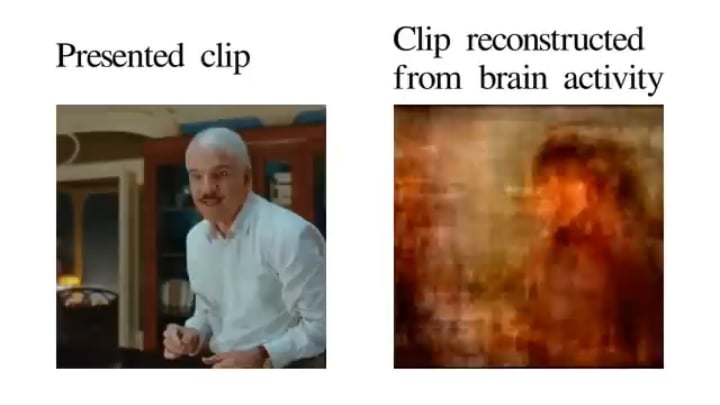
- Reconstruction: When a subject imagines a new image, the trained model predicts its appearance based solely on brain activity patterns.
Breakthrough Studies:
- A landmark 2023 study by Kyoto University used fMRI and Stable Diffusion (an AI image generator) to reconstruct high-resolution images from brain scans with over 90% accuracy in matching the original visuals.
- Researchers at Google and Osaka University leveraged a model called “MinD-Vis,” which decodes fMRI signals to reconstruct images viewed or imagined by participants, even capturing fine details like object orientation and style.
The Role of Deep Learning and AI
AI is the linchpin of this technology. Traditional methods struggled to decode the brain’s complexity, but modern AI models excel at finding patterns in vast datasets:
- Generative Models: Tools like GANs and diffusion models “imagine” images that align with neural signals.
- Brain-Computer Interfaces (BCIs): These systems translate brain activity into commands or visual outputs, aiding communication for paralyzed individuals.
In one experiment, AI reconstructed images of a dinosaur, an airplane, and a stained-glass window from fMRI data—proving conceptual and perceptual accuracy.
Why This Matters: Applications and Implications
- Medical Advancements:
- Restoring communication for patients with locked-in syndrome.
- Diagnosing and treating visual disorders (e.g., hallucinations in schizophrenia).
- AI Consciousness Research:
- Understanding how the brain encodes information could lead to more human-like AI.
- Creative & Legal Uses:
- “Recording” dreams or creative visions for art or design.
- Forensic applications, like verifying eyewitness memories.
Challenges and Limitations
- Complexity of Human Imagination: Mental imagery varies widely between individuals and may involve abstract concepts hard to decode.
- Data Constraints: Training AI requires massive fMRI datasets, which are expensive and time-consuming to collect.
- Privacy Risks: The ability to reconstruct thoughts raises ethical concerns about cognitive liberty and misuse.
Ethical Considerations: Can We Protect Mental Privacy?
As this technology evolves, society must address:
- Consent and Control: Who owns your brain data?
- Surveillance Risks: Could governments or corporations exploit this for interrogation or advertising?
- Regulatory Gaps: There are currently no laws governing neurodata privacy.
Experts advocate for “neuro-rights” legislation to prevent unauthorized access to neural information.
The Future of Brain Decoding
Researchers aim to:
- Improve reconstruction resolution to capture dynamic scenes (e.g., videos).
- Apply the tech to other senses, like auditory imagination or emotions.
- Integrate fMRI with portable neuroimaging tools (e.g., fNIRS) for real-world use.
In the next decade, we might witness mind-controlled VR experiences or devices that materialize thoughts into digital art.
Conclusion
Reconstructing mental imagination from brain activity using fMRI is no longer science fiction—it’s a rapidly advancing frontier of neuroscience and AI. While the technology promises revolutionary applications in medicine and beyond, it also demands careful ethical stewardship. As we unlock the brain’s visual code, we must ensure this power is used to uplift humanity, not undermine its freedoms.
One thing is certain: the human mind remains the universe’s most complex puzzle, and we’re just beginning to piece it together.
Target Keywords: fMRI brain decoding, mental imagery reconstruction, AI and neuroscience, brain-computer interface, neuroethics.
Optimization Tips:
- Use internal links to related articles (e.g., “How AI Is Revolutionizing Neuroscience”).
- Include alt text for images (e.g., “fMRI scan visualizing brain activity during imagination”).
- Encourage engagement by ending with a question: “Would you share your thoughts if a machine could see them?”