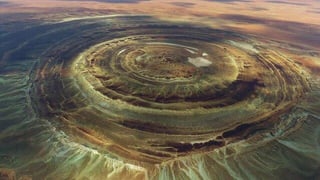
The Richat Structure, a geographical feature also known as “Eye of the Sahara” in Adrar Plateau, Mauritania. Resembling an eye in the middle of the Sahara Desert, hence the name.
Title:
The Richat Structure: Unveiling the Mysteries of the “Eye of the Sahara”
Meta Description:
Explore the Richat Structure, a stunning geological wonder known as the “Eye of the Sahara.” Uncover its origins, myths, and how to witness this surreal desert landmark in Mauritania.
The Richat Structure: A Cosmic Eye in the Sahara Desert
Deep within the vast expanse of the Sahara Desert lies one of Earth’s most enigmatic landmarks—the Richat Structure. Often dubbed the “Eye of the Sahara” due to its striking resemblance to a giant bullseye, this geological marvel has fascinated scientists, explorers, and conspiracy theorists alike. Located in Mauritania’s Adrar Plateau, the structure spans nearly 50 kilometers (30 miles) and is visible even from space. But what exactly is this mysterious formation, and why does it captivate the world? Let’s dive in.
What is the Richat Structure?
Discovered in the mid-20th century, the Richat Structure is a circular geological feature characterized by concentric rings of alternating rocky plateaus and sandy valleys. Its origin puzzled researchers for decades. Early theories suggested it was the remnants of an asteroid impact, but modern studies reveal a far more terrestrial explanation.
Key Facts:
- Location: Adrar Plateau, Mauritania, Western Sahara.
- Diameter: 40–50 km (25–30 miles).
- Visibility: Recognizable from low-Earth orbit.
- Alternative Name: “Eye of the Sahara” or “Guelb er Richat.”
The Science Behind the Eye
The current consensus among geologists is that the Richat Structure formed through a process of symmetrical uplift and erosion. Around 100 million years ago, a volcanic dome began pushing upward, creating a “bubble” of rock layers. Over millennia, wind and water eroded the dome’s center, exposing its concentric rings like tree rings. The result is a natural bullseye composed of:
- Outer rings: Resistant quartzite and sandstone.
- Inner rings: Softer sedimentary rock and eroded valleys.
Contrary to early speculation, it’s not an impact crater—NASA’s Earth Observatory confirms this through satellite imagery and geological surveys.
Myths and Legends: Atlantis Connection?
The Richat Structure’s uncanny symmetry has sparked wild theories. Most notably, some suggest it could be Atlantis, the lost city described by Plato. Advocates point to similarities between Plato’s descriptions (concentric rings, location “beyond the Pillars of Hercules”) and the Eye’s features. However, historians and archaeologists widely dismiss this:
- No evidence of human civilization exists in the structure’s layers.
- Plato’s Atlantis was likely metaphorical or inspired by Mediterranean events.
Still, the myth fuels public intrigue, making the Eye a hotspot for adventurous storytellers.
Why Visit the Eye of the Sahara?
For intrepid travelers, the Richat Structure offers a surreal, otherworldly experience:
- Landscape Photography: Capture a natural masterpiece best seen at sunrise or sunset.
- Geological Wonder: Walk the rings and witness Earth’s history etched into stone.
- Stargazing: The Sahara’s clear skies provide unmatched celestial views.
- Nearby Attractions: Pair with visits to Chinguetti’s ancient libraries or the dunes of Terjit Oasis.
How to Get There:
- Entry Point: Most trips start from Ouadane or Chinguetti, Mauritania.
- Guided Tours: 4×4 expeditions are essential due to rough terrain.
- Best Time: November–February (cooler temperatures).
Note: Mauritania requires visas, and remote desert travel demands preparation. Always hire local guides.
Preserving the Eye
Despite its remote location, tourism and climate change threaten the fragile ecosystem. Organizations like UNESCO advocate for geotourism standards to protect the site while allowing sustainable exploration.
Conclusion: Nature’s Masterpiece
The Richat Structure is a testament to Earth’s power to create beauty through destruction. Whether you’re drawn by science, myths, or sheer wanderlust, the “Eye of the Sahara” offers a humbling glimpse into our planet’s ancient past. Ready to cross it off your bucket list?
SEO Optimization Tips for Publishers:
- Keywords: Richat Structure, Eye of the Sahara, Mauritania, Sahara Desert, Atlantis, Adrar Plateau, geological wonders.
- Internal Links: Connect to articles on Sahara travel, Atlantis theories, or Mauritania guides.
- Alt Text for Images: “Aerial view of Richat Structure,” “Hiking the Eye of the Sahara.”
- External Links: Cite NASA, geological surveys, or UNESCO conservation efforts.
Call to Action:
Share this article to inspire desert explorers! Have questions about visiting? Drop them in the comments below. 🏜️👁️