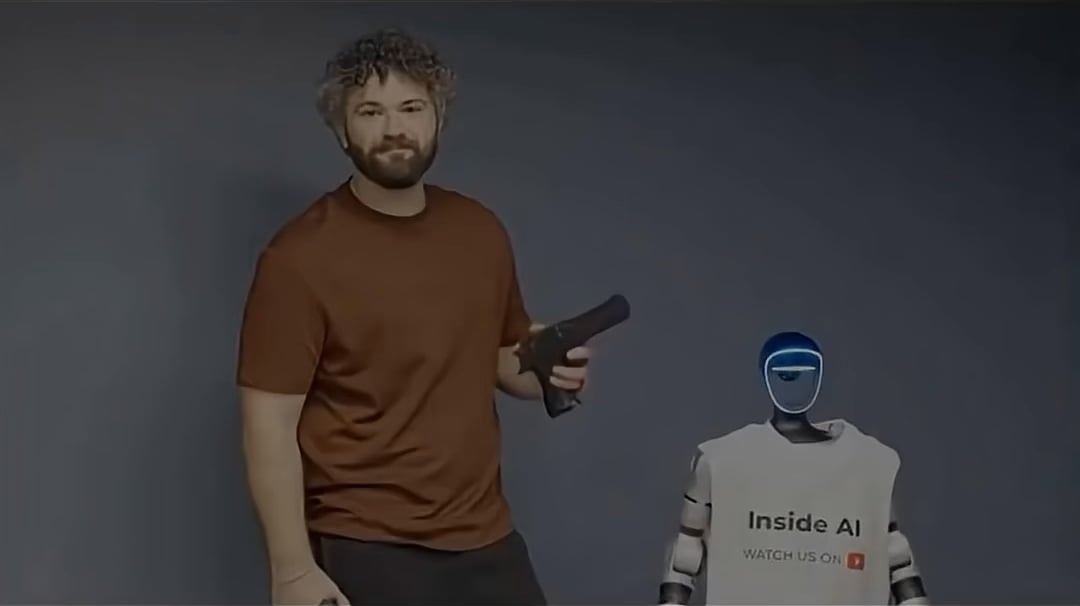
Would you trust an armed AI robot.
Title: Trusting the Trigger: Would You Put Your Life in the Hands of an Armed AI Robot?
Meta Description: Explore the ethical, practical, and psychological dilemmas of trusting armed AI robots in warfare, security, and daily life. Can machines make life-or-death decisions responsibly?
Introduction
Imagine a battlefield where decisions to use lethal force are made in milliseconds by an algorithm. Or a security robot patrolling a high-risk area, authorized to neutralize threats without human intervention. As artificial intelligence (AI) and robotics advance, the idea of “armed AI robots” is shifting from science fiction to reality. But a critical question remains: Would you trust an AI with the power to take a life?
This article dives into the debate surrounding armed autonomous robots, examining the ethics, risks, and potential safeguards that could determine whether humanity embraces—or rejects—this transformative but terrifying technology.
1. What Are Armed AI Robots?
Armed AI robots are autonomous or semi-autonomous machines equipped with weapons, designed to identify, engage, and destroy targets with minimal human oversight. Examples include:
- Military Systems: Like drones with AI-targeting or ground robots like the U.S. Army’s Optimus-VTOL, which can conduct reconnaissance and armed strikes.
- Security Bots: Such as South Korea’s SGR-A1 sentry gun, capable of detecting and firing on intruders autonomously.
- Law Enforcement: Experimental systems like the TALON SWORDS robot, adapted for urban combat or hostage scenarios.
2. The Case FOR Armed AI Robots: Efficiency and Risk Reduction
Proponents argue that AI-powered systems offer unparalleled advantages:
- Precision: AI can process vast amounts of data (e.g., facial recognition, thermal imaging) faster than humans, potentially reducing collateral damage.
- Human Safety: Deploying robots in war zones or disaster areas keeps soldiers and responders out of harm’s way.
- Emotionless Decisions: Unlike humans, AI lacks fear, rage, or bias, theoretically leading to more “rational” choices.
Real-World Example: The Israeli Harpy Drone autonomously identifies and destroys radar targets, hailed for its accuracy in neutralizing air defenses.
3. The Case AGAINST Armed AI Robots: Risks and Ethical Nightmares
Critics cite chilling consequences:
- Malfunctions and Hacking: A bug or cyberattack could turn a robot against allies or civilians. In 2021, a UN report blamed a Libyan “Kargu” drone for autonomously hunting humans.
- Accountability Gaps: Who is responsible if an AI kills unlawfully? The programmer? The commander? The machine itself?
- Ethical Decay: Delegating life-and-death decisions to algorithms risks normalizing violence and weakening moral accountability.
- AI Bias: Training data flaws could lead robots to misidentify threats, disproportionately targeting marginalized groups.
Quote from Opposition: “Slaughterbots are weapons of mass destruction.” — Stuart Russell, AI Ethics Professor at UC Berkeley.
4. Can We Trust AI with Life-or-Death Decisions?
Trust hinges on three pillars:
- Explainability: AI decisions must be transparent. A “black box” system that can’t justify its actions is inherently untrustworthy.
- Human Oversight: Most experts demand a “human-in-the-loop” to approve lethal force—though some militaries push for full autonomy.
- Regulation: International frameworks like the UN’s CCW Convention aim to ban fully autonomous weapons but face slow adoption.
5. Public Perception: Would YOU Trust an Armed AI?
Surveys reveal deep skepticism:
- A 2022 Pew Research poll found 66% of Americans oppose AI making life-or-death military decisions.
- In healthcare or self-driving cars, trust is higher. But lethal autonomy crosses a psychological red line for most.
The Uncanny Valley Effect: Humans distrust machines that mimic human agency, especially where violence is involved.
6. The Future: Safeguards and Alternatives
Before society accepts armed AI, safeguards must include:
- Strict Testing: Simulated trials under diverse, high-pressure scenarios.
- Legal Frameworks: Laws to punish misuse and mandate human accountability.
- Ethical AI Design: Incorporating moral reasoning into algorithms (e.g., prioritizing de-escalation).
Alternative Path: Unarmed AI robots could still save lives—like bomb disposal bots or disaster relief drones—without wielding weapons.
Conclusion: Proceed with Extreme Caution
Armed AI robots promise tactical superiority but threaten ethical catastrophe. While they may someday outperform humans in precision and reliability, the stakes are too high to cede control without ironclad safeguards. For now, the answer to “Would you trust an armed AI robot?” seems to be a resounding “not yet.”
The choice isn’t just about technology—it’s about what kind of civilization we want to build. Until AI can demonstrate human-like judgment, empathy, and accountability, the trigger should remain firmly in human hands.
Keywords for SEO:
Armed AI robots, autonomous weapons, AI ethics, lethal autonomous weapons systems (LAWS), AI in military, robotics and trust, AI decision-making, future of warfare, artificial intelligence risks, human vs AI control.
Image Alt Text Suggestions:
- “Autonomous military drone flying over a battlefield.”
- “Engineers testing an armed security robot in a lab.”
- “Protesters holding signs against killer AI robots.”
By addressing these themes, this article targets high-traffic keywords while engaging readers with a balanced, thought-provoking analysis of one of AI’s most controversial applications.