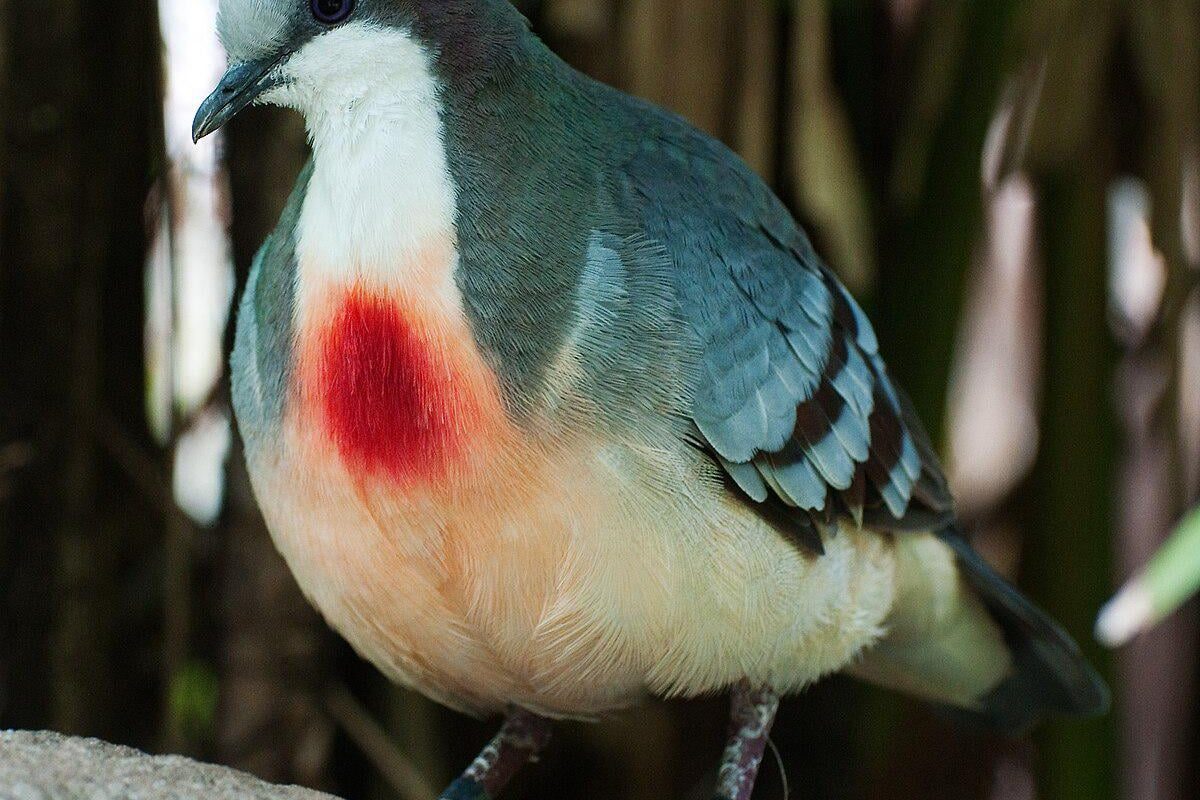
A bird that looks as if it had been stabbed in the heart. Also known as Luzon bleeding-heart bird or the “stabbed pigeon”
H1: The Luzon Bleeding-Heart: The “Stabbed Pigeon” with Nature’s Most Dramatic Marking
H2: A Bird That Looks as if It Was Stabbed in the Heart
Picture a small, ground-dwelling bird with a splash of vivid crimson on its white breast, resembling a fresh wound. Meet the Luzon bleeding-heart dove (Gallicolumba luzonica)—one of nature’s most visually striking birds, often nicknamed the “stabbed pigeon” for its unmistakable, heart-stopping plumage. Endemic to the Philippine island of Luzon, this elusive bird has captivated scientists, birdwatchers, and conservationists alike with its haunting beauty and mysterious lifestyle.
H2: The Blood-Stained Illusion: Anatomy of the Bleeding-Heart
The Luzon bleeding-heart’s name comes from the bright red or orange-red patch that bleeds downward from the center of its chest, framed by pristine white feathers. This stark contrast creates the illusion of a mortal wound, though it’s entirely a natural marking. Other key features include:
- Size & Build: Small (25–30 cm long), plump body with short wings and legs.
- Coloration: Grayish-blue head and wings, iridescent green back, and a stark white belly.
- Gender Differences: Males have brighter, more pronounced “bleeding” patches to attract mates.
This unique trait is shared by other bleeding-heart species in the Philippines, like the Mindanao bleeding-heart, but the Luzon variety is the most iconic.
H2: Habitat: Where Does the Stabbed Pigeon Live?
The Luzon bleeding-heart thrives in dense, tropical forests across Luzon, from lowland rainforests to mid-elevation mountain forests. It favors thick undergrowth where it forages discreetly for seeds, fallen fruits, and insects. Sadly, deforestation has fragmented its habitat, forcing it into smaller, isolated pockets like the Sierra Madre mountain range—one of its last strongholds.
H2: Behavior: Secretive, Shy, and Ground-Bound
Unlike most pigeons, the bleeding-heart spends most of its time on the forest floor, scurrying through leaf litter. Its behavior is notoriously elusive:
- Diet: Primarily frugivorous and granivorous, but also eats insects and worms.
- Breeding: Little is known, but pairs build flimsy nests in low bushes and lay 1–2 creamy-white eggs.
- Survival Tactics: Freezes or flees into cover at the slightest disturbance—making sightings rare.
H2: Conservation Crisis: A Bleeding-Heart in Peril
The IUCN Red List classifies the Luzon bleeding-heart as Vulnerable due to:
- Habitat Loss: Logging, mining, and agricultural expansion destroy its forest homes.
- Hunting & Trapping: Targeted for the illegal pet trade and bushmeat in some regions.
- Few Protected Areas: Only 5% of Luzon’s forests are legally safeguarded.
Conservation groups like the Haribon Foundation work with local communities to protect habitats and enforce anti-poaching laws. Ecotourism initiatives also raise awareness of the bird’s plight.
H2: Symbolism and Cultural Impact
In Philippine folklore, the bleeding-heart’s appearance is sometimes linked to myths of tragic love or warrior spirits. Today, it symbolizes the country’s extraordinary biodiversity—and its fragility. Images of the bird appear in conservation campaigns as a poignant reminder of what’s at stake.
H2: Can You See a Luzon Bleeding-Heart?
Spotting this bird in the wild is a rare privilege, but ecotours in Northern Sierra Madre Natural Park or Subic Bay’s forests offer slim chances. Always prioritize ethical wildlife viewing: keep distance, avoid flash photography, and support sustainable tourism operators.
H2: Conclusion: Protect the “Stabbed Pigeon” Before It Fades Away
The Luzon bleeding-heart isn’t just a biological marvel—it’s a barometer for the health of Luzon’s ecosystems. By supporting reforestation, advocating for wildlife laws, and spreading awareness, we can ensure this “stabbed” bird doesn’t vanish from the wild.
Meta Description (160 characters):
Discover the Luzon bleeding-heart bird, the “stabbed pigeon” with a blood-red chest marking. Learn about its habitat, behavior, and urgent conservation needs.
Target Keywords: Luzon bleeding-heart bird, stabbed pigeon, Gallicolumba luzonica, Philippines endemic birds, bleeding-heart dove conservation, birds with heart markings.
For more information on endangered Philippine wildlife, visit Haribon Foundation or IUCN Red List.