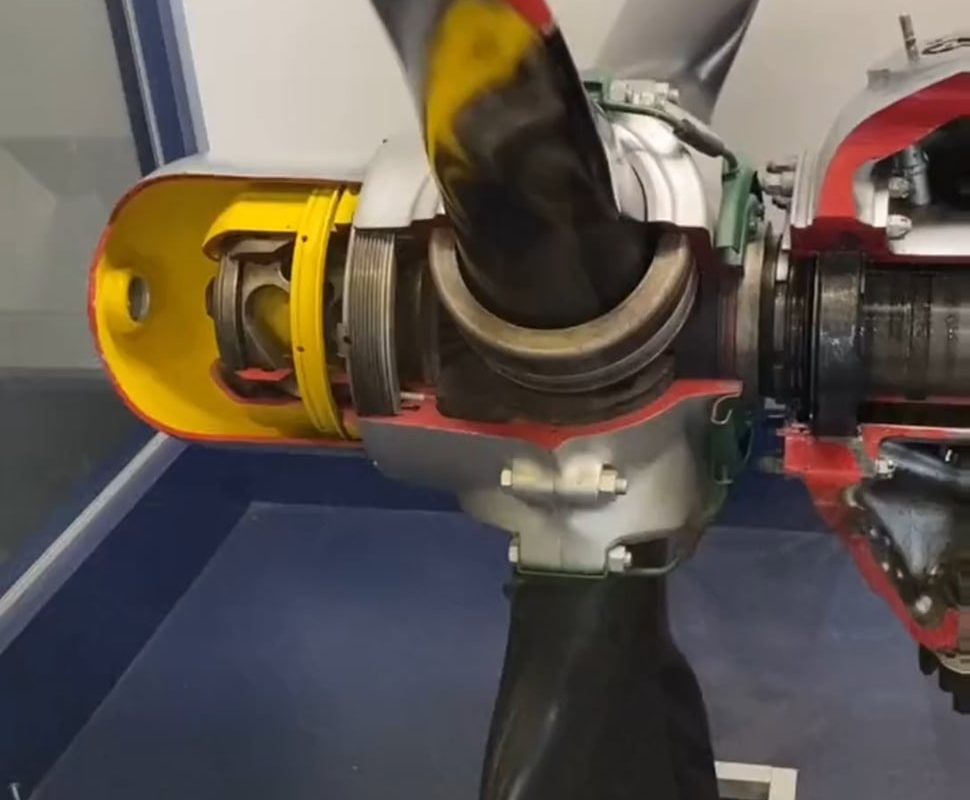
Cutaway of an air-cooled radial aircraft engine (1937)
Unveiling the Marvel: A Deep Dive into the Cutaway of a 1937 Air-Cooled Radial Aircraft Engine
The golden age of aviation, particularly the 1930s, was defined by groundbreaking engineering feats. Among the era’s most iconic innovations was the air-cooled radial aircraft engine—a masterpiece of mechanical design that powered legendary aircraft like the Douglas DC-3, Boeing B-17 Flying Fortress, and the rugged crop dusters of pre-war aviation. A cutaway view of a 1937 radial engine reveals not just its intricate inner workings but also a testament to the ingenuity that shaped modern aviation. In this article, we’ll dissect the anatomy, technology, and legacy of these engineering marvels.
1. The Radial Engine: A Primer
Radial engines arrange their cylinders in a circular pattern around a central crankshaft, resembling spokes on a wheel. This design offered unparalleled advantages for early aviation:
- Simplicity & Durability: Fewer moving parts compared to inline or V-type engines.
- Air-Cooling Efficiency: No heavy liquid coolant systems were needed, reducing weight and maintenance.
- Power-to-Weight Ratio: Ideal for high-output performance in compact airframes.
By 1937, leading manufacturers like Pratt & Whitney, Wright Aeronautical, and Bristol Engines had refined radial designs to deliver robust power for both commercial and military applications.
2. Inside the Cutaway: Anatomy of a 1937 Radial Engine
A cutaway radial engine exposes the symphony of components working in unison to convert fuel into flight. Key elements include:
A. Cylinder Assembly
- Cylinders & Pistons: Typically 7 to 9 cylinders arranged in a single or twin row. Airflow around the cylinders dissipated heat (no radiator needed).
- Overhead Valves: Operated by pushrods and rocker arms, optimized for high RPM performance.
- Finned Cylinder Heads: Increased surface area for better cooling—a hallmark of air-cooled engineering.
B. Crankshaft & Master Rod
- Master-and-Articulated Rod System: One central master rod connected directly to the crankshaft, with smaller rods linking other pistons—a clever solution for synchronizing power strokes.
- Robust Crankshaft: Engineered to withstand massive torsional stresses during flight.
C. Supercharger & Induction System
- Gear-Driven Supercharger: Compressed air for better high-altitude performance, common in 1930s military engines (e.g., Pratt & Whitney R-1830 Twin Wasp).
- Carburetor & Fuel Injection: Early fuel delivery systems fine-tuned for reliability across varying altitudes.
D. Ignition & Lubrication
- Dual Ignition Systems: Twin spark plugs per cylinder for redundancy—critical for long-haul flights.
- Dry Sump Lubrication: Oil stored in a separate tank, reducing risk of leaks and improving cooling.
3. Why 1937 Was Revolutionary
The mid-1930s marked a turning point in radial engine technology:
- Higher Compression Ratios: Advanced metallurgy allowed for stronger pistons and cylinders.
- Improved Supercharging: Turbocharging trials began enabling engines to maintain power above 15,000 feet.
- Lightweight Alloys: Aluminum and magnesium components reduced weight without sacrificing strength.
Engines like the Pratt & Whitney R-1830 (used in the DC-3 and B-24 Liberator) perfected these innovations, making 1937 a banner year for reliability and power—up to 1,200 horsepower in twin-row configurations.
4. Manufacturing Ingenuity: Forging the Future
Radial engines epitomized precision manufacturing. Each component was forged, machined, and hand-assembled to exacting standards:
- Forged Steel Crankshafts: Hammered into shape for superior strength.
- Babbitt Bearings: Provided low-friction surfaces for rotating parts.
- Interchangeable Parts: Streamlined production and repairs for wartime demands.
5. Iconic Aircraft Powered by 1930s Radials
- Douglas DC-3: Pratt & Whitney R-1830 engines made it the most successful airliner of its era.
- Boeing B-17 Flying Fortress: Relied on Wright R-1820 Cyclone 9 radials for its combat missions.
- Soviet Polikarpov I-16: A high-speed fighter thanks to its Shvetsov M-25 radial (a licensed Wright Cyclone).
6. Legacy: From Propellers to Modern Engineering
Though jet engines later dominated aviation, the radial’s impact endures:
- Reliability in Extreme Conditions: Its simplicity made it invaluable for bush pilots and vintage aircraft restorers today.
- Engineering Lessons: Concepts like air cooling and modular design influenced later engines, including turboprops.
- Cultural Icon: Radials symbolize the romance of early flight, showcased in museums and airshows worldwide.
Final Thoughts
The 1937 air-cooled radial aircraft engine stands as a monument to mechanical brilliance. Its cutaway view isn’t just a blueprint of pistons and gears—it’s a story of innovation that lifted humanity into the skies. For aviation enthusiasts, historians, or engineers, studying this masterpiece offers timeless insights into the art of problem-solving under pressure.
Keywords for SEO:
Air-cooled radial engine, 1937 aircraft engine, radial engine cutaway, Pratt & Whitney R-1830, WWII aircraft engine, how radial engines work, vintage aviation technology, aircraft engine anatomy.
Explore museum exhibits at the Smithsonian Air & Space or RAF Museum to witness these engineering wonders in person!