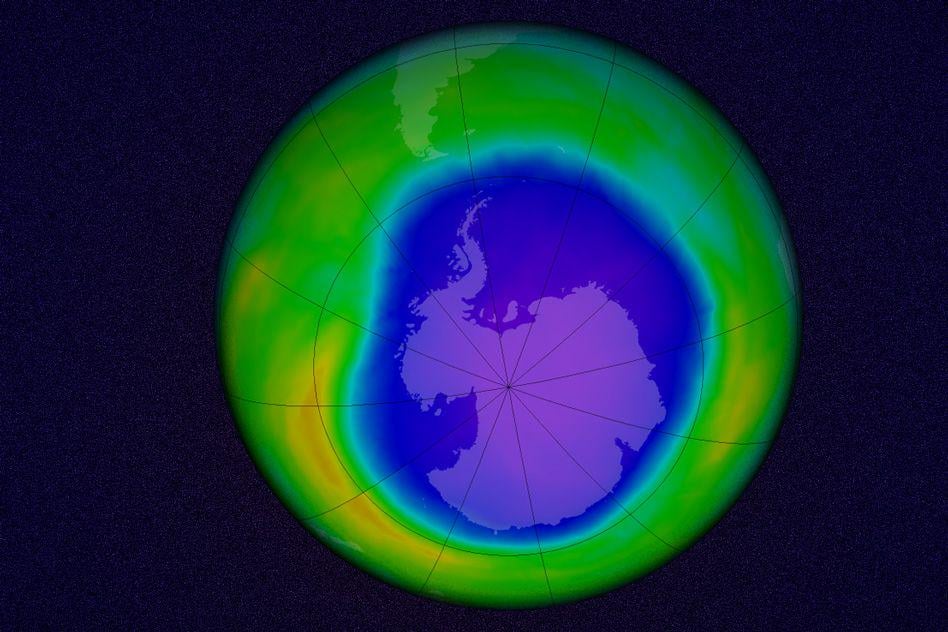
The Antarctic Ozone Hole closed early on Dec 1st 2025 showing signs of long term healing and also being smaller than in recent years.
Title: Antarctic Ozone Hole Closes Early in 2025: A Landmark Moment for Global Environmental Recovery
Meta Description: The Antarctic ozone hole closed earlier than expected on December 1, 2025, signaling significant long-term healing. Learn why this milestone matters for Earth’s future.
Antarctic Ozone Hole Seals Early, Marking a Triumph for Planetary Healing
In a landmark moment for global environmental efforts, the Antarctic ozone hole closed earlier than usual on December 1, 2025, according to scientists at NASA and the NOAA. Not only did it shut faster than recent averages (which typically linger into late December or January), but it was also notably smaller than in previous years—a powerful sign that decades of international action to repair Earth’s protective ozone layer are paying off.
This unexpected early closure adds to mounting evidence of the ozone layer’s long-term recovery, offering hope that humanity can reverse even the most daunting ecological crises when united by science and policy.
Why the Early Closure Matters
The ozone hole’s size and duration vary yearly due to weather patterns, but its steady decline over the past decade reflects a deeper trend:
- Smaller & Shorter-Lived: In 2025, the hole peaked at 18 million square kilometers in September—down from 24 million sq km in 2020—and dissipated weeks ahead of schedule.
- Healing Acceleration: Researchers confirm the ozone layer is recovering 1–3% per decade since 2000, putting it on track for a full rebound by 2060.
- Montreal Protocol Success: The 1987 global treaty banning ozone-depleting chemicals (CFCs, halons) has prevented up to 99% of potential damage, proving multilateral agreements work.
The Science Behind the Recovery
The ozone layer acts as Earth’s “sunscreen,” absorbing harmful UV radiation. Its thinning over Antarctica was first detected in the 1980s, sparking fears of soaring skin cancer rates and ecosystem collapse.
Thanks to the Montreal Protocol—ratified by all 198 UN member states—CFC production plummeted by 98%, allowing natural ozone regeneration. While atmospheric CFCs persist for decades, their decline (confirmed by NOAA’s atmospheric monitoring) has finally tipped the scales toward healing.
Challenges Remain
Despite progress, scientists warn against complacency:
- Climate Change Impacts: Warming stratospheric temperatures (from greenhouse gases) may slow ozone recovery or alter wind patterns.
- Illegal CFC Emissions: Unexpected spikes in banned chemicals, like a 2023 leak in China, threaten to delay healing.
- New Threats: Industrial chemicals not covered by the treaty, like some short-lived pollutants, require ongoing vigilance.
What This Means for the Future
The ozone hole’s early closure isn’t just a win for environmentalists—it’s proof that collective action drives change. As UN Environment Programme director Inger Andersen noted, “The Montreal Protocol is the blueprint for climate cooperation. If we replicate its urgency on emissions, we can curb global warming too.”
Key Takeaways
- ✅ The Antarctic ozone hole closed on Dec 1, 2025, earlier and smaller than recent averages.
- ✅ Recovery is accelerating due to the Montreal Protocol, cutting CFC use by 99%.
- ❗️ Vigilance is needed to tackle illegal emissions and climate interactions.
Conclusion: A Beacon of Hope
The 2025 ozone hole milestone reminds us that planetary repair is possible. By learning from this success, we can turn the same determination toward cutting carbon emissions, protecting biodiversity, and building a sustainable future. As NOAA atmospheric chemist David Fahey declared, “This is how you fix the sky.”
Optimized Keywords: Antarctic ozone hole 2025, ozone layer healing, Montreal Protocol success, climate recovery, ozone hole closure, CFC ban impact, NASA ozone data.
Image Alt Text: Satellite image of the Antarctic ozone hole shrinking in 2025 compared to 2000.
Internal Links:
For more science-backed climate news, subscribe to our newsletter. Together, we’re tracking the planet’s recovery, one breakthrough at a time.