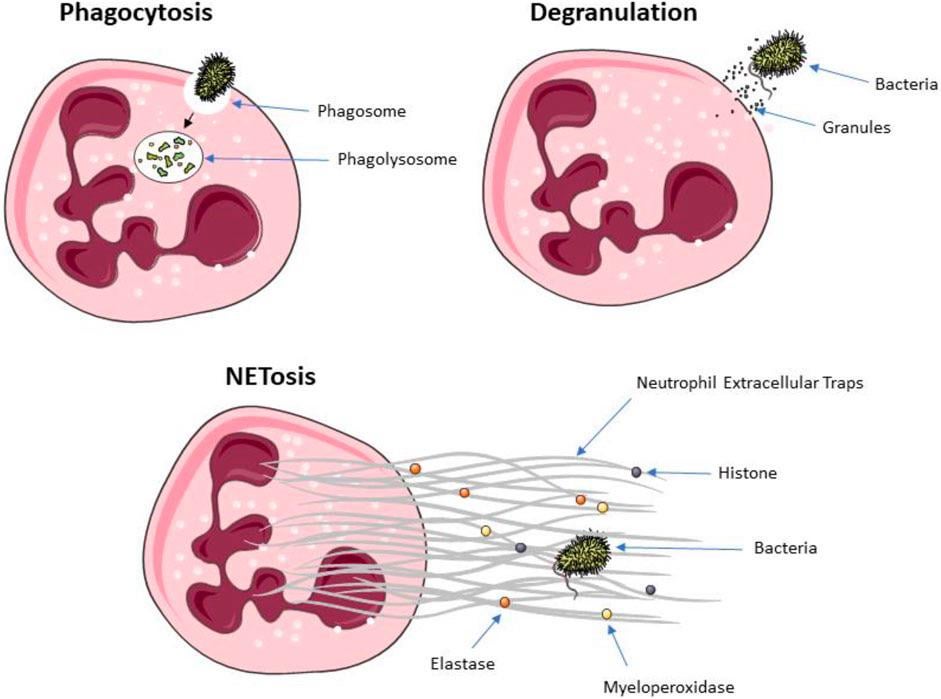
Your neutrophils are highly versatile white blood cells that can eat invaders (phagocytosis), release their granules which contain toxic substances on them (degranulation), or explode on them tangling them with their DNA and enzymes (NETosis).
Title: Neutrophils: Your Body’s Triple-Threat Immune Warriors
Meta Description: Discover how neutrophils, the immune system’s first responders, fight invaders using phagocytosis, degranulation, and NETosis—three lethal tactics to keep you healthy.
Keywords: neutrophils, phagocytosis, degranulation, NETosis, immune defense, white blood cells, innate immunity
The Mighty Neutrophil: A Master of Multitasking in Immune Defense
Neutrophils are the most abundant type of white blood cells in your body, acting as fearless frontline soldiers in your immune system. Making up 50–70% of your circulating white blood cells, these rapid responders detect and destroy pathogens within minutes of an invasion—whether it’s bacteria, fungi, or damaged cells. But what makes neutrophils truly remarkable is their arsenal of three distinct attack strategies: phagocytosis, degranulation, and NETosis. Together, these mechanisms make them a versatile and lethal force against infections.
1. Phagocytosis: The “Pac-Man” Tactic
What Happens:
Phagocytosis is the process where neutrophils literally engulf (“eat”) harmful microorganisms. Think of it like a microscopic game of Pac-Man—neutrophils surround invaders, trap them in a pocket called a phagosome, and digest them using enzymes or reactive oxygen species (ROS).
Why It Matters:
- Fast & Efficient: Neutrophils arrive at infection sites within hours, swallowing invaders whole.
- Cleanup Duty: They also remove dead cells and debris, preventing inflammation.
Fun Fact: A single neutrophil can phagocytose 5–20 bacteria before dying!
2. Degranulation: Unleashing Toxic Granules
What Happens:
When phagocytosis isn’t enough, neutrophils release the contents of their granules—tiny sacs filled with antimicrobial proteins and enzymes. These granules burst open near pathogens, poisoning or breaking them down.
The Granule Arsenal Includes:
- Myeloperoxidase (MPO): Converts hydrogen peroxide into bleach-like substances.
- Lysozyme: Destroys bacterial cell walls.
- Defensins: Punch holes in microbial membranes.
Why It Matters:
- Area-of-Effect Damage: Degranulation harms multiple invaders at once.
- Signal Amplification: The released chemicals alert other immune cells to join the fight.
Caution: Overactive degranulation can damage healthy tissue, worsening conditions like arthritis or COPD.
3. NETosis: The Kamikaze DNA Trap
What Happens:
In a drastic final move, neutrophils undergo NETosis. They explode, releasing their DNA like a spider’s web coated with toxic enzymes. These structures, called Neutrophil Extracellular Traps (NETs), immobilize and kill pathogens.
Why It Matters:
- Large-Scale Defense: NETs trap entire bacterial colonies or fungi.
- Last Resort: Used when phagocytosis or degranulation fails against stubborn threats.
The Trade-Off:
NETosis kills the neutrophil. Excessive NETs are linked to autoimmune diseases (e.g., lupus) and blood clots, highlighting the balance between defense and collateral damage.
Why Neutrophils Matter for Your Health
Neutrophils’ ability to switch between these three tactics ensures your body adapts to diverse threats. However, imbalances can lead to problems:
- Low Neutrophils (Neutropenia): Increases infection risk.
- Hyperactive Neutrophils: Contributes to chronic inflammation (e.g., rheumatoid arthritis).
FAQs About Neutrophils
Q: How are neutrophils activated?
A: They detect chemical signals (cytokines) from infected tissues or damaged cells.
Q: Can diet or lifestyle boost neutrophil function?
A: Yes! Adequate sleep, exercise, and nutrients (vitamin C, zinc, selenium) support immune health.
Q: What conditions involve neutrophil dysfunction?
A: Genetic disorders (e.g., Chronic Granulomatous Disease) or autoimmune diseases disrupt their activity.
Final Takeaway
Neutrophils are your immune system’s Swiss Army knife—flexible, fierce, and fast. By leveraging phagocytosis, degranulation, and NETosis, they protect you tirelessly. Understanding these processes empowers us to appreciate our bodies’ defenses and underscores why nurturing immune health matters.
Found this insightful? Share it to spread awareness of your body’s unsung heroes!
SEO Optimization Notes:
- Headers: Use H2/H3 tags for scannability.
- Keywords: Strategically placed in headers, body, and meta.
- Readability: Short paragraphs, bullet points, and analogies improve engagement.
- Latent Semantic Indexing (LSI): Terms like “immune response,” “inflammation,” and “microorganisms” boost relevance.