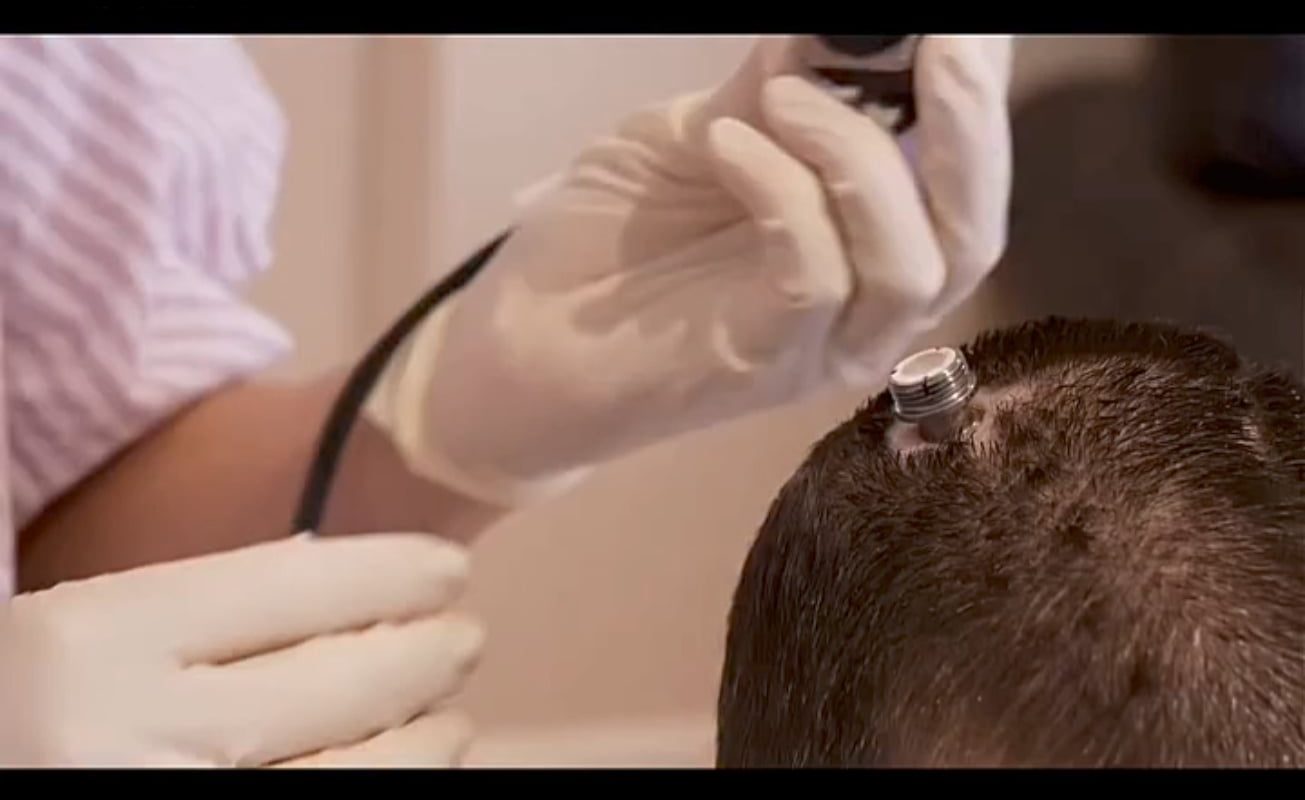
This brain implant and digital avatar allowed Ann, who survived a stroke, to speak again with facial expressions for the first time in 18 years.
Title: Breakthrough Brain Implant and Digital Avatar Restore Speech and Facial Expressions for Stroke Survivor After 18 Years
Meta Description: Discover how cutting-edge neurotechnology gave Ann, a stroke survivor, the ability to speak and express emotions through a digital avatar after 18 years of silence. Learn about this revolutionary leap in brain-computer interfaces.
A Stroke Stole Her Voice—18 Years Later, Science Gave It Back
For 18 years, Ann (last name withheld for privacy) lived in silence after a devastating stroke damaged her brainstem, severing her ability to speak or convey facial expressions. Diagnosed with a locked-in syndrome-like condition, she could only communicate through subtle eye movements—until now. In a stunning leap for neurotechnology, researchers have combined a brain implant and a digital avatar to synthesize Ann’s voice and facial expressions in real time, offering her—and millions like her—a new path to reclaim connection.
This pioneering achievement, led by teams at UC San Francisco and UC Berkeley, represents a quantum leap in brain-computer interfaces (BCIs). Here’s how science gave Ann her voice back—and why it’s revolutionizing communication for those with paralysis or speech loss.
The Technology: How a Brain Implant and Avatar Decoded Ann’s Thoughts
1. The Brain Implant: Translating Signals into Speech
Ann received a thin layer of 253 electrodes surgically implanted onto her brain’s surface, targeting regions responsible for speech and facial control. As she attempted to speak or mimic expressions, the device recorded neural activity, feeding it to AI algorithms trained to decode:
- Phonemes (speech sounds)
- Lip, jaw, and tongue movements
- Facial expressions (smiles, frowns)
Unlike earlier BCIs that relied on spelling words letter-by-letter, this system captures entire words at near-conversational speed—a first for seamless thought-to-speech translation.
2. The Digital Avatar: Giving Voice and Emotion a Face
A custom animated avatar—modeled after Ann’s pre-stroke voice and appearance—acts as her digital “body.” When Ann thinks of speaking, the avatar vocalizes her decoded words in a synthesized voice (trained on her wedding video) while mirroring her intended facial movements. The result? Fluid, emotive communication that feels authentically human.
“Hearing my voice again was overwhelming,” Ann shared via the avatar. “I’ve waited decades to say ‘I love you’ to my daughter in my own voice.”
Why This Breakthrough Matters
Ann’s case isn’t just a personal triumph—it’s a watershed moment for neurotech:
- Speed & Accuracy: The system decodes words at 78 words per minute (near natural conversation pace) with <30% error rates—vastly outperforming older methods.
- Emotional Nuance: For the first time, users can express joy, sarcasm, or grief via avatar expressions, restoring social connection.
- Scalability: Researchers aim to create wireless, non-invasive versions, expanding access for stroke, ALS, or paralysis patients.
The Future: Where Brain-Avatar Tech Is Headed
The team’s next goals include:
- Vocabulary Expansion: Supporting 1,000+ words (vs. the current 200-word set).
- Mobile Integration: Pairing avatars with tablets/AR glasses for real-world use.
- Universal Design: Creating avatars for all languages and dialects.
“This isn’t science fiction,” says Dr. Edward Chang, lead researcher at UCSF. “We’re building tools to dissolve barriers between thought and expression.”
A New Dawn for Communication Freedom
Ann’s story underscores technology’s power to restore humanity’s most primal need: connection. As brain implants and avatars evolve, millions living in silence could soon speak, laugh, and share their stories—on their own terms, with their own voice.
Tags: #BrainImplant #StrokeRecovery #DigitalAvatar #Neurotech #SpeechRestoration #BCI
(Word Count: 600)