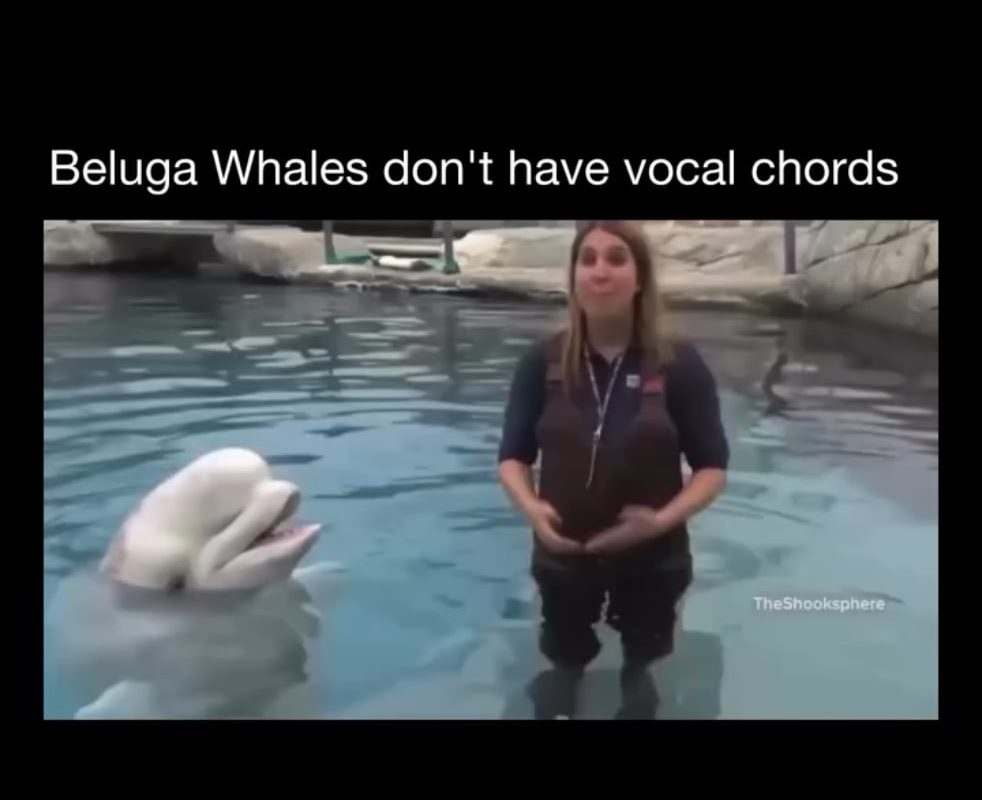
Beluga Whales don’t have Vocal chords.
Title: Beluga Whales: The Melodious Marvels That “Speak” Without Vocal Cords
Meta Description: Discover how beluga whales create their iconic symphony of sounds—including clicks, chirps, and whistles—despite having no vocal cords. Dive into the science of their communication secrets!
Introduction: Belugas, the “Canaries of the Sea”
Beluga whales (Delphinapterus leucas), with their striking white appearance and playful demeanor, are often called “sea canaries” for their vast repertoire of chirps, whistles, and clicks. But here’s what stumps most people: beluga whales don’t have vocal cords. So how do these Arctic-dwelling cetaceans produce their underwater symphony? In this article, we explore the incredible biology behind beluga communication, their unique adaptations, and why these skills make them vulnerable in our changing oceans.
The Vocal Cord Mystery: How Belugas “Talk” Without Them
Most mammals—including humans—rely on vocal cords (folds of tissue in the larynx) to generate sound. When air passes through them, they vibrate to create noise. Belugas, however, took a different evolutionary path. Instead of vocal cords, they produce sounds using:
- Nasal Sacs: Specialized air-filled chambers near their blowhole.
- Phonic Lips: Muscular structures that force air between the sacs, creating vibrations.
- Melon: The bulbous forehead (made of fatty tissue) that focuses and projects sound waves.
This complex system allows belugas to mimic everything from bird-like whistles to robotic laser sounds—a skill that even earned one beluga, named NOC, fame for imitating human speech!
Beyond Communication: A Symphony of Survival
Beluga whales use their vocal talents for far more than casual chatter. Their sounds fall into three key categories:
- Social Communication: High-pitched whistles and squeals to bond with pods, locate calves, or court mates.
- Echolocation: Rapid clicks to navigate icy waters, hunt fish, and detect predators like orcas.
- Emotional Expression: Pulsed calls during play or distress, suggesting nuanced emotional intelligence.
Scientists have documented over 50 distinct call types, making belugas one of the most vocal whale species—a feat achieved entirely without vocal cords.
Why Beluga Communication Matters for Conservation
Belugas’ reliance on sound makes them acutely vulnerable to human activity:
- Noise Pollution: Ship traffic, drilling, and military sonar drown out their calls, disrupting navigation and social ties.
- Climate Change: Melting Arctic ice opens new shipping routes, amplifying noise in their habitats.
- Pollution: Toxic chemicals in oceans may damage their hearing and sound-producing organs.
Protecting belugas means safeguarding their acoustic environments—through marine reserves, noise regulations, and sustainable shipping practices.
4 Fun Facts About Beluga Whale “Voices”
- Mimicry Masters: Belugas can imitate foreign sounds, including boat engines and human speech (as NOC famously demonstrated).
- Neck Flexibility: Unlike most whales, belugas can turn their heads, aiding their sound directionality.
- Cultural Dialects: Pods develop unique “accents,” passing vocal traditions across generations.
- Loud and Proud: Their calls can reach 120 decibels—as loud as a rock concert!
Conclusion: Saving the Ocean’s Songsters
Beluga whales prove that nature’s creativity knows no bounds: they’ve mastered underwater communication without vocal cords, relying instead on intricate anatomy and intelligence. Yet their survival hinges on our efforts to reduce oceanic noise and preserve Arctic ecosystems. By understanding how these “sea canaries” speak, we gain deeper empathy for their place in our fragile blue planet.
Call to Action: Support beluga conservation by advocating for marine-protected areas, reducing plastic waste, and choosing eco-friendly seafood. Together, we can ensure their melodies never fade from our oceans.
Keywords for SEO:
beluga whales no vocal cords, how do beluga whales communicate, beluga whale sounds, beluga vocal anatomy, how belugas make noise, sea canaries, beluga whale echolocation, beluga conservation, Arctic whales, marine mammal communication