A little history lesson in moving water
Title: A Little History Lesson in Moving Water: From Ancient Aqueducts to Modern Pumps
Meta Description: Explore the fascinating evolution of water transportation, from primitive irrigation to today’s high-tech pumps. Dive into humanity’s timeless quest to move water efficiently!
Introduction
Since the dawn of civilization, humans have been obsessed with moving water. Whether for survival, agriculture, hygiene, or industry, our ability to transport water has shaped societies, sparked engineering marvels, and fueled progress. This quick dive into history reveals just how creatively we’ve tackled the challenge—and how those ancient innovations still influence us today.
1. Ancient Beginnings: Canals, Aqueducts, and Qanats
Long before electric pumps or PVC pipes, early civilizations devised ingenious ways to redirect water.
-
Mesopotamia & Egypt (4000–2000 BCE):
The earliest known irrigation canals appeared in Mesopotamia, where farmers dug trenches to divert river water into fields. Similarly, Egypt’s Nile-dependent society built basin irrigation systems, using natural flooding to nourish crops. -
The Persian Qanat (1000 BCE):
In arid Iran, engineers created qanats—underground channels that tapped mountain aquifers and gravity-fed water to cities and farms. This 3,000-year-old technology is still used today! -
Roman Aqueducts (312 BCE onward):
Rome’s iconic aqueducts combined arches, lead pipes, and precise gradients to transport water over miles, supplying baths, fountains, and homes. The Aqua Appia, built in 312 BCE, set the standard for urban water infrastructure.
2. Medieval Ingenuity: Water Wheels and Mechanical Pumps
As societies expanded, so did the demand for water. The Middle Ages and Renaissance saw leaps in mechanical engineering.
-
Norias and Water Wheels (500–1500 CE):
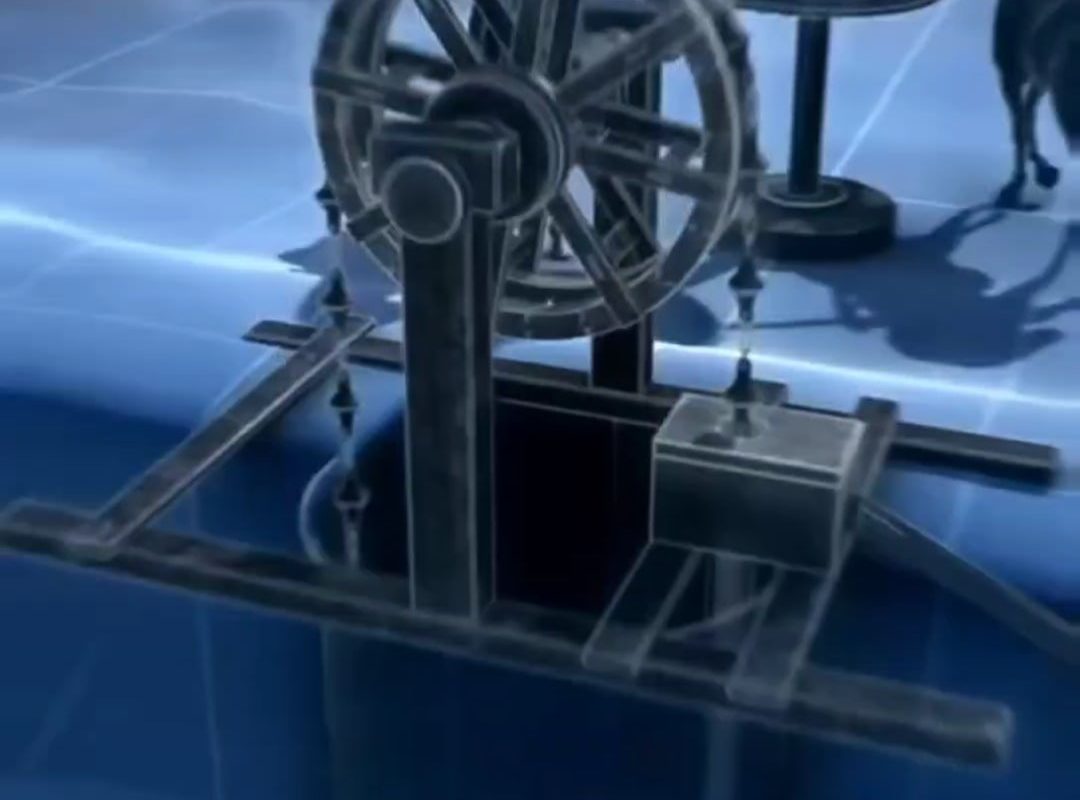
Muslim engineers in Syria and Spain perfected the noria—a massive water wheel powered by rivers or animals to lift water for irrigation. Meanwhile, vertical water wheels drove mills across Europe, grinding grain and later powering early factories. -
Renaissance Pumps (1400s–1600s):
Leonardo da Vinci sketched designs for centrifugal pumps and screw-shaped lift devices (inspired by Archimedes). Though not built in his lifetime, these ideas laid groundwork for modern hydraulics.
3. Industrial Revolution: Steam, Steel, and Scaling Up
The 1800s transformed water movement forever. Steam power and mass production enabled large-scale systems.
-
The Steam-Powered Pump (1712):
Thomas Newcomen’s steam engine initially pumped water from flooded mines. Later, James Watt’s improved version revolutionized municipal waterworks, enabling cities to draw from distant sources. -
Cast Iron Pipes (1800s):
Durable iron pipes replaced leaky wood and clay, drastically improving urban water networks. London and New York built sprawling systems to combat cholera and fire risks. -
Centrifugal Pumps (1851):
British inventor John Appold’s curved-vane centrifugal pump became a game-changer for industry, mines, and agriculture. It’s the ancestor of today’s electric pumps!
4. Modern Marvels: Electricity, Plastic, and Smart Tech
The 20th century turbocharged water movement with new materials and precision engineering.
-
Electric Submersible Pumps (1920s):
Compact, waterproof pumps made deep-well extraction and home plumbing feasible worldwide. -
PVC Pipe Revolution (1950s):
Lightweight, corrosion-resistant PVC pipes slashed costs and simplified installations—from farm drip irrigation to urban sewer lines. -
Smart Water Systems (2000s):
Today, IoT sensors, solar-powered pumps, and AI-driven irrigation optimize water use in real time, combating scarcity in drought-prone regions.
Why This History Matters Today
Our ancestors moved water with sheer ingenuity, but modern challenges—climate change, population growth, and aging infrastructure—demand even smarter solutions. By studying the past, we gain inspiration for:
- Sustainable Systems: Ancient qanats teach us about passive, low-energy design.
- Resilient Infrastructure: Roman aqueducts remind us that durability saves resources.
- Equitable Access: Millions still lack clean water—innovation must prioritize inclusivity.
Conclusion
From hand-dug trenches to AI-managed reservoirs, humanity’s quest to move water reflects our deepest needs and brightest ideas. The next chapter? Technologies like atmospheric water generators and desalination may redefine what’s possible—proving that even in a digital age, water remains the ultimate liquid currency.
Keywords for SEO: History of water movement, ancient aqueducts, qanat systems, Roman engineering, Industrial Revolution pumps, modern water technology, sustainable irrigation, smart water systems.
Enjoyed this history lesson? Share it with fellow water nerds! 💧
For more deep dives into engineering history, subscribe to our newsletter or explore related articles on ancient civilizations and green tech.
Meta tags (for SEO):
- Focus Keyphrase: History of moving water
- Slug: /history-moving-water-engineering
- Alt Text (for images): “Ancient Roman aqueduct in Segovia, Spain” / “Diagram of Persian qanat system” / “19th-century steam pump schematic”