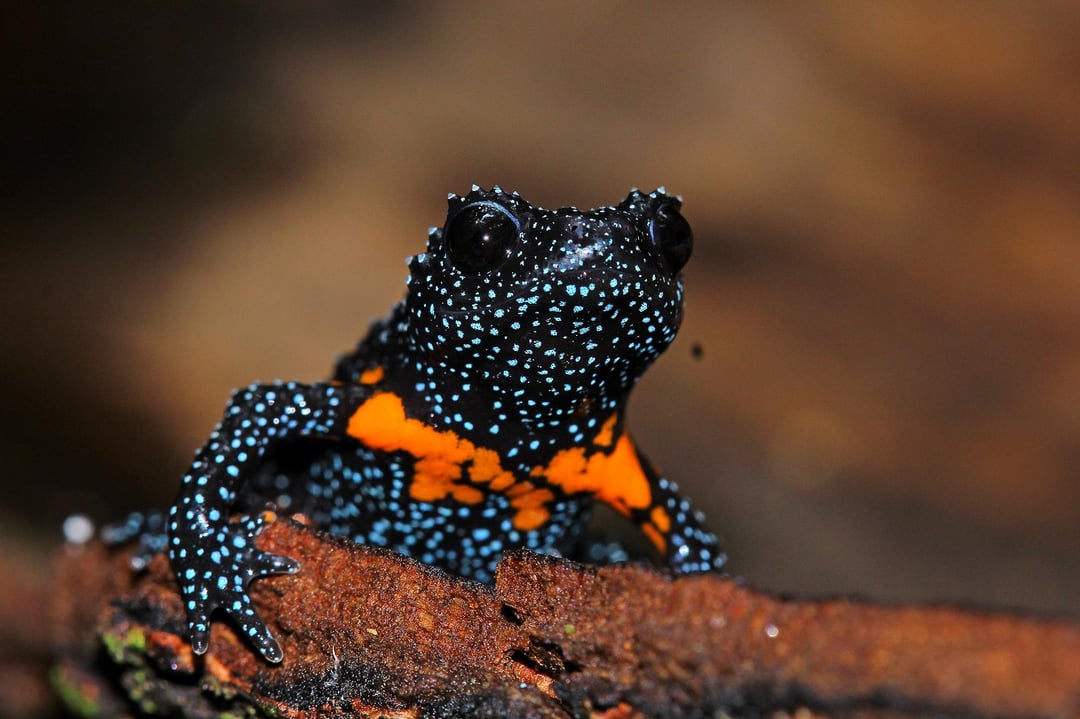
This is the rare Galaxy frog, listed as Vulnerable to Extinct by IUCN, found exclusively in Western Ghats
Title: The Galaxy Frog: A Rare Jewel of the Western Ghats Teetering on the Brink of Extinction
Meta Description: Discover the Galaxy Frog (Melanobatrachus indicus), an otherworldly amphibian found only in India’s Western Ghats. Learn why this IUCN-listed Vulnerable species faces extinction and how conservation efforts can save it.
Introduction
Hidden in the mist-shrouded rainforests of India’s Western Ghats lies a creature that seems plucked from the cosmos: the Galaxy Frog (Melanobatrachus indicus). Named for its striking, star-like speckles that resemble a distant galaxy, this amphibian is one of Earth’s rarest and most elusive frogs. Classified as Vulnerable by the International Union for Conservation of Nature (IUCN), the Galaxy Frog is sliding perilously toward extinction due to habitat loss and climate change. In this article, we explore its unique biology, fragile habitat, and the urgent efforts needed to protect it.
What Makes the Galaxy Frog Unique?
The Galaxy Frog captivates scientists and nature enthusiasts alike with its distinctive traits:
- Appearance: Its jet-black body is adorned with bright white or blue speckles, evoking a starry night sky.
- Size: Adults measure just 2–3 cm, making them easy to overlook in the dense forest undergrowth.
- Behavior: A nocturnal species, it thrives in cool, moist microhabitats near streams and leaf litter.
Unlike many frogs, the Galaxy Frog lacks tadpoles—females lay terrestrial eggs that hatch directly into miniature froglets, an adaptation to its rainforest home.
Habitat: Exclusive to the Western Ghats
The Galaxy Frog is endemic to the Western Ghats, a UNESCO World Heritage Site and global biodiversity hotspot. This mountain range stretches along India’s southwest coast, harboring species found nowhere else on Earth. The frog’s survival hinges on:
- Elevation: Found between 800–1,300 meters, often in Kerala and Tamil Nadu.
- Ecosystem Dependence: It inhabits pristine tropical evergreen forests and marshes, where humidity and rainfall sustain its fragile skin.
Threats: Why Is the Galaxy Frog Disappearing?
Human activity and environmental shifts are pushing this species toward extinction:
- Habitat Destruction: Deforestation for agriculture (e.g., tea/coffee plantations), urbanization, and roads fragments its habitat.
- Climate Change: Altered rainfall patterns and rising temperatures disrupt breeding cycles and dry out moisture-dependent ecosystems.
- Pollution: Pesticides and waste from plantations contaminate streams.
- Invasive Species: Non-native plants and fish outcompete the frog for resources.
With its tiny range and specialized needs, even minor disturbances could wipe out entire populations.
IUCN Status: What Does “Vulnerable” Mean?
The IUCN Red List categorizes the Galaxy Frog as Vulnerable (VU), signaling a high risk of endangerment if threats persist. Key concerns include:
- Population Decline: Estimated to have dropped by 30% over 10 years.
- Limited Range: Occupies less than 5,000 km², with habitat quality deteriorating.
Unless conservation action escalates, it could face Critically Endangered status or even extinction in the wild.
Conservation Efforts: Race Against Time
Local and global organizations are rallying to protect the Galaxy Frog:
- Protected Areas: Parts of its habitat fall within reserves like Silent Valley National Park and Anamalai Tiger Reserve.
- Research: Scientists track populations using bioacoustics and environmental DNA to map its distribution.
- Community Engagement: NGOs work with farmers to promote sustainable land use and reduce agrochemical runoff.
- Legal Protection: Listed under India’s Wildlife Protection Act (1972), though enforcement remains inconsistent.
How You Can Help
- Support Conservation NGOs: Donate to groups like the IUCN Amphibian Specialist Group or India’s Wildlife Trust.
- Spread Awareness: Share information about the Galaxy Frog’s plight on social media.
- Eco-Friendly Choices: Opt for sustainably sourced products (e.g., Rainforest Alliance-certified coffee) to reduce deforestation.
Conclusion: A Call to Save Our “Starry” Frog
The Galaxy Frog is more than a biological marvel—it’s a living barometer for the health of the Western Ghats. Saving this species means preserving an entire ecosystem teeming with life. Through urgent conservation action, public awareness, and habitat restoration, we can ensure future generations gaze upon its cosmic beauty in the wild, not just in history books.
Protect the Galaxy Frog—before its light goes out forever.
Keywords: Galaxy Frog, Melanobatrachus indicus, Western Ghats frogs, IUCN Vulnerable species, endangered amphibians, rare frogs India, amphibian conservation, Western Ghats biodiversity.
Image Alt Text Suggestion: “Galaxy Frog with star-like spots resting on moss in the Western Ghats rainforest.”
FAQ:
- Q: Why is it called the Galaxy Frog?
A: Its dark body with white/blue speckles resembles a star-filled galaxy. - Q: Can the Galaxy Frog be kept as a pet?
A: No! Capturing or trading this protected species is illegal and harms wild populations.
Sources: IUCN Red List, Wildlife Trust of India, Journal of Threatened Taxa.