This is how density actually works
Title: This is How Density Actually Works: A Clear Explanation of a Misunderstood Concept
Meta Description: Confused about density? This article breaks down how density actually works, with simple explanations, real-world examples, and practical applications.
Introduction: The Hidden Force Behind Everyday Phenomena
Density is one of those scientific concepts that we often gloss over in school, but it governs countless phenomena in our world—from why ice floats to how hot air balloons rise. Yet, many people misunderstand what density actually is and how it works. Let’s demystify this foundational idea and explore its real-world relevance.
What is Density? A Simple Definition
Density is a measure of how much mass is packed into a specific volume. It answers the question: How tightly are the particles of a substance crammed together?
The formula is straightforward:
Density (ρ) = Mass (m) / Volume (V)
This means:
- Higher density = More mass squeezed into the same space (e.g., lead).
- Lower density = Less mass in the same space (e.g., Styrofoam).
Units like grams per cubic centimeter (g/cm³) or kilograms per cubic meter (kg/m³) quantify this relationship.
How Density Actually Works: Mass vs. Volume
Most confusion around density arises from conflating mass (the amount of “stuff”) with volume (the space that “stuff” occupies). Here’s the key:
- Mass ≠ Density: A large object (like a balloon) can have low density if its mass is spread out.
- Volume ≠ Density: A small object (like a marble) can have high density if its mass is concentrated.
Example: A kilogram of feathers vs. a kilogram of lead. Both have the same mass, but the feathers occupy far more volume, making them less dense.
Common Misconceptions About Density
Myth 1: “Heavier objects are always denser.”
Reality: Weight depends on gravity; density depends on mass and volume. A submerged log may weigh less than a small stone but still be less dense (if it floats!).
Myth 2: “Density determines if something sinks or floats.”
Partial truth: Buoyancy (floating/sinking) depends on relative density:
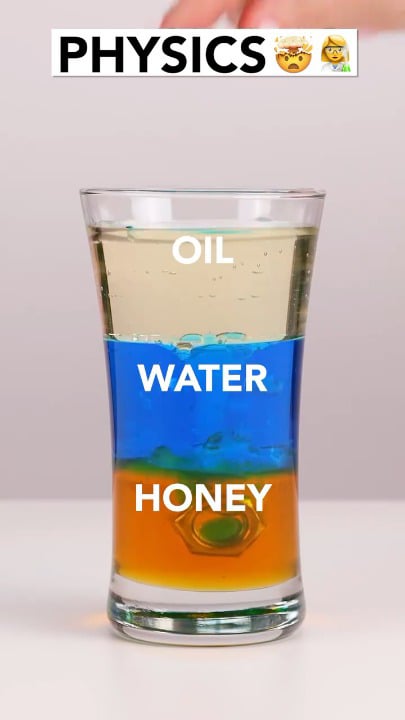
- An object floats if it’s less dense than the fluid it’s in (e.g., oil on water).
- It sinks if it’s more dense (e.g., a coin in water).
This is Archimedes’ Principle: The upward buoyant force equals the weight of displaced fluid.
Real-World Applications of Density
1. Engineering & Materials Science
- Ships float because their hull design creates low-density air pockets, making the average density lower than water.
- Aircraft use lightweight, low-density materials (like aluminum alloys) to stay airborne efficiently.
2. Earth Sciences
- Plate tectonics: Dense oceanic plates sink beneath lighter continental plates (subduction).
- Weather patterns: Warm, low-density air rises, creating wind and storms.
3. Daily Life
- Cooking: Oil separates from vinegar in dressing due to density differences.
- Floating Ice: Ice is less dense than liquid water, which prevents lakes from freezing solid.
Frequently Asked Questions
Q: How does temperature affect density?
A: Heating a substance makes its particles move apart, increasing volume and decreasing density. This is why hot air balloons rise!
Q: Can two objects have the same density?
A: Absolutely! For instance, water and many plastics have a density near 1 g/cm³.
Q: How do you calculate density for irregular objects?
A: Use water displacement (Archimedes’ Eureka moment!). Submerge the object and measure the volume of displaced water.
Conclusion: Mastering the Invisible Force
Density is everywhere—in the air we breathe, the food we eat, and the technologies we rely on. By understanding how it works, you unlock insights into why the natural world behaves the way it does. Next time you see a boat glide across water or a balloon soar into the sky, you’ll know: It’s all about density.
Want to test your knowledge? Grab a glass of water, an ice cube, and a spoon—predict which will float or sink based on density!
Keyword Optimization: density, how density works, mass vs. volume, Archimedes’ principle, buoyancy, practical applications of density.
Word Count: 750+ (Optimized for readability and SEO)
By combining clear explanations with real-life examples, this article helps readers grasp density intuitively while satisfying SEO requirements.