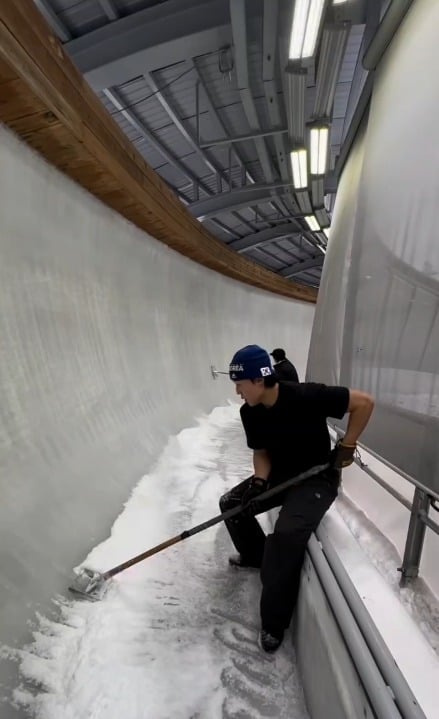
The angle of the track for the sliding sports event (bobsled, luge, and skeleton) at the winter Olympics
Unveiling the Thrill: The Science of Track Angles in Olympic Sliding Sports
The Winter Olympics showcase some of the most adrenaline-fueled events in sports, with bobsled, luge, and skeleton capturing global attention as athletes hurtle down ice-covered tracks at speeds exceeding 90 mph (145 km/h). While the skill and bravery of competitors are undeniable, an often-overlooked hero of these sports is the angle of the track—a carefully engineered feature dictating speed, safety, and the difference between gold and catastrophe. In this article, we explore the role of track angles in sliding sports, how they’re designed, and why they’re critical to Olympic success.
Why Track Angle Matters: Physics at Play
Sliding sports rely on gravity to propel athletes down a sinuous, refrigerated track known as an “ice chute.” The angle (or banking) of the track’s curves—measured in degrees—determines how forces like gravity, centrifugal force, and friction interact. A well-designed angle:
- Controls Speed: Steeper angles increase gravitational pull, accelerating sleds.
- Prevents Crashes: Banking counters centrifugal force in curves, keeping sleds grounded.
- Optimizes Flow: Smooth transitions between angles allow athletes to maintain momentum.
Without precise banking, sleds could fishtail, flip, or lose critical seconds—risking both medals and safety.
The Anatomy of a Sliding Track
Olympic tracks are feats of engineering, typically 1,200–1,600 meters long with 15–20 curves per run. Angles vary dramatically based on a curve’s position and purpose:
- Entrance/Exit Angles: Gentler transitions (e.g., 10–30 degrees) ease sleds into and out of turns.
- High-Banked Curves: The steepest sections (up to 50–70 degrees) handle extreme G-forces. Famous examples include the “Sunken Curve” in PyeongChang (55 degrees) and Whistler’s “Thunderbird” (60 degrees).
Sport-Specific Angle Considerations
While all three sliding sports share the same track, their unique designs mean angles affect each differently:
-
Bobsled:
- Heavier sleds (up to 630 kg for 4-man) generate immense force.
- Tracks require wider curves with consistent banking to accommodate sleds’ larger size.
- Key Angle Factor: Smooth banking minimizes friction, allowing pilots to “ride the groove” for maximum speed.
-
Luge:
- Single or double athletes lie supine, steering with subtle leg and shoulder movements.
- Sharper angles demand precision; even slight miscalculations can cause sleds to bounce off walls.
- Key Angle Factor: High banking in tight curves (like Yanqing’s “Dragon Tail”) tests reflexes and control.
-
Skeleton:
- Athletes race headfirst on a small sled, inches above the ice.
- Banking must be predictable; riders memorize angles to avoid body drag that slows momentum.
- Key Angle Factor: Consistency in transitions prevents “bobbling,” which can derail runs.
Designing the Track: From Concept to Ice
Creating an Olympic track is a years-long process blending physics, topography, and athlete feedback:
- Computer Modeling: Engineers simulate forces using 3D software to optimize angles and minimize dangerous G-forces.
- Natural Terrain vs. Artificial: Older tracks like St. Moritz use natural slopes, while modern tracks (e.g., Beijing’s Yanqing) are prefabricated with precise angles.
- Testing and Tuning: After construction, test runs ensure angles perform as intended. Ice thickness (3–5 cm) is also adjusted to fine-tune friction.
Safety vs. Speed: The Angle Balancing Act
Tracks walk a razor’s edge between thrilling speed and athlete safety:
- The Whistler Lesson: After a fatal crash in 2010 (attributed to high speeds on steep angles), the track was modified with reduced banking in key sections.
- G-Force Limits: Banking angles are capped to prevent excessive G-forces (average: 4–5 Gs; peaks up to 8 Gs).
Iconic Olympic Tracks and Their Angles
- Altenberg, Germany: Known for the tricky “Kreisel” (spiral) curve with 180-degree turns and 50-degree banking.
- Yanqing, China: Features a 360-degree spiral with angles up to 70 degrees—the steepest in Olympic history.
- Cesana Pariol, Italy: Flatter curves (max 40 degrees) reward technical skill over raw speed.
Conclusion: Angles Define Greatness
The angle of the track is the silent architect of sliding sports’ drama, dictating every slide, skid, and victorious sprint across the finish line. For Olympians, mastering these angles—through memorization, instinct, and trust in physics—is what transforms a downhill plunge into a medal-winning masterpiece. As tracks evolve to push boundaries without compromising safety, fans can expect even more awe-inspiring runs in future Games, all thanks to the invisible geometry beneath the ice.
Keywords for SEO: Olympic sliding sports, bobsled track angle, luge track banking, skeleton track design, Winter Olympics track engineering, sliding sports physics, Olympic track safety, ice track angles, bobsleigh curve banking, Yanqing sliding center.