Silphium, an extinct wonder plant from Cyrene know for it’s aphrodisiac properties, likely gave us the now universal heart symbol
Meta Title: Silphium: The Extinct Aphrodisiac Plant That May Have Inspired the Heart Symbol
Meta Description: Explore Silphium, Cyrene’s ancient “miracle plant” prized for its aphrodisiac powers and contraceptive properties—and how its extinction may have given birth to the universal ❤️ symbol.
Silphium: The Extinct Wonder Plant That Shaped Love, Medicine, and the Iconic Heart Symbol ❤️
Deep in the annals of ancient history lies the legend of Silphium—a golden-flowered plant so revered that it fueled empires, inspired poets, and possibly gave humanity one of its most enduring symbols of love: the heart shape (❤️). Harvested to extinction nearly 2,000 years ago, this mysterious herb from the Libyan city of Cyrene was treasured as a panacea, aphrodisiac, and even early contraceptive. Let’s unravel the story behind this botanical marvel and its surprising legacy.
The Glory Days of Silphium: Cyrene’s “Green Gold”
Silphium (Ferula historica or silphion in Greek) grew exclusively in a narrow coastal strip near Cyrene (modern-day Shahhat, Libya). Ancient records describe it as tall, with celery-like stalks, yellow flowers, and heart-shaped seedpods. Its resin, roots, and sap were so coveted that:
- 🔥 It was worth its weight in silver—Cyrene’s economy thrived on Silphium exports.
- 💊 Hippocrates prescribed it for coughs, sore throats, and digestive issues.
- 💘 Romans dubbed it the “ultimate aphrodisiac”—reports claim it could “stir desire” and even prevent pregnancy when consumed as a tea or resin.
The Ancient World’s Miracle Cure
From Egypt to Greece, Silphium was a pharmaceutical superstar:
- Contraceptive: Used as an early birth control method (likely due to estrogen-like compounds).
- Culinary Must-Have: A seasoning akin to modern asafoetida or garlic.
- Panacea: Treating everything from warts to epilepsy.
Pliny the Elder wrote that the last known stalk of Silphium was gifted to Emperor Nero—an ominous sign of its looming extinction.
Why Did Silphium Go Extinct?
Despite its value, Silphium vanished by the 1st century CE. Theories abound:
- Overharvesting: High demand outpaced slow regrowth.
- Climate Shifts: Desertification shrank its limited habitat.
- Grazing Animals: Sheep reportedly loved the plant, decimating wild stocks.
By 200 CE, the “miracle herb” was just a memory—and a cautionary tale of human-driven extinction.
The Heart Symbol Mystery: Did Silphium Inspire ❤️?
Here’s where history gets romantic: many scholars argue that Silphium’s heart-shaped seedpods (silphia) inspired the universal love symbol. Evidence includes:
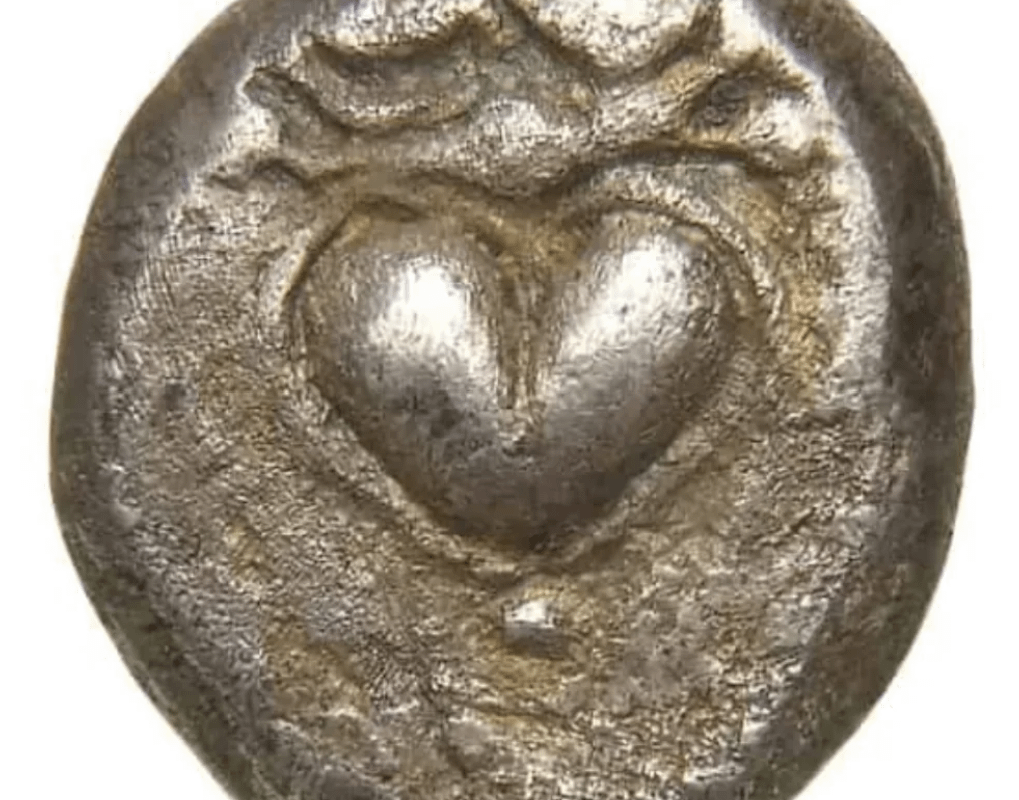
- 🪙 Ancient Cyrene Coins: Stamped with hearts resembling Silphium seedpods (see image below).
- ❤️ Greek & Roman Symbolism: The seed shape became shorthand for love and eroticism—mirroring Silphium’s aphrodisiac fame.
Before the medieval “cardioid” heart shape emerged, these coins linked botanical anatomy to cultural iconography. No other plant has as strong a claim to the symbol’s origin!

Image: Silver drachma from Cyrene (c. 500 BCE) featuring the heart-like Silphium seedpod.
Silphium in Modern Culture & Science
While its exact species remains debated (Ferula? A long-lost cousin?), Silphium’s legacy persists:
- 🎭 Myth & Literature: Ovid and Catullus rhapsodized its erotic power.
- 🧪 Scientific Interest: Botanists still search Libya for Silphium descendants.
- 🌿 Eco-Lesson: A cautionary symbol of unsustainable resource use.
Conclusion: A Lost Wonder That Still Beats in Our Hearts 💔➡️❤️
Silphium was more than a plant—it was love potion, medicine, and currency rolled into one. Though extinct, its emblem lives on every Valentine’s card, social media post, and romantic gesture as the iconic ❤️. Next time you use the heart symbol, remember: you might just be paying tribute to an ancient aphrodisiac that captivated the classical world!
Keywords for SEO: Silphium, Extinct plant, Cyrene, Aphrodisiac plant, Heart symbol origin, Ancient contraception, Ancient Greek medicine, Roman Empire plants, Lost herbs, Silphium heart shape.