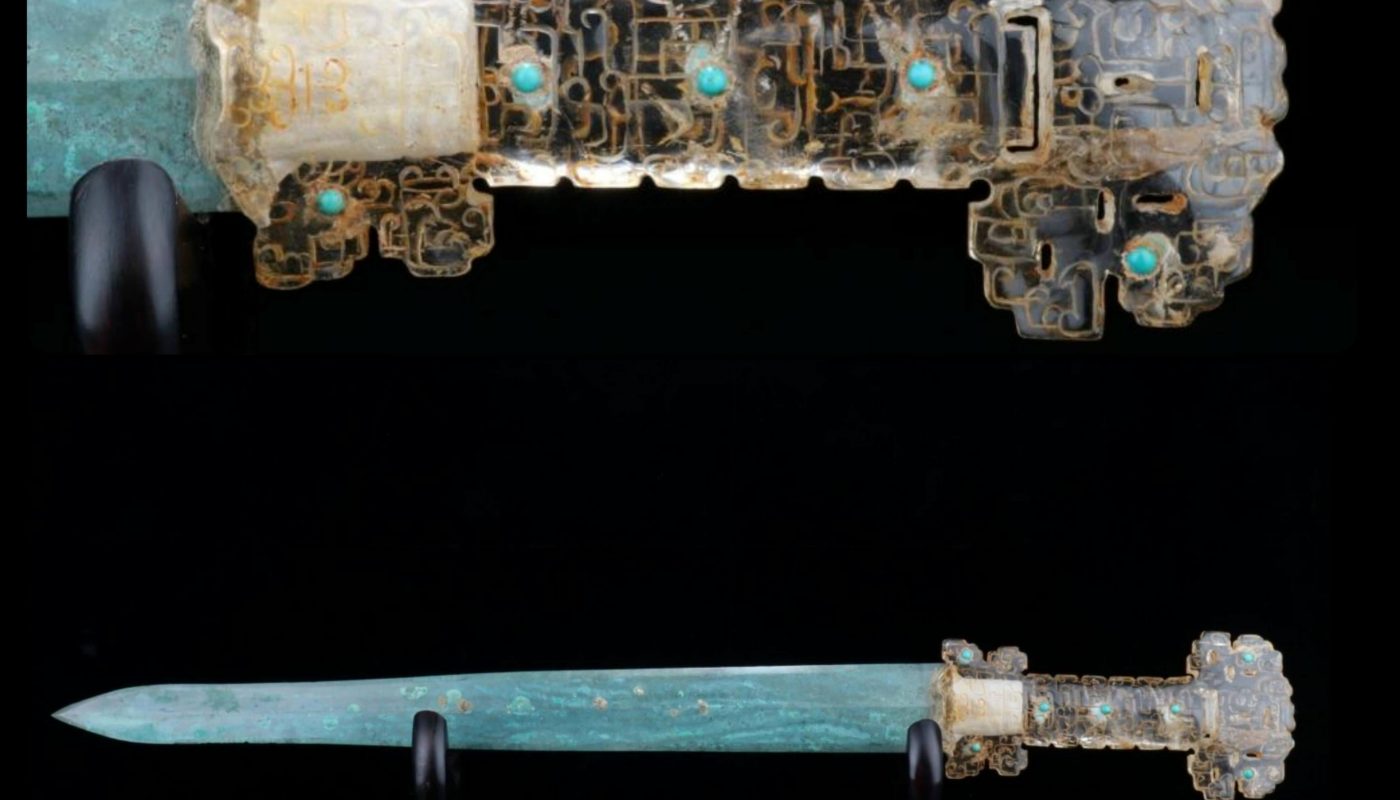
Bronze and Crystal Sword from China, c.450-250 BCE: the hilt of this sword was crafted from rock crystal, turquoise, and gold, and the blade is covered in a greenish-blue patina that was naturally produced over time
Title: Unearthing the Mystique: China’s Bronze and Crystal Sword (450-250 BCE) – A Masterpiece of Ancient Craftsmanship
Meta Description: Discover the breathtaking Bronze and Crystal Sword from China’s Warring States period (c.450-250 BCE). Explore its rock crystal hilt, turquoise accents, gold detailing, and the story behind its unique green-blue patina.
Introduction: A Glimpse into Ancient Artistry
Among the treasures of ancient China’s Warring States period (c.450–250 BCE), few artifacts capture the imagination like the Bronze and Crystal Sword. This extraordinary weapon blends martial function with unparalleled artistry, featuring a rock crystal hilt adorned with turquoise and gold, while its blade tells a silent story through a striking greenish-blue patina—a natural testament to the passage of millennia. More than just a sword, this relic stands as a symbol of technological innovation, elite status, and the spiritual beliefs of China’s turbulent pre-imperial age.
The Sword in Context: Technology and Symbolism in the Warring States Period
The Warring States period was a time of intense conflict and cultural flourishing in ancient China. As rival states vied for dominance, weaponry evolved into both tools of war and works of art. Swords like this one were likely owned by nobility or high-ranking warriors, serving as ceremonial objects and symbols of authority.
- Blade Material: Made from bronze—a copper-tin alloy—the blade would have been formidable in its time, though age has softened its appearance under a layer of patina.
- Patina: The greenish-blue corrosion results from bronze’s interaction with oxygen, moisture, and soil minerals over centuries. This “living” surface is now treasured for its archaeological value, preserving the blade’s integrity while giving it an ethereal quality.
The Hilt: A Masterstroke of Luxury and Spirituality
What truly sets this sword apart is its dazzling hilt, crafted from rare and symbolically potent materials:
- Rock Crystal: Known in Chinese culture for its purity and believed mystical properties, rock crystal represented clarity, protection, and a bridge between the mortal and divine. Shaping this brittle, transparent mineral into a functional hilt demanded exceptional skill.
- Turquoise: Inlaid turquoise stones—associated with heaven, luck, and immortality in ancient China—provided a vivid contrast to the crystal’s translucence.
- Gold Accents: Delicate gold filigree would have shimmered against the crystal, reinforcing the owner’s prestige and wealth.
This lavish combination suggests the sword was intended for ritual ceremonies, burials, or diplomatic gifts rather than battle—a luxurious emblem of power meant to awe both allies and enemies.
Scientific Insights: How the Patina Tells a Story
The blade’s green-blue patina is more than just decay; it offers clues to its history:
- Formation Process: Over 2,000 years, bronze undergoes chemical reactions (oxidation, sulfidation) influenced by burial conditions, creating layers of malachite, azurite, and copper carbonates.
- Preservation Paradox: While the patina “protects” the underlying bronze from further corrosion, it also transforms the blade into a work of natural art. Modern conservation prioritizes stabilizing this patina to honor the object’s timeline.
Cultural Legacy: Why This Sword Matters Today
- Technological Prowess: The fusion of metallurgy (bronze blade) and lapidary arts (crystal hilt) showcases the sophistication of Warring States craftsmen.
- Spiritual Beliefs: Materials like crystal and turquoise highlight the era’s fascination with the supernatural, aligning human ambition with cosmic forces.
- Archaeological Value: Similar swords are rare and often discovered in elite tombs, like those in Hubei or Henan provinces, where high-status individuals were buried with opulent grave goods for the afterlife.
Where to See It: Museums and Exhibitions
While the exact location of this sword is not specified here, comparable Warring States-era artifacts are displayed at:
- The National Museum of China (Beijing)
- Hubei Provincial Museum (Wuhan), home of the famed Marquis Yi’s artifacts.
- The Metropolitan Museum of Art (New York), which houses Chinese antiquities.
Digital collections and virtual exhibits also offer opportunities to explore such treasures remotely.
Conclusion: A Window into an Ancient World
The Bronze and Crystal Sword transcends its role as a weapon, embodying the artistry, spirituality, and power dynamics of a transformative era in Chinese history. Its rock crystal hilt, turquoise inlays, and gold embellishments speak to luxury, while the patina-clad blade whispers secrets of time itself. For archaeologists, historians, and art lovers alike, it remains a mesmerizing relic of humanity’s quest to merge beauty, function, and the eternal.
Keywords for SEO: Ancient Chinese sword, Warring States period artifacts, Bronze Age weaponry, rock crystal hilt, turquoise inlay, archaeological discoveries, Chinese ceremonial swords, bronze patina, ancient Chinese craftsmanship, historical artifacts China.
Explore further: Dive into the metallurgy of ancient Chinese swords or the symbolism of gemstones in early Chinese culture to deepen your appreciation for this masterpiece.