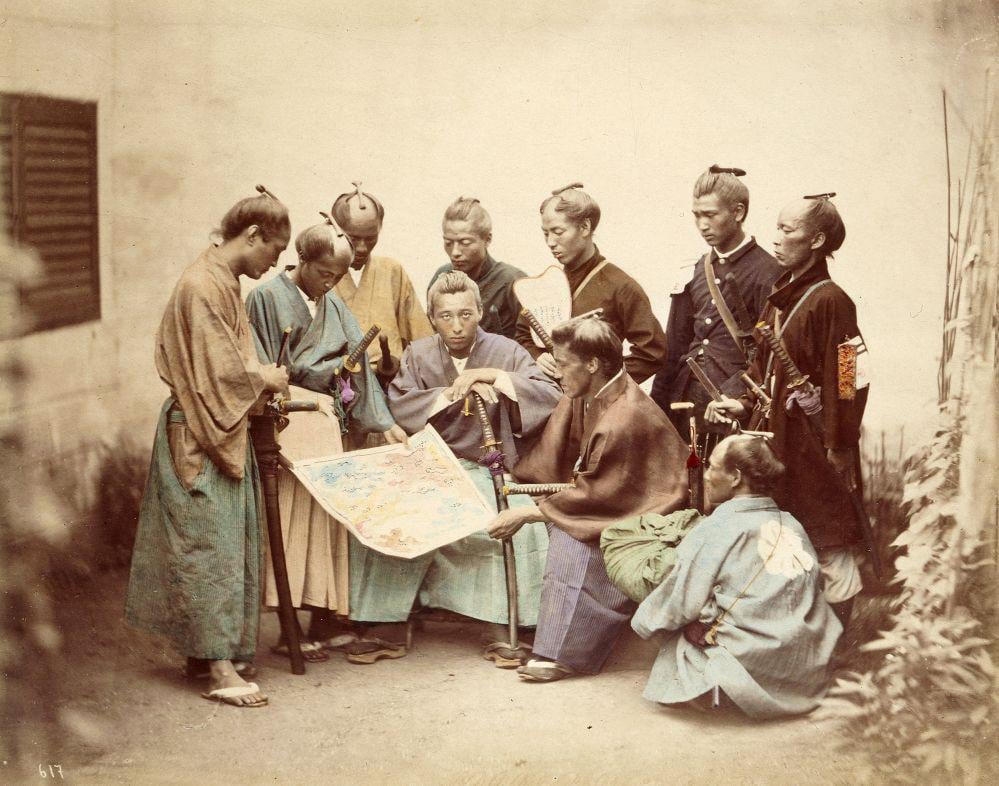
Samurai of the Satsuma clan, members of the Satchō Alliance, fighting for the Imperial side during the Boshin War period.
Title: The Satsuma Samurai: Imperial Vanguard of the Boshin War and the Satchō Alliance
Meta Description: Discover the pivotal role of the Satsuma clan samurai in Japan’s Boshin War. Learn how their alliance with Chōshū (Satchō) shaped the fall of the Tokugawa shogunate and birthed modern Japan.
Introduction: The Satsuma Warriors and the Dawn of Imperial Japan
The Boshin War (1868–1869) was a defining civil conflict that ended 265 years of Tokugawa shogunate rule and propelled Japan into the modern Meiji era. At the heart of this revolution were the samurai of the Satsuma clan, whose fierce loyalty to Emperor Meiji, combined with cutting-edge tactics and an alliance with Chōshū (known as the Satchō Alliance), made them instrumental in securing Imperial victory. This article explores their legacy, motivations, and the battles that reshaped Japanese history.
The Satsuma Clan: Warriors of the Southern Frontier
The Satsuma domain (modern-day Kagoshima Prefecture) was renowned for its fiercely independent samurai, who cultivated unparalleled martial discipline and embraced foreign military technology earlier than most Japanese clans. Key traits defined them:
- Loyalty to the Shimazu Daimyo: Governed by the Shimazu family for centuries, Satsuma samurai valued autonomy and resisted Edo’s (Tokyo) central authority.
- Western Military Adoption: After the 1863 Bombardment of Kagoshima by the British Royal Navy, Satsuma leaders prioritized modernizing their army with rifles, artillery, and European-style drill tactics.
- Anti-Tokugawa Sentiment: Long resentful of the shogunate’s monopoly on power, Satsuma saw Emperor Meiji’s restoration as a path to national renewal.
The Satchō Alliance: Catalyst for Revolution
The Satchō Alliance (薩長同盟), forged secretly in 1866 between Satsuma and Chōshū, became the backbone of the Imperial campaign. Despite historical rivalries, both clans shared a common goal: to overthrow the shogunate and restore political power to the Emperor.
- Strategic Collaboration: Chōshū supplied infantry and revolutionary zeal, while Satsuma provided naval support, financial resources, and elite warriors.
- Foreign Arms Access: Satsuma’s ties to British traders allowed the alliance to bypass the shogunate’s embargo on modern weapons.
The Boshin War: Satsuma Samurai in Battle
The Boshin War erupted in January 1868 after Emperor Meiji declared the abolition of the shogunate. Satsuma forces, led by legendary figures like Saigō Takamori and Ōkubo Toshimichi, spearheaded the Imperial campaign.
Key Battles and Contributions
-
Battle of Toba-Fushimi (January 1868):
- Satsuma troops used modern Armstrong cannons and Gatling guns to rout shogunate forces outside Kyoto.
- Their victory demoralized Tokugawa loyalists and proved the power of Western-style warfare.
-
Siege of Edo (April–May 1868):
- Satsuma commanders negotiated the bloodless surrender of Edo (Tokyo), leveraging their reputation for decisive force.
-
Aizu Campaign (Late 1868):
- Satsuma-Chōshū forces crushed the Aizu domain, famed for its loyalist Byakkotai (White Tiger Brigade).
-
Naval Dominance:
- Satsuma’s warships, including the Kasuga, secured coastal waters, blockading shogunate strongholds like Ezo (Hokkaido).
Why the Satsuma Sided with the Emperor
The clan’s support for the Imperial faction was both pragmatic and ideological:
- Political Opportunity: Aligning with the Emperor offered a chance to dismantle the Tokugawa hierarchy and elevate Satsuma’s influence.
- Nationalism: Leaders like Saigō framed the conflict as a patriotic duty to unify Japan against Western colonialism.
- Economic Incentives: The shogunate’s trade restrictions hampered Satsuma’s lucrative sugar and arms industries.
Legacy: Triumph and Tragedy
The Boshin War ended in 1869 with Imperial victory, but Satsuma’s role had lasting consequences:
- Meiji Modernization: Ex-Satsuma leaders dominated the early Meiji government, driving reforms like conscription and industrialization.
- The Satsuma Rebellion (1877): Ironically, Saigō Takamori later led a rebellion against the Meiji government he helped create, opposing the erosion of samurai privileges. His defeat marked the end of the samurai era.
- Cultural Influence: Satsuma’s warrior ethos persists in Kagoshima’s identity, celebrated in festivals, museums, and media (e.g., NHK’s Segodon drama).
FAQ: Satsuma Clan and the Boshin War
Q: What weapons did Satsuma samurai use?
A: While retaining katana for close combat, they relied on imported rifles (Enfield, Snider), cannons, and ironclad warships.
Q: How did the Satchō Alliance form?
A: Mediated by Sakamoto Ryōma (a Tosa samurai), Satsuma and Chōshū agreed to unite against the shogunate after initial hostilities.
Q: Were all samurai pro-Imperial?
A: No. Many clans (Aizu, Jōzai) backed the shogunate, viewing Imperial forces as destabilizing.
Conclusion: The Satsuma’s Enduring Mark on Japan
The Satsuma clan’s blend of tradition and innovation made them indispensable to the Meiji Restoration. By fighting for the Imperial cause in the Boshin War, they catalyzed Japan’s transformation from feudal isolation to a modern global power. Though their warrior class ultimately faded, their legacy as architects of a new Japan remains immortalized in history.
Keyword Tags: Satsuma clan, Satchō Alliance, Boshin War, Meiji Restoration, Saigō Takamori, Samurai warriors, Japanese history.