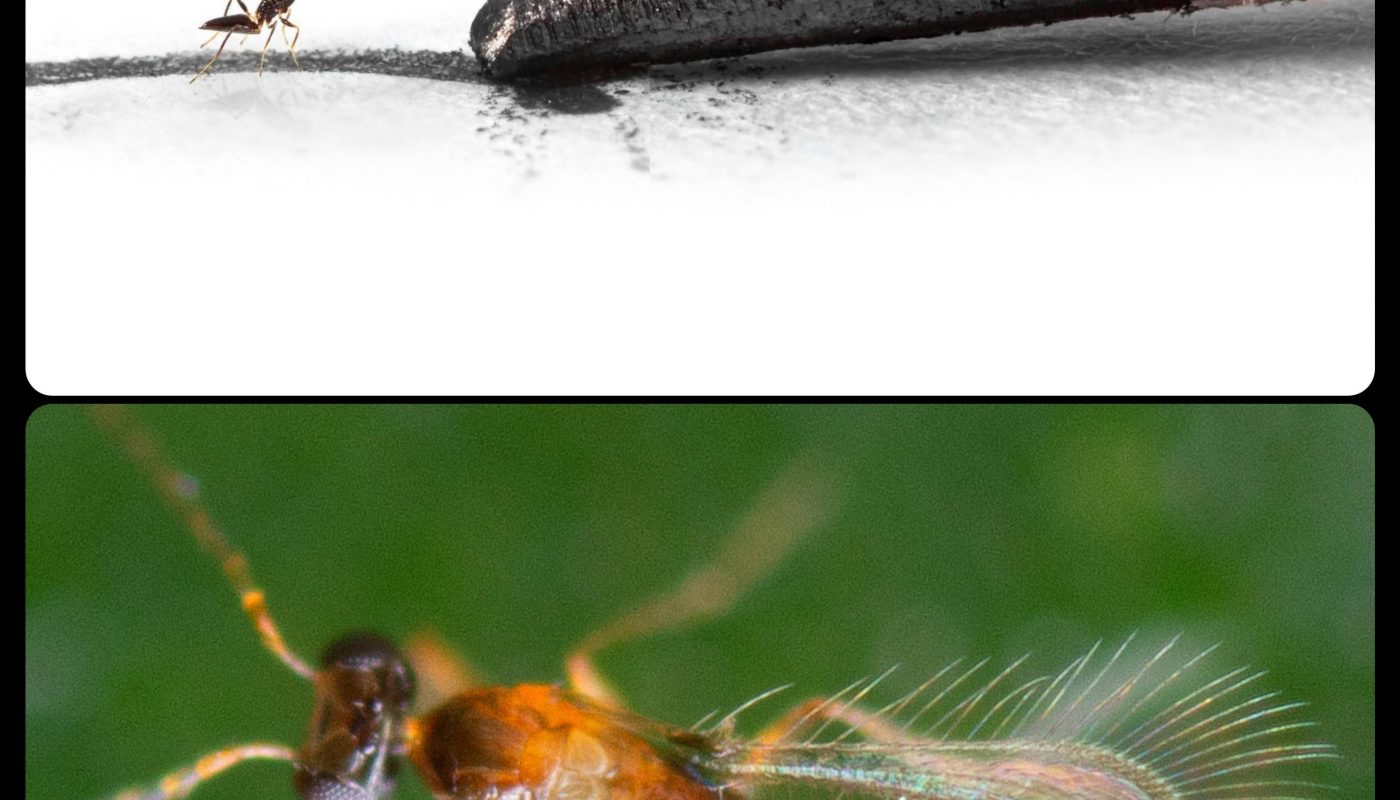
Fairy Wasps: the wasps of this genus are the world’s smallest known insects, with some species measuring as little as 0.139mm (139 microns) long, which is roughly the size of a human egg cell
Title: Fairy Wasps: The Microscopic Marvels of the Insect World
Meta Description: Discover fairy wasps (family Mymaridae), the world’s smallest insects, some measuring just 0.139mm long—smaller than some single-celled organisms. Learn about their biology, ecology, and why size doesn’t limit their impact!
Fairy Wasps: The World’s Smallest Insects
Imagine an insect so tiny it could fit inside the period at the end of this sentence. Meet fairy wasps (also known as fairyflies), the minuscule champions of the arthropod world. Members of the family Mymaridae, these parasitic wasps hold the record for the smallest known insects on Earth, with some species measuring an astonishing 0.139 millimeters (139 microns) long—roughly the size of a human egg cell or an amoeba!
In this deep dive, we’ll explore the fascinating biology, ecological importance, and mind-bending scale of fairy wasps, proving that even the tiniest creatures can leave a colossal impact.
How Small Is “Small”? Putting Fairy Wasp Size Into Perspective
To truly grasp the microscopic scale of fairy wasps, consider these comparisons:
- A Dicopomorpha echmepterygis male (one of the smallest fairy wasp species) is smaller than a single-celled Paramecium (200-300 microns).
- They’re 1/5th the width of a grain of table salt (500 microns).
- Their wingspan barely exceeds 0.25mm, with feathery bristles that act like paddles for swimming through humid air.
Despite their size, fairy wasps possess fully functional organs, including a brain, digestive system, and reproductive organs. Their compact bodies defy biological norms, raising questions about how life functions at such extremes.
Biology of the Tiny: How Do Fairy Wasps Survive?
1. Anatomy of a Micro-Wasp
Fairy wasps evolved to exploit ecological niches larger insects can’t access. Key adaptations include:
- Feathery Wings: Hair-like bristles on their wings help them “swim” through air pockets in soil or damp habitats.
- Eyes and Antennae: Reduced but highly sensitive to detect hosts and mates.
- Parasitic Larvae: Their young develop inside the eggs of other insects (e.g., beetles, leafhoppers).
2. Life Cycle: A Race Against Time
- Fairy wasp larvae hatch inside host eggs, consuming nutrients until they emerge as adults.
- Males are often wingless and blind, living just long enough to mate before dying.
- Females live slightly longer, hunting for host eggs using chemical cues.
Ecosystem Impact: Why Tiny Wasps Matter
As parasitoids (insects whose larvae kill their hosts), fairy wasps are natural pest controllers. They target agricultural pests like thrips, leafhoppers, and beetles, reducing crop damage without pesticides. For example:
- Anagrus species protect vineyards by parasitizing grape leafhopper eggs.
- Gonatocerus wasps manage sugarcane pests in tropical regions.
Their efficiency makes them invaluable in integrated pest management (IPM) programs, supporting sustainable farming worldwide.
Where Do Fairy Wasps Live?
Fairy wasps thrive in humid environments worldwide, from rainforests to temperate woodlands. They’re commonly found in:
- Leaf Litter: Females lay eggs in concealed host eggs buried in soil or decay.
- Freshwater Margins: Some species live near ponds or streams, where humidity aids flight.
- Agricultural Fields: Especially where their host pests proliferate.
Remarkably, their lightweight bodies let them float on wind currents, aiding dispersal across continents!
Threats and Conservation: Protecting the Invisible
Despite their ecological value, fairy wasps face risks from:
- Habitat Loss: Deforestation and urbanization destroy microhabitats.
- Pesticides: Broad-spectrum chemicals kill both pests and their parasitoid allies.
- Climate Change: Drier conditions may disrupt their humidity-dependent life cycle.
Protecting these insects requires preserving biodiverse ecosystems and reducing agrochemical reliance.
FAQs: Answering Common Questions
Q: Are fairy wasps dangerous to humans?
A: No—they cannot sting or bite. Their minuscule size makes them harmless to people.
Q: How were fairy wasps discovered?
A: Early microscopists identified them in the 1800s, but modern imaging tech (e.g., electron microscopes) revealed their full complexity.
Q: Do all fairy wasps look alike?
A: No! Over 1,400 species exist, ranging in color (clear, brown, black) and bristle patterns.
Conclusion: Tiny Titans of the Insect World
Fairy wasps prove that size isn’t everything. These barely visible insects shape ecosystems, protect crops, and challenge our understanding of life’s boundaries. Next time you stroll through a garden or forest, remember: an entire world of microscopic marvels is buzzing just out of sight!
Keyword Focus: fairy wasps, smallest insects, Mymaridae, parasitic wasps, Dicopomorpha echmepterygis, integrated pest management, micro-insects.
Boost Your SEO Strategy:
- Link to studies on parasitic wasps or sustainable agriculture.
- Use related terms: “microscopic insects,” “beneficial wasps,” or “insect biodiversity.”
- Include high-quality images (electron microscope shots recommended).
By spotlighting these miniature marvels, your readers will gain newfound appreciation for the unseen heroes of our planet’s ecosystems.