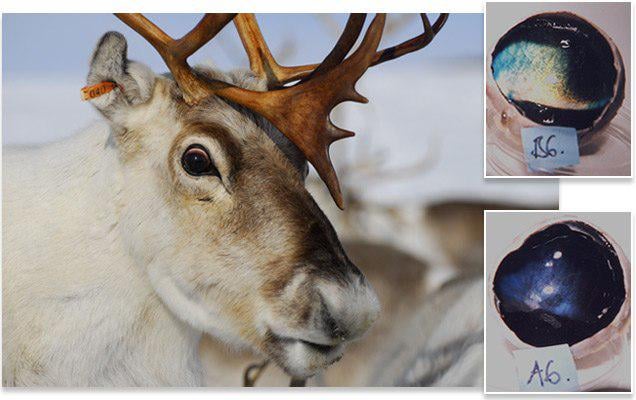
The color of the Arctic reindeer’s eyes changes with the seasons. It is golden in the summer and turns blue in the winter. This mechanism gives the animal a greater ability to adapt to changing light levels in its harsh environment.
The Secret Behind Arctic Reindeer’s Magical Eye Color Change: A Survival Masterpiece
The Arctic reindeer, an icon of resilience in one of Earth’s harshest environments, holds a breathtaking secret: its eyes change color with the seasons. In summer, they glow a shimmering gold. By winter, they transform into a striking deep blue. This remarkable adaptation isn’t just a curiosity—it’s a survival superpower tailored to the extreme light conditions of the Arctic.
A Marvel of Evolution: Why Do Arctic Reindeer Eyes Change Color?
The answer lies in the Arctic’s dramatic seasonal shifts. During summer, the region experiences 24 hours of daylight (“midnight sun”), while winter plunges it into near-total darkness for months. To thrive, reindeer have evolved a unique trick: their tapetum lucidum, a mirror-like layer behind the retina that boosts night vision, physically changes structure between seasons.
- Summer Eyes (Gold): Under constant daylight, the tapetum reflects gold/yellow wavelengths. This maximizes sharpness for spotting food and predators but reduces sensitivity in low light.
- Winter Eyes (Blue): In perpetual twilight, increased pupil dilation raises pressure inside the eye, compressing collagen fibers in the tapetum. This shifts reflection to blue light, which scatters more efficiently in darkness, enhancing vision by up to 1,000 times.
How Science Unlocked the Mystery
Researchers from University College London (UCL) discovered this phenomenon after studying Arctic reindeer (Rangifer tarandus) in Norway. Using specialized cameras, they confirmed the gold-to-blue shift correlates with changing light levels, not temperature. The key driver? Intraocular pressure:
- Winter’s dark conditions force reindeer pupils to dilate for weeks, compressing the tapetum and altering its reflective properties.
- In summer, relaxed pupils reverse the process, loosening collagen fibers to reflect warmer wavelengths.
The Survival Advantage of Blue Winter Eyes
Arctic reindeer face constant threats—from wolves to whiteouts. Here’s how their winter-blue eyes give them an edge:
- Enhanced Low-Light Vision: Blue light scattering improves contrast in snowy, dim landscapes, helping detect motion (like lurking predators).
- Reduced Glare Sensitivity: Snow reflects up to 90% of sunlight. Blue eyes minimize glare blindness during rare winter daylight hours.
- Energy Efficiency: Sharper winter vision reduces wasteful movements, conserving calories in a food-scarce season.
Could Climate Change Threaten This Adaptation?
As Arctic winters grow warmer and lighter, scientists question whether reindeer eyes will retain this seasonal switch. Disrupted light cycles could weaken the pressure changes needed for the color shift, potentially leaving reindeer vulnerable. Studying this helps conservationists predict how climate shifts will impact Arctic wildlife.
FAQs About Reindeer Eye Color
- Do all reindeer have color-changing eyes?
No—only Arctic subspecies like the Svalbard reindeer exhibit this trait due to extreme seasonal light shifts. - Can humans mimic this ability?
Bioengineers study reindeer eyes to develop adaptive lenses, but replicating the tapetum’s structure remains a challenge. - Do blue eyes harm reindeer vision clarity?
They sacrifice some focus for light sensitivity—a trade-off crucial in dark winters.
Conclusion: Nature’s Genius in Action
The Arctic reindeer’s shifting eyes exemplify evolution’s brilliance. By harnessing light itself, these animals turn survival into an art form. As research continues, their story reminds us that even in Earth’s most unforgiving habitats, life finds astonishing ways to adapt—and inspire.
Optimized Keywords:
Arctic reindeer eye color change, seasonal eye adaptation, tapetum lucidum, winter blue eyes, animal vision adaptation, Arctic survival mechanisms.
Image suggestion for SEO: “Arctic reindeer in winter snow with close-up of blue eyes.”
This unique adaptation not only illuminates the wonders of the natural world but underscores the delicate balance between species and their environments—a balance increasingly threatened by our changing climate.