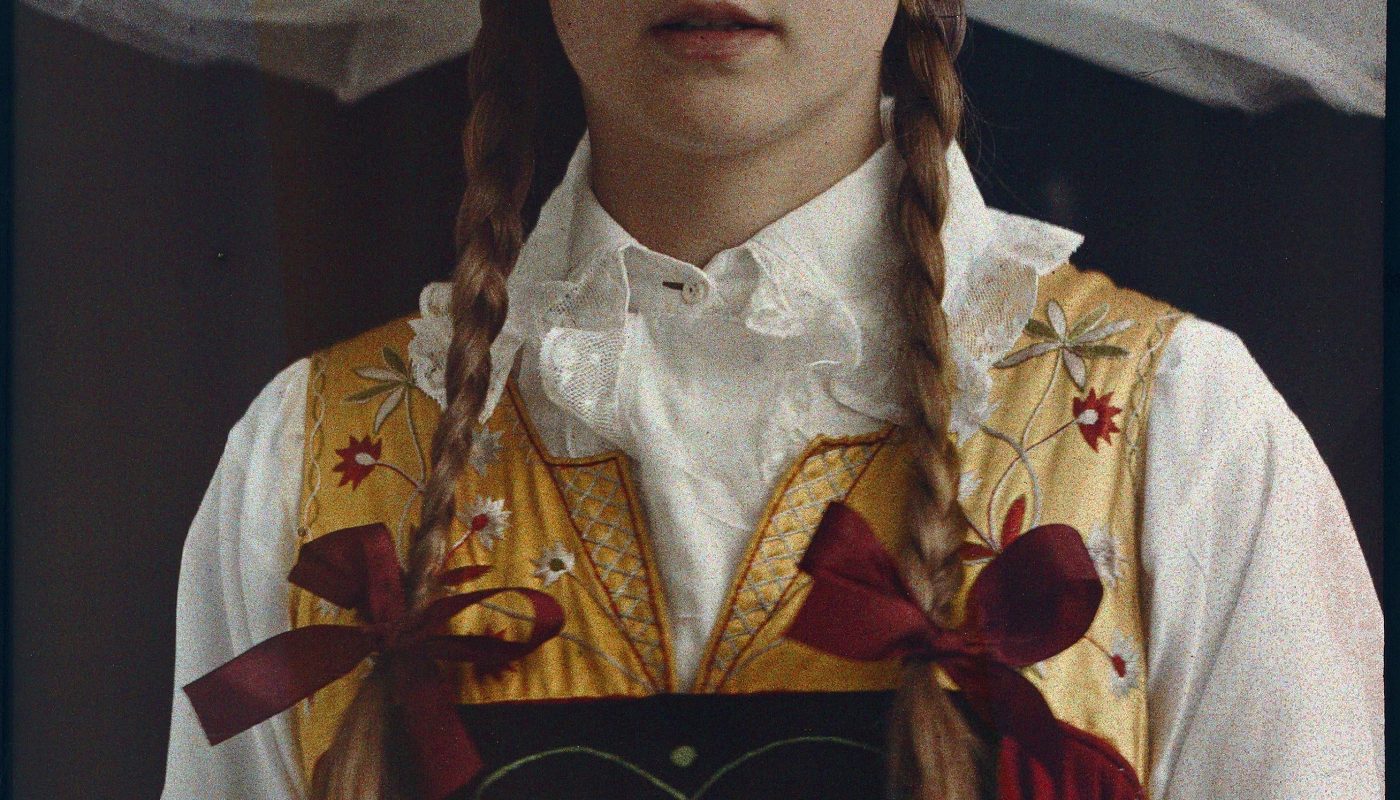
Autochrome shot of a swedish young lady in her traditional clothes, 1912.
Title: Timeless Beauty: An Autochrome Portrait of a Swedish Young Lady in Traditional Attire, 1912
Introduction
In 1912, as the world teetered on the brink of monumental change, a rare and mesmerizing glimpse of Swedish cultural heritage was captured through the groundbreaking Autochrome photography process. This vivid portrait of a young Swedish woman dressed in traditional clothing offers not only a window into early 20th-century fashion but also highlights the revolutionary technology that made color photography possible. In this deep dive, we explore the historical, cultural, and technical significance of this stunning image.
The Autochrome Revolution: Capturing Color in 1912
Invented by the Lumière brothers in 1907, the Autochrome process was the first commercially viable method for producing color photographs. Unlike black-and-white images of the era, Autochromes used dyed potato starch grains layered over glass plates to create ethereal, painterly hues. By 1912, this technique had gained popularity among photographers seeking to document life with unprecedented realism.
The image of the Swedish woman stands out for its soft, dreamlike quality—a hallmark of Autochromes. Her attire, meticulously preserved in color, showcases intricate embroidery and regional fabrics, offering insights into a pre-industrial Swedish society clinging to its traditions amidst rapid modernization.
Traditional Swedish Dress: Symbols of Identity in 1912
The young lady’s clothing reflects Sweden’s regional folk costumes (folkdräkt), worn during festivals, weddings, and cultural celebrations. Key elements of her ensemble likely include:
- A Vibrant Bodice and Skirt: Often crafted from wool or linen, dyed in deep blues, reds, or greens, with embroidery symbolizing nature or local folklore.
- An Apron: A staple of Nordic folk attire, featuring geometric patterns or floral motifs.
- A Lace Cap or Bonnet: An indicator of marital status or regional origin, completed with ribbons or metal brooches.
In 1912, traditional clothing was experiencing a revival as Sweden embraced nationalromantik (national romanticism). This cultural movement sought to preserve rural customs against urbanization, making portraits like this one both a personal memento and a political statement.
The Subject: A Glimpse into Swedish Life
Beyond the clothing, the photograph’s subject embodies the ideals of early 20th-century Sweden. Her composed posture and serene expression hint at the era’s societal expectations for women—grace, modesty, and connection to domestic life. Yet her direct gaze also suggests quiet resilience, reflecting the growing influence of women’s rights movements in Scandinavia.
Historical records indicate regional photographers often documented locals in traditional dress, both for artistic purposes and to support folk costume preservation societies. This image may have been part of such an initiative, capturing a fleeting moment before World War I reshaped Europe’s cultural landscape.
Legacy of the Autochrome: Why This Image Matters
Autochrome photography faded into obscurity by the 1930s, replaced by cheaper, faster processes like Kodachrome. Today, fewer than 100,000 Autochromes survive worldwide, making this Swedish portrait a priceless artifact of both photographic history and Nordic heritage.
- Cultural Preservation: The image immortalizes textile techniques and designs that might otherwise have been lost. For example, the embroidery patterns seen here could trace back to Sweden’s Viking Age or medieval influences.
- Technological Artistry: The Lumière brothers’ process required painstaking precision—exposures lasted several seconds, demanding absolute stillness. The photograph’s clarity is a testament to both the subject’s poise and the photographer’s skill.
Where to See Similar Autochromes
While the original image’s whereabouts may be unknown, enthusiasts can explore similar works at:
- The Swedish Museum of Performing Arts (Stockholm): Houses early 20th-century folk costumes.
- The Lumière Museum (Lyon, France): Showcases groundbreaking Autochromes from the 1900s–1920s.
- Digital Archives: Institutions like Wikimedia Commons host high-resolution scans of Autochrome collections.
Conclusion
The 1912 Autochrome of a Swedish woman in traditional dress bridges art, technology, and cultural memory. It reminds us of a time when color photography was magical, and folk traditions were a beacon of national pride. For historians, photographers, and admirers of Nordic culture, this image remains a poignant emblem of resilience and beauty frozen in time.
SEO Keywords:
Autochrome photography 1912, Swedish traditional clothing, early color photography, Lumière brothers, folkdräkt, Sweden national dress 1900s, vintage Swedish portraits, cultural heritage photography, Nordic folk costumes, historical Autochrome images.
By blending technical history with cultural insight, this article invites readers to appreciate a singular moment where innovation met tradition—a Swedish legacy captured in vivid, enduring color.