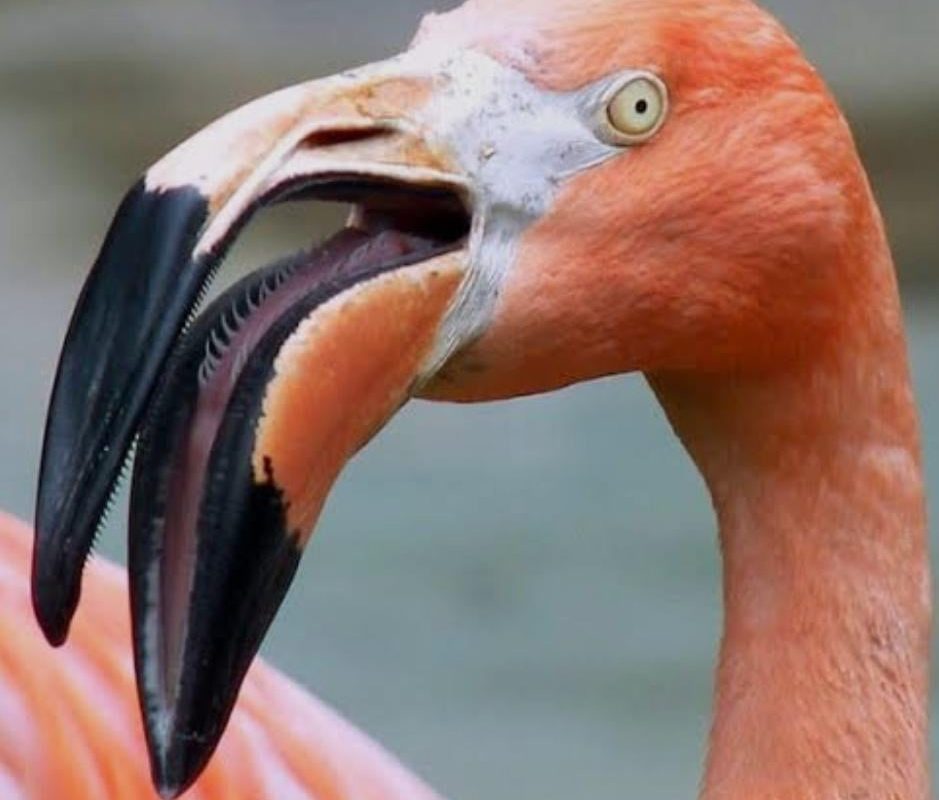
Flamingos filter feed like Baleen whales but have different structure in their mouths called Lamellae
Flamingos and Baleen Whales: Nature’s Unlikely Filter-Feeding Twins
Introduction
Picture a flock of flamingos, their vibrant pink feathers shimmering under the sun as they wade through shallow waters with heads upside-down. Now imagine a massive baleen whale gliding through the ocean, mouth agape as it engulfs a school of krill. Though these animals seem worlds apart, they share a fascinating evolutionary secret: both are master filter feeders. While baleen whales use keratinous plates to sieve prey from seawater, flamingos rely on a lesser-known but equally ingenious structure—lamellae—to strain food from mud and water. Let’s dive into the science behind this ecological parallel!
What Is Filter Feeding?
Filter feeding is a feeding strategy where organisms strain tiny food particles (like algae, plankton, or small invertebrates) from water or sediment. This method allows animals to thrive in nutrient-rich environments without chasing individual prey. Nature has evolved several solutions for this, with flamingos and baleen whales representing two brilliant—and structurally distinct—examples.
Flamingos: The Upside-Down Filter Feeders
Flamingos are iconic waders, often seen sweeping their heads side-to-side in shallow lakes, lagoons, and estuaries. Their unique feeding behavior relies on specialized anatomy:
- Lamellae: Lining the edges of their curved bills are tiny, hair-like structures called lamellae. Made of keratin (the same protein in human hair and nails), these comb-like ridges act like a microscopic sieve.
- Tongue Pumping: Flamingos use their muscular tongues to pump water and mud through their bills up to 4 times per second. As the mixture flows in, the lamellae trap algae, diatoms, shrimp, and insects.
- Salt Glands: To handle salty or alkaline water, flamingos excrete excess salt through specialized glands near their nostrils—a handy adaptation for their harsh habitats.
Diet Impact: The carotenoids in their shrimp-heavy diet give flamingos their iconic pink hue—a literal example of “you are what you eat”!
Baleen Whales: Giants of the Filter-Feeding World
Baleen whales (like humpbacks and blues) use a different but equally effective filtering system:
- Baleen Plates: Instead of teeth, these whales have hundreds of flexible plates made of keratin hanging from their upper jaws. The plates fray into bristles that trap krill, fish, and plankton as water floods out.
- Lunge Feeding: Whales accelerate into dense prey patches, expanding their throat pouches to engulf thousands of gallons of water. They then push the water out through the baleen, leaving behind a protein-rich meal.
Lamellae vs. Baleen: Same Goal, Different Design
While both structures filter food, their mechanics diverge due to habitat and scale:
| Feature | Flamingo Lamellae | Baleen Whale Plates |
|---|---|---|
| Size | Microscopic ridges (1–2 mm) | Massive plates (up to 10 feet long!) |
| Function | Trap particles as water is pumped out | Strain prey during high-speed lunge |
| Prey Size | Microscopic algae, brine shrimp | Krill, small fish, copepods |
| Environment | Shallow freshwater/saltwater ecosystems | Open ocean |
Key Difference: Flamingos actively pump water through lamellae using their tongues, while whales rely on body movement to force water through baleen.
Why Did This Similarity Evolve?
This is a classic case of convergent evolution—unrelated species developing comparable traits to solve similar ecological challenges. Both animals needed to exploit abundant but tiny prey in aquatic environments. Lamellae and baleen emerged as efficient, low-energy solutions to maximize calorie intake with minimal effort.
Fun Facts About Flamingo Feeding
- Head Stands: Their upside-down posture allows gravity to aid filtration.
- Teamwork Pays: Large flocks stir up mud, exposing more food for the group.
- Chicks Lack Lamellae: Baby flamingos rely on “crop milk” from parents until their bills develop fully.
Conservation Lessons
These filter-feeding systems are highly sensitive to environmental changes:
- Flamingos: Depend on wetland health—pollution or habitat loss disrupts their food supply.
- Whales: Face threats from microplastics (which clog filters) and declining krill populations due to climate change.
Protecting these species means safeguarding the intricate ecosystems that sustain their unique diets.
Conclusion: Nature’s Ingenious Recyclers
Flamingos and baleen whales remind us that evolution is a creative problem-solver. Whether through flamingo lamellae or whale baleen, life finds a way to thrive by turning “small bites” into survival success. Next time you see a flamingo’s graceful neck dip, remember: it’s not just dining—it’s performing a 25-million-year-old filtration ballet perfected by nature.
Target Keywords:
- Flamingo filter feeding
- Lamellae in flamingos
- Flamingo vs whale feeding
- How flamingos eat
- Convergent evolution examples
SEO Optimization Tips:
- Use internal links to related articles (e.g., “Flamingo Habitats” or “How Whales Feed”).
- Include alt text for images describing flamingo lamellae and whale baleen.
- Link to research papers or videos of flamingos feeding.
FAQs Section:
Q: Can flamingos filter feed in saltwater?
A: Yes! Their salt glands allow them to thrive in alkaline lakes.
Q: Are lamellae unique to flamingos?
A: No—some ducks and geese have similar structures, but flamingos’ are highly specialized.
Q: How much food do flamingos consume daily?
A: Up to 15% of their body weight—roughly 5–6 ounces of algae and invertebrates.
Let this marvel of nature inspire you to look closer—the wildest innovations are often hidden in plain sight! 🌊🦩