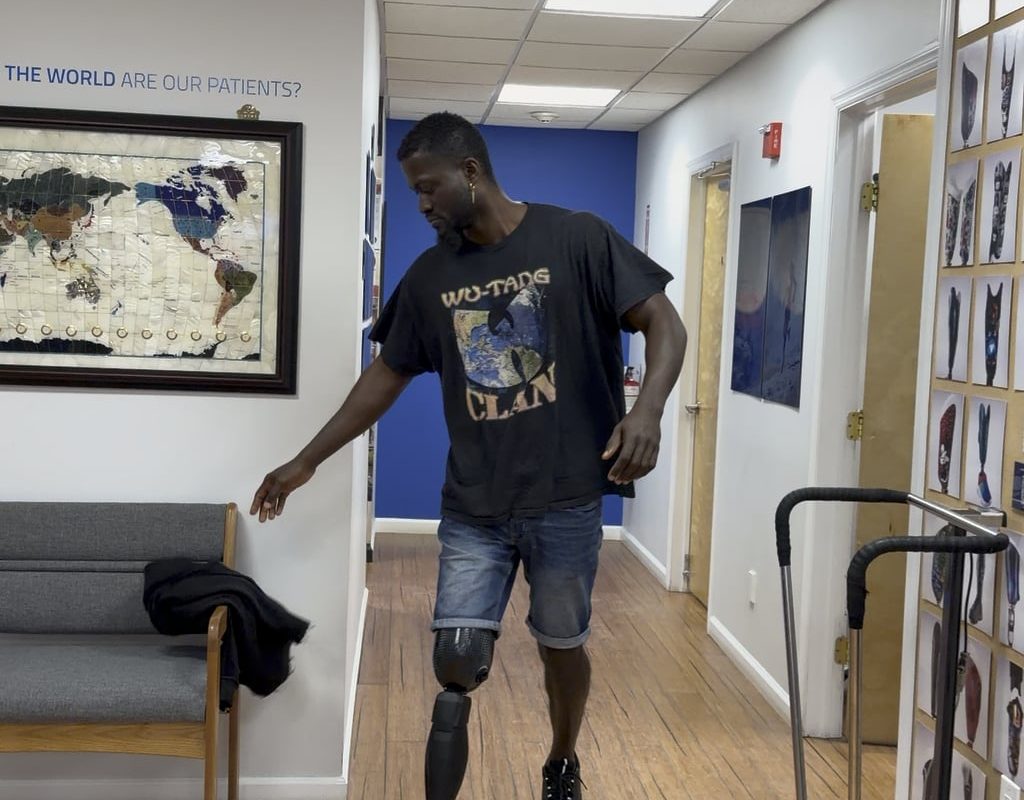
An amputee walking with a very technological improved prosthetic.
Title: The Future of Mobility: How Advanced Prosthetics Are Empowering Amputees to Walk Naturally Again
Meta Description: Discover how cutting-edge prosthetic technology, including bionic limbs, AI, and neural interfaces, is revolutionizing mobility for amputees. Explore real-world success stories and the science behind these life-changing innovations.
Introduction: A New Era of Prosthetic Innovation
For decades, prosthetic limbs were rudimentary tools designed primarily for cosmetic appeal or basic functionality. But today, breakthroughs in robotics, artificial intelligence, and biomedical engineering have transformed prosthetics into sophisticated extensions of the human body. Amputees are now experiencing unprecedented freedom, walking with fluidity, stability, and even subconscious control—thanks to prosthetic limbs that blend seamlessly with their nervous systems and respond to their intentions in real time. This article dives into the revolutionary technologies redefining mobility for amputees and the profound impact they’re having on lives worldwide.
The Evolution of Prosthetic Limbs: From Passive Tools to Active Partners
Modern prosthetics are no longer static devices. They’re dynamic systems engineered to mimic—and sometimes surpass—natural human movement. Here’s how they work:
-
Bionic Limbs with Robotic Joints
Advanced prosthetics like the Össur Power Knee or Ottobock’s C-Leg use microprocessors, gyroscopes, and accelerometers to analyze gait patterns and terrain. These limbs adjust knee flexion, ankle angle, and power output in milliseconds, enabling smooth transitions between walking, climbing stairs, or running. -
Mind-Controlled Prosthetics (Neural Interfaces)
Pioneering researchers have developed prosthetics that connect directly to the wearer’s nervous system. By implanting electrodes in residual nerves or muscles, signals from the brain are decoded to control limb movements. For example, Johns Hopkins University’s Modular Prosthetic Limb (MPL) allows users to pick up a grape or shake hands simply by thinking about the action. -
AI-Driven Adaptability
Artificial intelligence enables prosthetics to learn user habits and predict movements. The Hero Arm by Open Bionics uses machine learning to refine grip strength and precision based on daily usage, while sensors provide tactile feedback, simulating the sensation of touch. -
3D Printing and Customization
Lightweight, patient-specific prosthetics are now affordable and accessible, thanks to 3D printing. Companies like UNYQ create sleek, aerodynamic designs tailored to an amputee’s anatomy—even incorporating artistic personalization.
Real-World Impact: Stories of Transformation
- Hugh Herr: A double amputee and MIT biomechatronics researcher, Herr wears self-designed bionic legs that let him rock-climb, hike, and dance. His TED Talks highlight how prosthetics could one day eliminate disability entirely.
- Amy Palmiero-Winters: The first amputee to qualify for the U.S. National Running Team, she shattered records using a specialized running blade modeled after Olympic athletes.
- Civilian and Veteran Rehabilitation: Organizations like ROBOTdalen and Warrior Centric Health deploy advanced prosthetics to help wounded veterans regain independence and pursue active lifestyles.
Overcoming Challenges: Pain, Comfort, and Accessibility
While futuristic prosthetics offer incredible promise, barriers remain:
- Cost: High-tech limbs can exceed $50,000, though insurance coverage and nonprofits like The LIMBS Foundation are expanding access.
- Psychological Adaptation: Learning to trust an AI-powered limb requires time and therapy.
- Energy Efficiency: Many devices still rely on frequent battery changes, though wireless charging and kinetic energy solutions are emerging.
The Future of Prosthetics: What’s Next?
Emerging trends set to redefine mobility:
- Brain-Computer Interfaces (BCIs): Projects like Neuralink aim to create prosthetics controlled solely by neural signals, bypassing hardware limitations.
- Self-Healing Materials: Researchers are testing polymers that repair minor damage autonomously, extending device lifespan.
- Sensory Feedback Systems: Future limbs may relay temperature, texture, and pressure data directly to the brain, creating a near-natural sense of embodiment.
Conclusion: Redefining Human Potential
Technologically advanced prosthetics aren’t just restoring mobility—they’re reimagining what it means to live with limb loss. As science continues bridging the gap between human and machine, amputees are stepping into a future where disability no longer dictates possibility. With ongoing innovation, collaboration, and advocacy, walking naturally with a prosthetic limb is no longer science fiction—it’s today’s reality.
Call to Action:
Interested in learning more? Share this article or connect with organizations like Amputee Coalition and Open Bionics to support the future of accessible mobility tech.
Keywords for SEO:
Bionic prosthetics, robotic limbs for amputees, advanced prosthetic technology, mind-controlled prosthetics, AI-driven prosthetics, neural interface prosthetics, 3D printed prosthetics, Hugh Herr prosthetics, amputee mobility solutions, future of prosthetics.
Optimized for search engines, this article combines technical detail, human interest storytelling, and actionable insights to rank for high-value keywords while informing and inspiring readers.