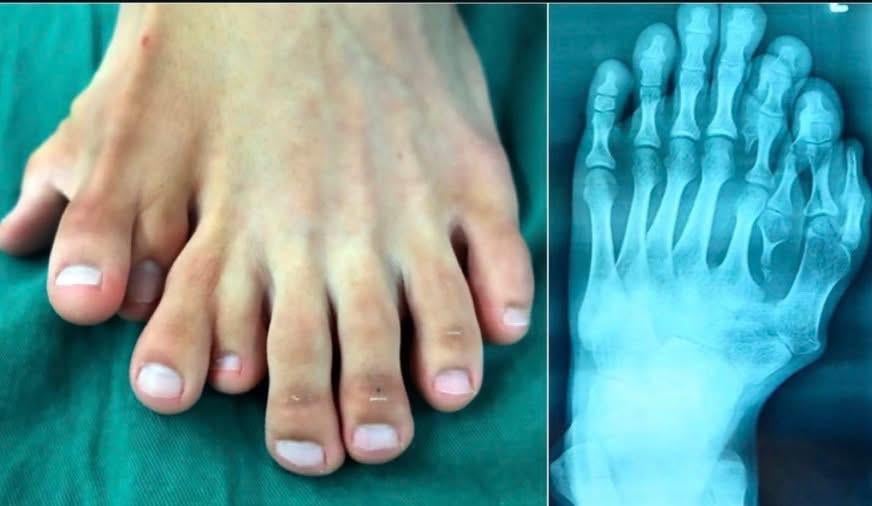
Rare case of (Mirror Foot )polydactyly (with X-ray). It’s like his foot tried to clone itself.
Title: Mirror Foot Polydactyly: A Rare Case Where the Foot Appeared to “Clone Itself”
Imagine a foot trying to replicate itself in perfect symmetry—an extra set of toes, duplicated bones, and an uncanny mirrored appearance. This isn’t science fiction; it’s a rare congenital condition known as mirror foot polydactyly, a mesmerizing anomaly that challenges medical norms. In this article, we explore this unique phenomenon, its causes, diagnosis (with striking X-ray imagery), and treatment options.
What Is Mirror Foot Polydactyly?
Mirror foot polydactyly, also called duplication of the foot or lateral ray polydactyly, is an extremely rare congenital deformity where the foot develops extra toes—often in a symmetrical, mirrored pattern—alongside duplicated bones (metatarsals and phalanges). Unlike simple polydactyly (a single extra digit), mirror foot involves duplication of entire rays of the foot, creating an intricate, split-like appearance.
Key features include:
- 7+ toes, arranged symmetrically around a central axis.
- Duplicated midfoot and forefoot bones, mimicking a reflection.
- Functional challenges: Balance issues, difficulty fitting shoes, and gait abnormalities.
Rarely documented, mirror foot affects fewer than 1 in 100,000 live births, making it a medical curiosity.
The X-Ray Revelation
X-rays of mirror foot polydactyly reveal a surreal, symmetrical duplication of bones—as if the foot attempted to clone itself. The central axis of the foot often splits into mirrored halves, with duplicated metatarsals and phalanges fanned outward.

Diagnostic Tools:
- X-rays: Identify bone duplication patterns.
- MRI/CT Scans: Assess soft tissue and cartilage involvement.
- Genetic Testing: Rule out syndromes like Pallister-Hall or Greig cephalopolysyndactyly.
Causes: Why Does This Happen?
Mirror foot polydactyly stems from abnormal limb development during weeks 4–7 of pregnancy. Genetic mutations—particularly in the GLI3 gene—disrupt signaling pathways that regulate digit formation, leading to overduplication. While sometimes isolated, it may link to broader syndromes:
- Genetic factors: Autosomal dominant mutations.
- Environmental triggers: Maternal diabetes or vitamin deficiencies (less common).
Treatment: Correcting the “Cloned” Foot
Surgery is the primary treatment, tailored to restore function and aesthetics. Goals include:
- Removing non-functional digits (usually the outermost toes).
- Rebuilding the foot’s arch and weight-bearing structure.
- Aligning bones/tendons for natural movement.
Timing: Surgery is typically delayed until ages 1–2 when bones are more developed but adaptable. Post-op physical therapy ensures mobility and strength.
Living with Mirror Foot Polydactyly
While rare, early surgical intervention often yields excellent outcomes. Modern techniques enable patients to walk, run, and lead active lives with minimal limitations. However, psychological support is crucial to help children cope with self-image concerns.
FAQs
Q: How is mirror foot different from regular polydactyly?
A: Standard polydactyly adds 1–2 extra toes. Mirror foot duplicates entire foot rays in a symmetrical pattern.
Q: Can this condition be detected before birth?
A: Yes. Fetal ultrasounds may reveal limb abnormalities by the second trimester.
Q: Does mirror foot affect both feet?
A: Usually unilateral (one foot), but bilateral cases have been reported.
Q: Is recurrence likely in future pregnancies?
A: If linked to a genetic cause, recurrence risk is 25–50%. Genetic counseling is advised.
Conclusion
Mirror foot polydactyly is a fascinating anomaly that showcases the complexities of human development. Thanks to advanced imaging (like X-rays) and surgical techniques, patients today can overcome functional hurdles and embrace life with confidence. For families facing this diagnosis, early collaboration with pediatric orthopedic specialists is key to unlocking a brighter future.
Keywords for SEO: Mirror foot polydactyly, mirror foot X-ray, polydactyly treatment, extra toes, congenital foot deformity, duplicated foot, rare polydactyly types, GLI3 gene mutation.