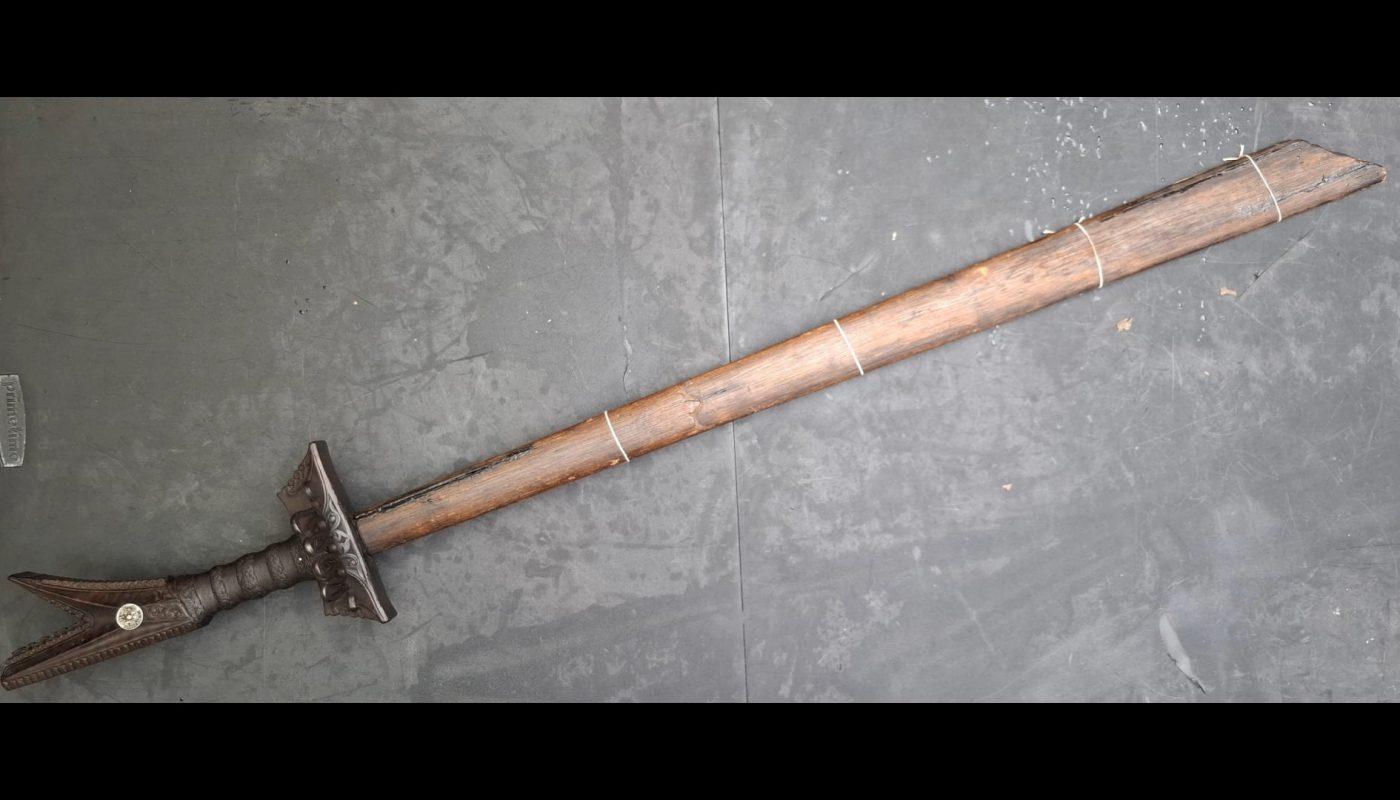
An antique sword that literally cuts right out of its scabbard: the Moro Kampilan.
The Moro Kampilan: The Antique Sword That Literally Cuts Right Out of Its Scabbard
When it comes to legendary blades steeped in history and cultural significance, few weapons capture the imagination like the Moro Kampilan—a formidable Filipino sword renowned not only for its lethal design but for the extraordinary way it interacts with its scabbard. Unlike typical sheathed swords, the Kampilan’s scabbard is engineered in a way that allows the blade to literally cut itself free when drawn, a feature that showcases the ingenuity of its creators. This article dives into the origins, design, and legacy of this iconic weapon wielded by the fearless Moro warriors of the Philippines.
A Blade Born of Battle: The Kampilan’s Origins
The Kampilan hails from the southern Philippines, where it was forged and wielded by the Moro people—a collective term for Muslim-majority ethnic groups like the Maguindanao, Maranao, and Tausug. These warriors resisted Spanish colonization for centuries, and the Kampilan became a symbol of defiance, status, and martial prowess.
Historical records suggest the sword dates back to at least the 16th century, where it featured prominently in raids, ceremonies, and legendary battles. Its size and appearance made it instantly recognizable: often measuring over 40 inches long, it dwarfed most Southeast Asian blades and was reserved for chiefs and skilled fighters.
Anatomy of a Warrior’s Weapon: Design & Features
The Kampilan’s imposing structure is a testament to its dual role as a functional weapon and a ceremonial object:
-
The Blade: Single-edged, narrow at the hilt, and widening dramatically into a flared tip, the blade often culminated in a bifurcated (split) point resembling a crocodile’s mouth—a nod to local folklore. This design maximized slashing power, capable of cleaving through armor and limbs in close combat.
-
The Hilt & Pommel: Carved from hardwood or bone, the hilt was long enough for two-handed use. Its crowning feature was a distinctive pommel shaped like a jawless creature (often a naga or dragon), symbolizing protection and ferocity.
-
The Scabbard (**Sarong): Made from lightweight wood and wrapped in rattan or metal bands, the scabbard’s genius lies in its construction. Unlike tightly fitted sheaths, the Kampilan’s scabbard features minimal internal contact**, relying instead on friction from the hilt’s base and exterior bindings. When drawn with force, the blade slices through the loosely bound scabbard, appearing to “cut itself free.”
Why the “Self-Cutting” Scabbard Was Revolutionary
This seemingly peculiar design served critical practical purposes:
- Speed in Combat: In the heat of battle, warriors could unsheathe the Kampilan swiftly without fumbling. The blade’s near-effortless release gave fighters a crucial first-strike advantage.
- Durability: The minimal contact between blade and scabbard reduced wear, preserving the edge.
- Psychological Impact: The dramatic act of drawing the sword—with the scabbard splitting audibly—intimidated enemies and bolstered the wielder’s aura of invincibility.
Cultural Symbolism & Legacy
Beyond warfare, the Kampilan held deep spiritual meaning:
- Status: Only elite warriors and leaders carried the Kampilan, often adorned with intricate carvings, tassels, or hair taken from fallen foes.
- Mythology: Folk tales linked the sword to divine favor, with some believing it could channel ancestral spirits.
- Spanish Colonial Encounters: Spanish chroniclers documented the dread the Kampilan inspired, dubbing it the “sword that breaks scabbards” (espada que rompe vainas).
Today, surviving antique Kampilans are prized by collectors and museums. However, their scarcity (due to battles and tropical decay) makes authentic pieces rare. Modern reproductions honor their legacy in Filipino martial arts (Kali and Eskrima) and cultural festivals.
Collecting Kampilans: A Note for Enthusiasts
If you’re seeking an authentic Kampilan:
- Examine Craftsmanship: Look for hand-forged blades with variance in texture—machine-made reproductions lack irregularities.
- Materials: Hilts should be carved from native hardwoods like kamagong (ironwood), and scabbards often feature rattan bindings.
- Provenance: Documentation or tribal markings boost authenticity.
- Beware of Fakes: Many “antique” Kampilans are modern replicas artificially aged. Consult experts before purchasing.
Conclusion: A Sword That Defies Convention
The Moro Kampilan is more than a weapon—it’s a masterpiece of engineering and cultural pride. Its “self-cutting” scabbard highlights the resourcefulness of Moro warriors, transforming a simple act like drawing a blade into a statement of power. As interest in Southeast Asian antiquities grows, the Kampilan remains a shining example of how tradition, art, and lethal utility can converge in a single, unforgettable design.
Want to see a Kampilan in person? Visit museums specializing in Philippine history or connect with trusted dealers in ethnographic arms. Its story is carved not just into steel and wood, but into the soul of a resilient people.
Target Keywords: Moro Kampilan, antique Filipino sword, Kampilan scabbard, Moro warrior weapons, Philippine edged weapons, self-cutting sword, kampilan sword history.