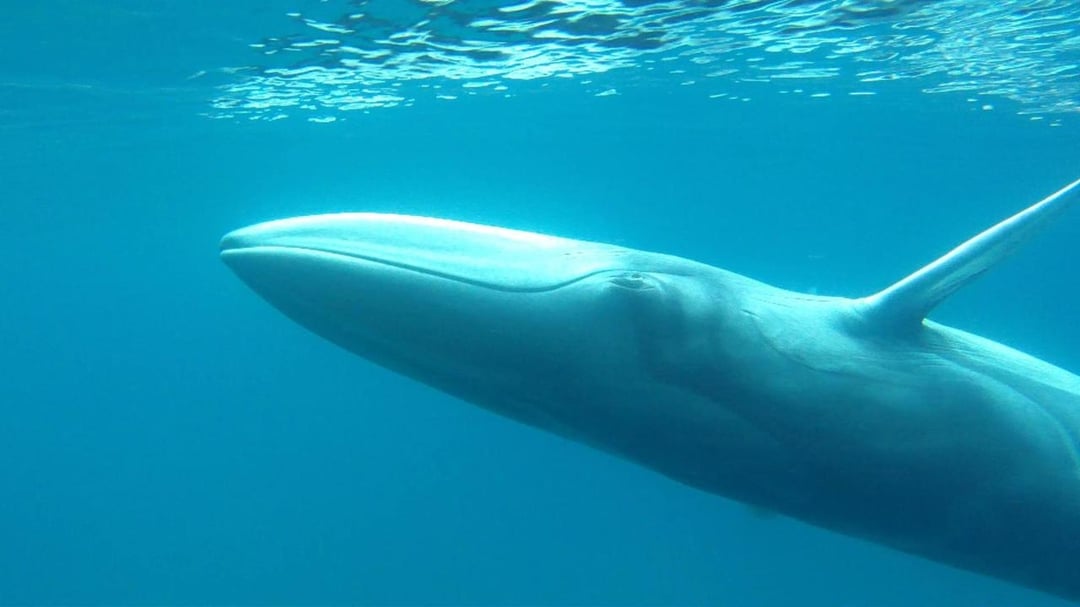
The Omura’s Whale (Balaenoptera omurai), discovered in 2003 and rarely seen in the wild, is a small, slender baleen whale known for its asymmetrical markings along the jaw and throat. Very little is known about its behavior, population, or habits.
Meta Title: Omura’s Whale: Unveiling the Secrets of the Ocean’s Most Elusive Baleen Giant
Meta Description: Discover the mysterious Omura’s whale, a rare baleen species first identified in 2003. Learn about its asymmetrical markings, elusive behavior, and ongoing conservation efforts.
The Enigmatic Omura’s Whale: Unveiling the Mystery of the Ocean’s Rarest Baleen Giant
Introduction
Imagine a whale so elusive that scientists didn’t confirm its existence until the 21st century. Meet the Omura’s whale (Balaenoptera omurai), a small, slender baleen whale discovered in 2003 and rarely seen in the wild. Named after Japanese cetologist Hideo Omura, this species remains one of the ocean’s greatest enigmas. With its asymmetrical facial markings and ghost-like presence, the Omura’s whale captivates marine biologists and conservationists alike.
The Groundbreaking Discovery of the Omura’s Whale
The Omura’s whale was first identified in 2003 when DNA analysis of whale specimens collected decades earlier revealed a genetic distinction from Bryde’s whales, their closest relatives. Initially misclassified, this rare whale species was only recognized after:
- Genetic profiling of specimens from the 1970s.
- Examination of stranded whales in the Indo-Pacific.
- Later photographic evidence from wild sightings.
This discovery shook the marine biology world, proving that even in modern times, large marine mammals can remain hidden in plain sight.
Physical Characteristics: Nature’s Asymmetrical Masterpiece
The Omura’s whale stands out with its unique anatomy:
- Size: Reaches 33–38 feet (10–11.5 meters) – smaller than most baleen whales.
- Body: Sleek, streamlined build with a narrow, hooked dorsal fin.
- Markings: Jaw-dropping asymmetrical coloration:
- Right side: Dark jaw with white/light gray streaks.
- Left side: Mostly dark with a contrasting white patch near the eye.
- Other traits include 80–90 ventral pleats for filter-feeding and asymmetrical pigmentation on its baleen plates.
These markings are key identifiers for researchers documenting this rare whale species in the wild.
Behavior and Habitat: The Ultimate Marine Mystery
Little is known about the Omura’s whale due to its scarcity, but emerging research reveals intriguing clues:
- Habitat: Prefers tropical/subtropical waters, with sightings in the Indian, Pacific, and Atlantic Oceans.
- Feeding: Likely filter-feeds on krill or small fish using lunge-feeding tactics.
- Social Patterns: Usually solitary or in pairs, though small groups (6–7 whales) were observed off Madagascar.
- Reproduction: Breeding habits remain unknown, but calves may be born in warm waters during low-activity seasons.
A 2015 study off Madagascar (the first-ever field research) documented breaching, vocalizations, and mother-calf pairs – groundbreaking insights into this elusive marine mammal.
Why Is the Omura’s Whale So Rarely Seen?
This ocean enigma evades human detection for several reasons:
- Remote Habitats: Favors deep, offshore waters far from coastlines.
- Cryptic Appearance: Resembles Bryde’s whales at a glance, leading to misidentification.
- Population Size: Unknown, but likely small and fragmented.
- Low Profile: Avoids ships and rarely exhibits dramatic surface behaviors like humpbacks.
Ongoing Research and Conservation Challenges
Despite its 2003 discovery, the Omura’s whale remains Critically Data Deficient on the IUCN Red List. Key obstacles include:
- Funding Gaps: Research focuses on higher-profile whale species.
- Detection Difficulties: Requires specialized tech (eDNA, drones, hydrophones).
- Threats: Potential risks from shipping noise, plastic pollution, and climate-driven habitat shifts.
Hope on the Horizon:
- Acoustics studies are decoding their unique vocalizations.
- Citizen science initiatives (e.g., Madagascar Ecowhale Alliance) engage local communities in sightings reporting.
- They’re now protected under CITES Appendix II, banning international trade.
Why This Discovery Matters for Marine Conservation
The Omura’s whale symbolizes how much we still don’t know about ocean life. Protecting this rare whale species benefits entire marine ecosystems by:
- Preserving biodiversity hotspots.
- Informing policies on shipping lanes and fishing quotas.
- Highlighting the need for open-ocean conservation.
Join the Quest to Unlock the Omura’s Whale’s Secrets
Every sighting, photo, or strandings report brings us closer to understanding this mysterious whale. If you’re near tropical waters, keep your eyes peeled for a small baleen whale with asymmetrical markings – you might just witness history.
Frequently Asked Questions (FAQs)
Q: How was the Omura’s whale discovered?
A: Through DNA analysis of archived specimens in 2003, previously mistaken for Bryde’s whales.
Q: What makes Omura’s whales different from Bryde’s whales?
A: Smaller size, distinct asymmetrical jaw coloring, and genetic differences.
Q: Are Omura’s whales endangered?
A: Unknown due to scarce data, but likely threatened by human activities.
Q: Where can I see an Omura’s whale?
A: Rarely sighted, but confirmed in waters off Madagascar, Japan, and Brazil.
Alt Text for Images (Recommendations):
- Image 1: “Omura’s whale surfacing, showcasing asymmetrical jaw markings.”
- Image 2: “Comparison chart: Omura’s whale vs. Bryde’s whale size and features.”
- Image 3: “Drone footage of Omura’s whale mother and calf off Madagascar.”
Share this article to spread awareness about Earth’s most mysterious whale! 🌊🐋 #OmurasWhale #MarineConservation #OceanMysteries
Target Keywords: Omura’s whale, rare whale species, baleen whale, whale discovery 2003, asymmetrical whale markings, elusive marine mammals, whale conservation, Balaenoptera omurai.
By blending scientific intrigue with conservation urgency, this article aims to rank for niche and educational searches while deepening public interest in this enigmatic cetacean.