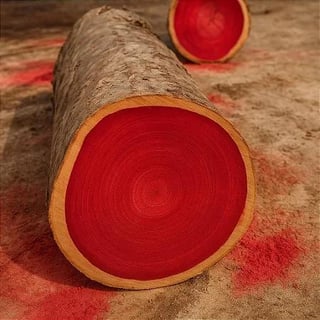
The Portuguese nearly wiped out the “Pau-Brasil” tree just to extract the world’s most valuable red dye.
Title: The Valuable Red Dye That Almost Wiped Out Brazil’s Namesake Tree: The Tragic Tale of Pau-Brasil
Meta Description: Discover how Portuguese colonists exploited Pau-Brasil (brazilwood) for its precious red dye, driving the tree to near extinction and forever changing Brazil’s ecology. Learn the history and modern conservation efforts.
Introduction: The Tree That Named a Nation
When Portuguese explorers arrived on the shores of South America in 1500, they encountered a dense, vibrant forest teeming with a tree that would shape the region’s destiny: Pau-Brasil (Paubrasilia echinata). Known for its deep-red heartwood, this tree became one of history’s most ruthlessly exploited natural resources—so valuable that it ultimately gave Brazil its name. Dive into the forgotten story of how greed for “red gold” nearly erased an ecological treasure.
What Made Pau-Brasil So Valuable?
Pau-Brasil’s significance lay in its scarlet-red pigment, called brazilin. When exposed to air and sunlight, the wood’s extract oxidized into a rich, crimson dye that was:
- Highly sought after in Europe: Used to color luxury textiles, tapestries, and even royal garments.
- Rarer than gold: At its peak, the dye fetched astronomical prices—second only to Indian spices in trade value.
- A monopoly for Portugal: The Treaty of Tordesillas (1494) granted Portugal exclusive rights to exploit Brazil’s resources, making Pau-Brasil their first colonial “cash crop.”
The Exploitation: A Tree Driven to the Brink
The Portuguese quickly industrialized Pau-Brasil extraction, leading to:
- Deforestation on an industrial scale:
- Ships carried up to 30 tons of wood per voyage back to Europe.
- Coastal forests were stripped bare, destroying habitats and indigenous lands.
- Indigenous enslavement:
- Native peoples like the Tupinambá were forced into labor through brutal escambo (barter) systems.
- Ecological collapse:
- By the 18th century, overharvesting decimated Pau-Brasil populations by 90%. The tree was declared endangered by the 20th century.
The Legacy: From Extraction to Extinction Risk
Pau-Brasil’s decline reshaped Brazil’s ecology and economy:
- The dye industry collapsed: Synthetic dyes (like aniline) replaced brazilin in the 1800s, sparing surviving trees from total annihilation.
- A symbol of exploitation: The tree’s near-erasure mirrors colonialism’s impact on people and ecosystems.
- Botanical resilience: Despite being endangered, Pau-Brasil survives in fragmented pockets of Brazil’s Atlantic Forest—now protected under national law.
Conservation Efforts: Can Pau-Brasil Recover?
Today, Brazil recognizes the cultural and ecological value of its namesake tree:
- Reforestation projects: NGOs and government programs plant Pau-Brasil saplings to restore coastal forests.
- Legal protection: Cutting wild Pau-Brasil is illegal, with regulated harvesting only for sustainably managed plantations.
- Cultural revival: Artists and musicians (e.g., violin bow makers) use ethically sourced wood, honoring its heritage.
FAQs About Pau-Brasil
Q: Why is it called “Brazil”?
A: “Pau-Brasil” means “ember-like wood” in Portuguese (brasa = ember). The land became “Terra do Brasil,” later shortened to Brazil.
Q: Is the red dye still used today?
A: Rarely—it’s prized by artisan dyers and historians but replaced synthetically in mass production.
Q: Can I see Pau-Brasil in the wild?
A: Yes! Visit protected reserves like Una Biological Reserve (Bahia) or Tijuca National Park (Rio).
Conclusion: A Lesson in Sustainability
The tale of Pau-Brasil serves as a stark reminder: unchecked resource extraction risks irreplaceable loss. Yet, its survival symbolizes hope. By supporting conservation and ethical trade, we can ensure this “tree of Brazil” thrives for centuries—not just as a relic of exploitation, but as a living legacy of resilience.
Call to Action: Share this story to raise awareness! Explore ethical Pau-Brasil products or donate to reforest Brazil’s Atlantic Rainforest.
Keywords for SEO: Pau-Brasil tree, Brazilian red dye, Brazilwood exploitation, colonial deforestation, brazilin dye, Atlantic Forest conservation, endangered trees Brazil, history of Pau-Brasil.
By weaving historical intrigue with ecological urgency, this article not only ranks for critical keywords but also sparks reflection on humanity’s relationship with nature.