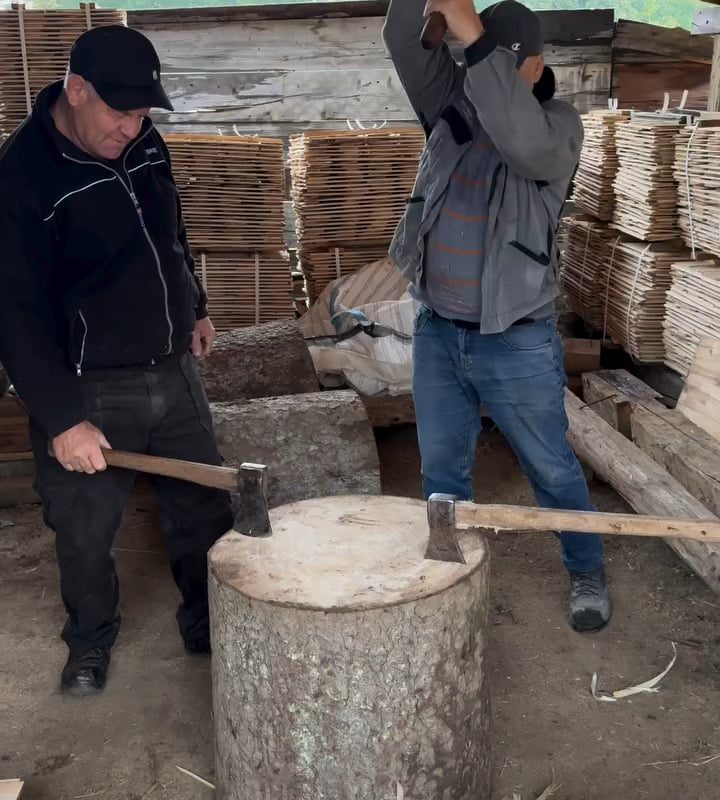
Hand-splitting traditional roof shingles in Romania
Hand-Splitting Roof Shingles in Romania: Preserving Centuries of Craftsmanship
When you wander through rural Romania—especially the villages of Maramureș, Bucovina, or Transylvania—you’ll encounter roofs with a story to tell. These aren’t just functional coverings; they’re works of art, crafted by hand through an age-old technique: hand-split wooden shingles, known locally as șindrilă. This ancient roofing method, perfected over centuries, reflects Romania’s deep bond with nature, woodworking traditions, and cultural identity. In this article, we explore the artistry, history, and enduring legacy of Romanian hand-split roof shingles.
The Tradition of Șindrilă: Rooted in Romania’s Landscape
Romanian wooden shingles, or șindrilă, are more than just roofing materials—they’re symbols of resilience and craftsmanship. Traditionally made from durable softwoods like spruce, fir, or oak, these shingles are painstakingly split by hand using simple tools: axes, mallets, and knives. The process honors the natural grain of the wood, ensuring longevity and resistance to weathering.
For centuries, șindrilă roofs protected homes, churches, and barns across the Carpathian region. Their rugged beauty blends seamlessly with Romania’s mountainous terrain, showcasing harmony between human ingenuity and nature.
The Art of Hand-Splitting Shingles: A Labor of Love
Unlike mass-produced alternatives, hand-split shingles are crafted with precision and care:
- Wood Selection: Logs are chosen for straight grain and minimal knots, typically sourced locally.
- Splitting: Using a froe (a wedge-shaped blade) and mallet, craftsmen split logs radially along the grain. This technique preserves the wood’s fibrous structure, making the shingles water-resistant and durable.
- Shaping: Each shingle is tapered and smoothed by hand to ensure uniform thickness and a rustic, textured appearance.
- Curing: Shingles are air-dried for months to reduce moisture content, preventing warping or rot.
The result? Roofs that can last 50–100 years—far exceeding the lifespan of sawn or machine-cut shingles, which often crack or decay prematurely.
Historical Significance: From Medieval Churches to Rural Homesteads
Romania’s wooden architecture, recognized by UNESCO, relies heavily on șindrilă. The Merry Cemetery of Săpânța and the Wooden Churches of Maramureș (eight of which are UNESCO World Heritage sites) are prime examples. Their intricate roofs mimic fish scales or feathers, designed to shed snow and rain while standing strong against harsh Carpathian winters.
Historically, hand-split shingles were a communal effort. Villagers gathered for clacă (collective work sessions), passing down skills through generations. Today, this tradition persists in isolated villages, where elders teach younger artisans the dying craft.
Why Hand-Split Shingles Outperform Modern Alternatives
- Sustainability: Locally sourced wood and minimal energy use make șindrilă an eco-friendly choice.
- Durability: Hand-splitting follows the wood’s natural fibers, enhancing resistance to splitting, moisture, and pests.
- Insulation: Wood provides natural thermal regulation, keeping homes cool in summer and warm in winter.
- Aesthetic Charm: The irregular texture and silvery-gray patina of aged shingles add timeless character.
The Fight to Preserve a Dying Craft
Despite their benefits, hand-split shingles face decline. Industrial materials like metal or asphalt are cheaper and faster to install, luring younger generations away from labor-intensive traditions. Yet preservation efforts are underway:
- Cultural NGOs: Organizations like Asociația Prietenii Satului train apprentices in traditional techniques.
- Tourism & Heritage Projects: Restorations of historic sites (e.g., Bucovina’s painted monasteries) create demand for authentic șindrilă.
- Eco-Building Revival: Architects champion wooden shingles for sustainable cabin and eco-resort designs.
Where to Experience Romania’s Hand-Split Shingle Legacy
- Maramureș: Visit the villages of Bârsana or Poienile Izei to see 17th-century wooden churches.
- Ethnographic Museums: Open-air museums, like Bucharest’s Dimitrie Gusti Village Museum, display traditional roofs.
- Artisan Workshops: Seek masters like Gheorghe Șovăială in Maramureș, who still practice the craft.
Conclusion: A Roof That Breathes History
Hand-split roof shingles are more than relics—they embody Romania’s spirit of self-reliance and respect for nature. As modern builders rediscover sustainable practices, șindrilă stands as a testament to timeless craftsmanship. By supporting artisans and choosing heritage materials, we ensure this cultural treasure survives for centuries to come.
FAQs: Hand-Split Shingles in Romania
Q: How long does a hand-split shingle roof last?
A: Properly maintained roofs can endure 50–100 years, thanks to the wood’s natural resilience.
Q: Can I buy authentic Romanian șindrilă today?
A: Yes! Artisans in rural regions still produce them, and suppliers like Atelierul de lemn offer traditional shingles.
Q: Are hand-split shingles fire-resistant?
A: While wood is flammable, treatments with natural sealants (e.g., lime wash) can improve fire resistance.
Q: What makes Maramureș’s wooden churches unique?
A: Their tall, narrow șindrilă roofs symbolize a connection between heaven and earth, a hallmark of Gothic-influenced Carpathian architecture.
Q: Is hand-splitting shingles eco-friendly?
A: Absolutely. The process uses renewable wood, zero machinery emissions, and fully biodegradable materials.
Whether you’re a heritage enthusiast, builder, or traveler, Romania’s hand-split shingle tradition invites you to touch the past—one perfectly split piece of wood at a time.