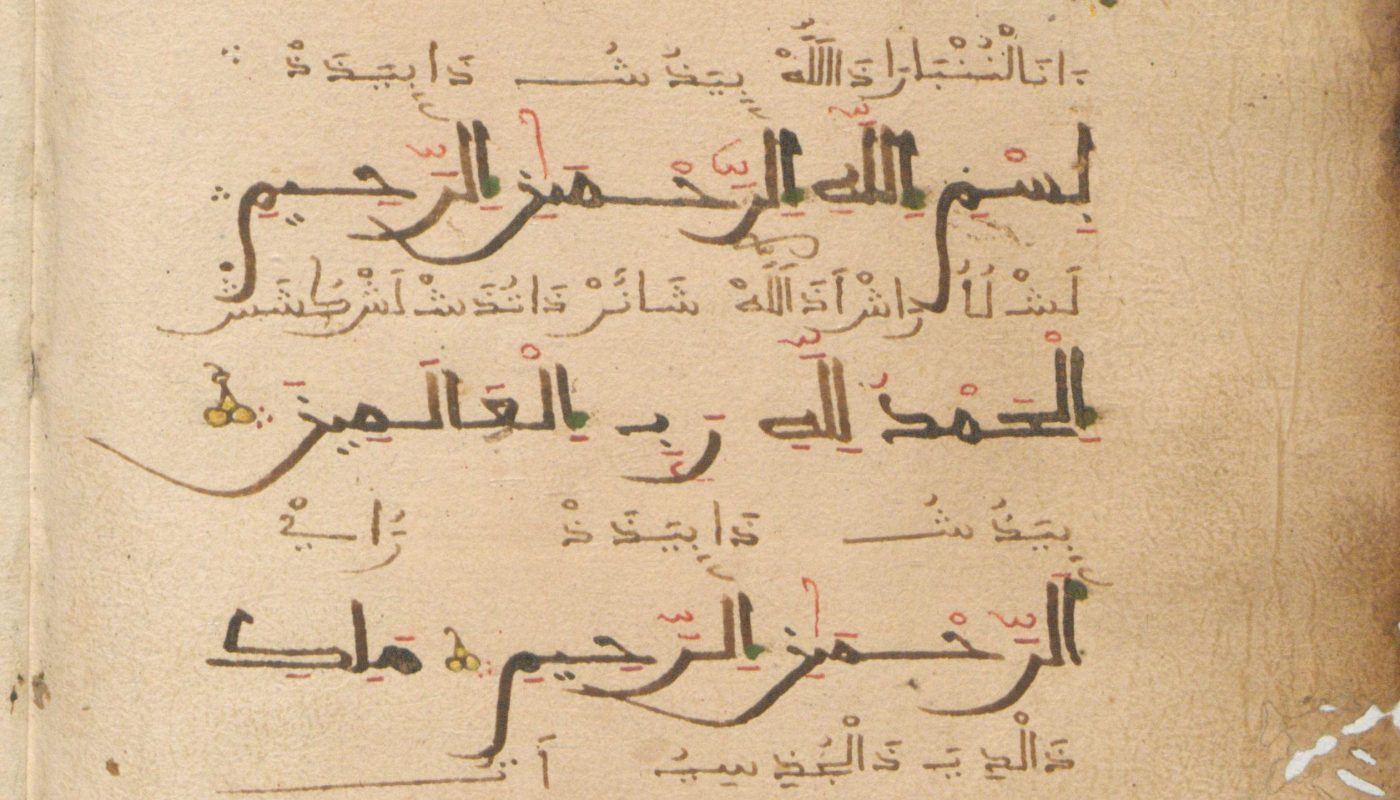
A manuscript from Muslim Spain containing AL-fathiha in Arabic and a translation in Spanish written in the Arabic script on top of each line
Title: Unveiling a Cultural Treasure: The Aljamiado Manuscript of Al-Fatiha from Muslim Spain
Introduction
In the vibrant crossroads of medieval Spain, where Islamic, Christian, and Jewish traditions intertwined, a remarkable manuscript emerged—a testament to linguistic ingenuity and cultural resilience. This artifact, hailing from Muslim Spain (Al-Andalus), features the Quran’s Opening Chapter, Al-Fatiha, in its original Arabic, adorned with a Spanish translation meticulously inscribed in Arabic script above each line. This extraordinary document, part of the Aljamiado literary tradition, bridges faith, language, and history, offering a window into the lives of Muslims navigating a shifting Iberian landscape. In this article, we explore the manuscript’s origins, significance, and enduring legacy.
The Historical Context: Al-Andalus and Cultural Synthesis
Between the 8th and 15th centuries, Al-Andalus flourished as a beacon of intellectual exchange, where scholars advanced fields like astronomy, medicine, and linguistics. Despite the eventual Christian Reconquista, Muslim communities (Mudéjars and later Moriscos) preserved their identity under Castilian rule. This manuscript likely originated in the 15th or 16th century, a time when Arabic literacy declined, yet devotional texts remained central to clandestine religious practice.
Key Insight: The Spanish translation in Arabic script (Aljamiado) reflects both adaptation—to a Romance-speaking audience—and resistance, safeguarding Islamic knowledge despite growing persecution.
What is Aljamiado? The Art of Hidden Language
Aljamiado (from Arabic ʿajamiyah, meaning “non-Arabic”) refers to texts in Iberian Romance languages written in Arabic script. For Moriscos, forbidden from openly practicing Islam after 1492, this was a lifeline. By transcribing Spanish prayers into Arabic characters, they maintained spiritual continuity while obscuring content from Christian authorities.
The Manuscript’s Structure:
- Arabic Original: Al-Fatiha (The Opening), Islam’s most recited chapter, appears in classical Arabic.
- Spanish Translation: A line-for-line vernacular interpretation, written in Arabic script above the sacred text.
- Purpose: To aid understanding for non-Arabic speakers while preserving the sanctity of the Quranic verses.
Linguistic Significance: Tracing Spanish Through Arabic Script
This manuscript isn’t just a religious relic—it’s a linguistic time capsule. The Spanish used is an early form, infused with Mozarabic (Romance) elements and borrowings from Arabic. For scholars, it illuminates:
- Language Evolution: How Spanish transitioned from Vulgar Latin, shaped by Arabic vocabulary (e.g., aceite from azzayt, “olive oil”).
- Cultural Identity: The deliberate use of Arabic script symbolizes a connection to Islamic heritage, even as the language itself evolved.
Example Translation:
- Arabic Line: بِسْمِ ٱللّٰهِ ٱلرَّحْمٰنِ ٱلرَّحِيمِ
- Aljamiado Spanish: “En el nombre de Allah, el Clemente, el Misericordioso” (In the name of Allah, the Most Gracious, the Most Merciful).
The Manuscript’s Journey: From Secrecy to Scholarly Spotlight
Many Aljamiado manuscripts were hidden in walls or buried to avoid destruction during the Spanish Inquisition. Rediscovered in the 19th–20th centuries, they reshaped understandings of Morisco life. Today, this Al-Fatiha manuscript resides in archives like the Biblioteca Nacional de España or the Escorial Library, studied for its:
- Theological Depth: How marginalized communities reinterpreted core Islamic tenets.
- Artistry: Ornate calligraphy and geometric motifs, blending Andalusian aesthetics with devotional purpose.
Why This Manuscript Matters Today
- Interfaith Dialogue: It embodies coexistence—a sacred Islamic text filtered through Spanish linguistic roots.
- Heritage Preservation: Highlights efforts to digitize and conserve endangered Aljamiado works.
- Relevance to Modern Spain: Sparks conversations about the nation’s multicultural past amid contemporary debates on identity.
SEO Keywords: Aljamiado manuscript, Muslim Spain Quran, Arabic Spanish translation, Al-Fatiha Al-Andalus, Morisco cultural heritage, Aljamiado texts, historical Islamic manuscripts.
Conclusion: Echoes of Al-Andalus in the Modern World
This Aljamiado manuscript is more than a relic—it’s a narrative of resilience, creativity, and the unbroken thread of faith. As scholars decode its lines, it reminds us that languages and scripts are not mere tools, but vessels of memory. In a world often divided, such artifacts underscore humanity’s capacity to adapt while honoring tradition.
Call to Action: Explore digitized collections of Aljamiado manuscripts or visit Spanish cultural institutes to witness this fusion of Arabic and Romance heritage firsthand.
Meta Description: Discover an Aljamiado manuscript from Muslim Spain, featuring Al-Fatiha in Arabic with a Spanish translation in Arabic script. Explore its history, linguistic impact, and cultural legacy.