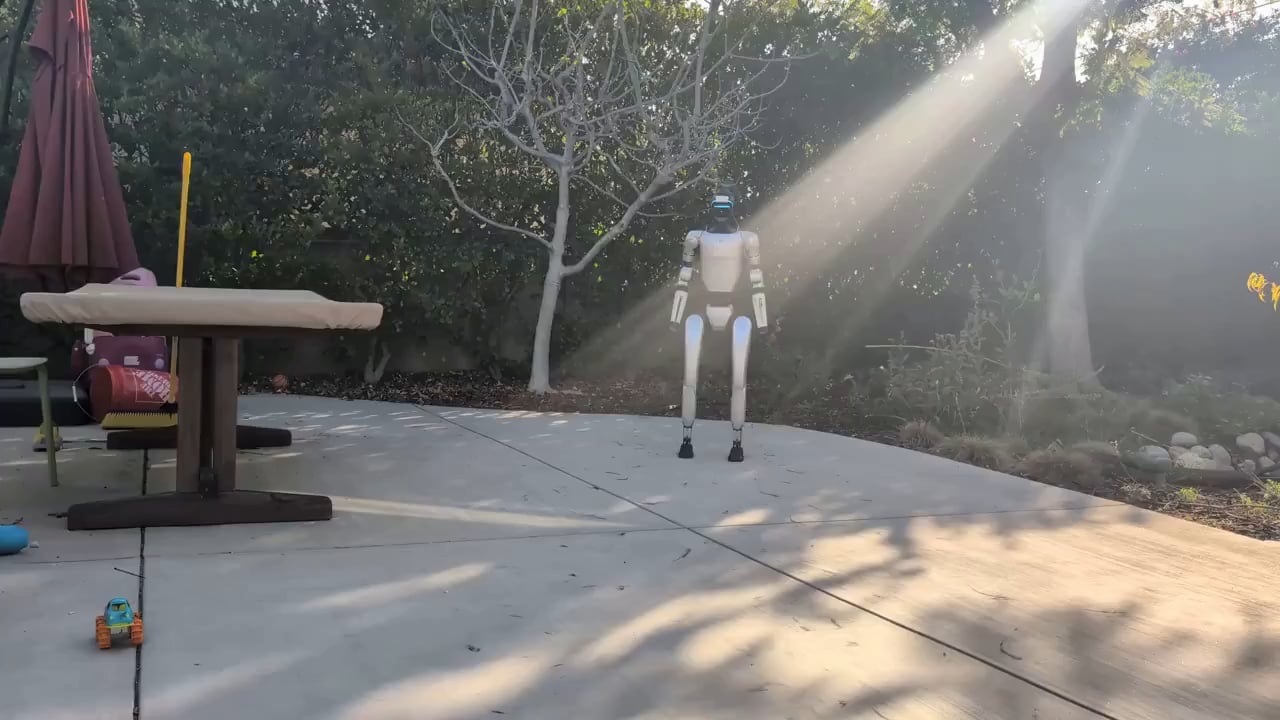
Robotics engineer posted this to make a point that robots are “faking” the humanlike motions – it’s just a property of how they’re trained. They’re actually capable of way weirder stuff and way faster motions.
The Robot Charade: Why Human-Like Movements Are Just the Tip of the Iceberg
The Illusion of the Dancing Robot
You’ve seen the videos: humanoid robots gracefully pouring coffee, walking across labs, or bowing with eerie precision. These demonstrations flood social media, reinforcing the idea that robots are evolving to mimic humans. But a robotics engineer recently pulled back the curtain with a provocative claim: These human-like motions are theater. Robots aren’t “learning” to move like us—they’re being trained to perform a convincing act.
The Training Deception
- It’s Not Evolution, It’s Constraint: When engineers teach robots fluid movements, they’re often imposing human-like patterns for relatability and safety—not because it’s optimal.
- The Speed They’re Hiding: Industrial robots in factories operate at blinding speeds (think 10x faster than human reflexes) but deliberately slow down for public demos to avoid triggering fear.
- “Weird” as the Default: Without training filters, robots default to movements humans find unsettling—hyper-quick joint rotations, multi-axis spins, or insect-like limb coordination.
Why the Dog-and-Pony Show?
Human Comfort Comes First
Robotics companies prioritize approachability. A robot folding laundry with human-like hesitation feels less threatening than one performing the task in a blur of motion. This “uncanny valley” avoidance is strategic:
- Public Trust: Jerky, alien movements trigger discomfort. Smooth, familiar motions make robots appear predictable and safe.
- Media Hype: Videos of robots “struggling” to open doors or “learning” to walk generate viral engagement, despite being choreographed simplicity.
The Raw Potential They’re Suppressing
Behind the scenes, engineers see a different reality:
| Human-Like Demo | Untrained Robot Capability |
|——————|—————————|
| Slow, deliberate hand movements | Microsecond-speed actuator adjustments |
| Awkward but “cute” stumbling | Dynamic self-recovery via uncontrolled flailing (mathematically optimal!) |
| Linear walking paths | Non-Euclidean movement paths exploiting 360° joint rotation |
These untrained behaviors aren’t flaws—they’re evidence of machines operating outside biological limits. A factory robot arm could solve a Rubik’s Cube in 0.38 seconds, while a humanoid bot could sprint at 40 mph—if stability weren’t prioritized over capability.
The Dangerous Myth of “Human-Likeness”
The obsession with anthropomorphism stifles innovation. Robots don’t need to bend knees to lift objects or “hesitate” to appear thoughtful. These are performative constraints, masking three radical truths:
-
Robots Excel at the “Weird”:
- They can teleport objects by moving too fast for human eyes to track.
- Spinning on 7 axes simultaneously isn’t a bug—it’s a hyper-efficient way to reposition.
-
Speed Sacrificed for Spectacle:
Industrial bots like FANUC’s M-2000iA/1700L can fling 1.7-ton cars like toys but move cautiously in public demos to avoid frightening viewers. -
Alien Logic > Human Logic:
Robots compute movement paths that ignore human anatomical logic. Why “step” over debris when you can cartwheel across it using momentum-driven chaos control?
Free the Machines: A Call to Embrace the Strange
The future isn’t C-3PO—it’s a drone morphing mid-flight or a rescue bot slithering like an eel through rubble. By fetishizing human-like grace, we’re overlooking superior alternatives:
- Bio-Inspired ≠ Human-Inspired: Octopus-inspired arms can bend in infinite directions; spider-like bots climb walls without suction or magnets.
- Speed as a Superpower: Medical robots could perform surgeries in milliseconds if safety protocols allowed (researchers are already testing lasers for ultra-fast incisions).
As one engineer quipped: “We’re teaching robots ballet when they’re born to breakdance.”
The Lesson: Next time you see a robot “learning” to walk, remember—you’re watching a carefully directed performance. The real show happens when the training wheels come off.
Interested in the untapped potential of robotics? Subscribe for deep dives into how de-humanizing robots could revolutionize manufacturing, medicine, and space exploration.