Fingal’s cave Scotland
Meta Title: Fingal’s Cave Scotland: Mystical Geology, Legends, & Visiting Guide
Meta Description: Explore Fingal’s Cave Scotland – a volcanic marvel, Celtic legend, and inspiration for art. Learn how to visit, its history, and nearby attractions.
Fingal’s Cave Scotland: A Geological Masterpiece Steeped in Myth & Music
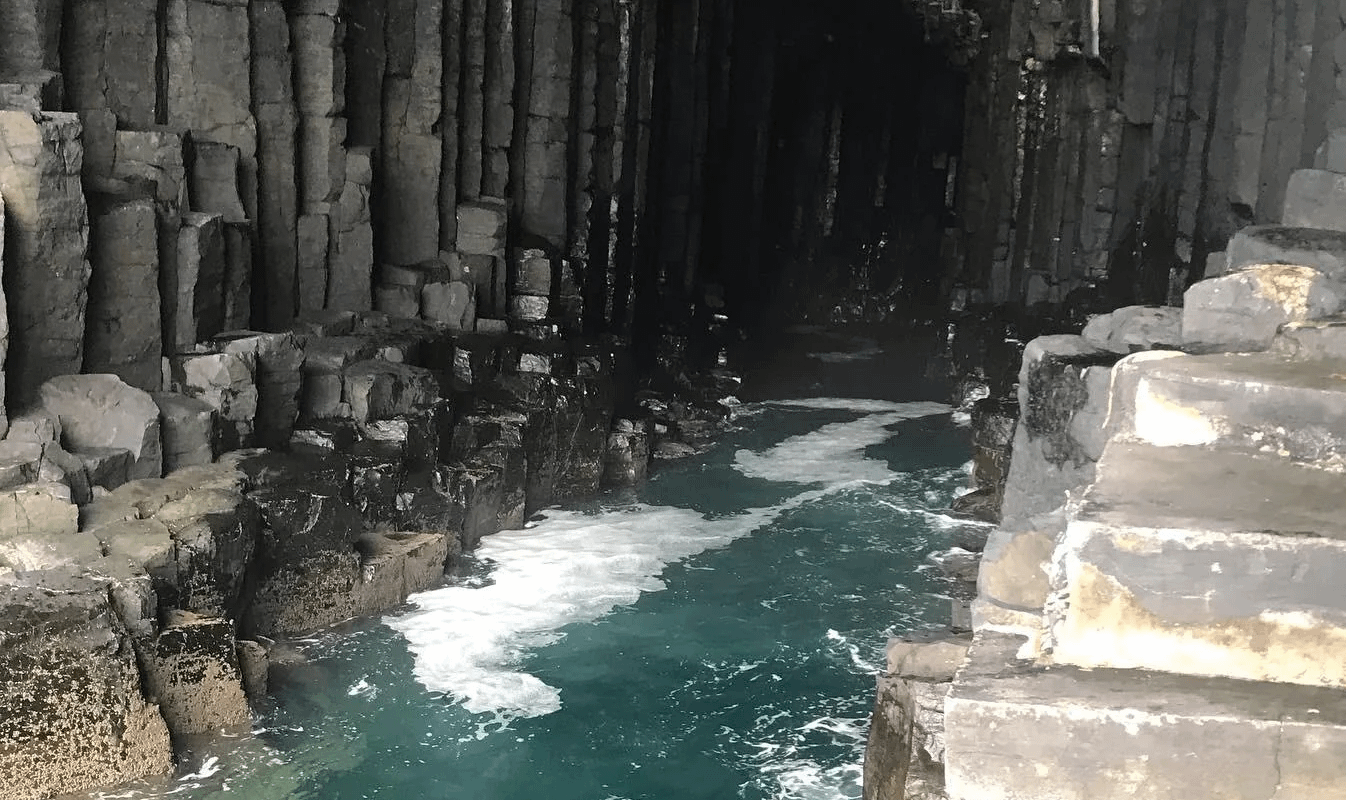
Nestled on the uninhabited Isle of Staffa in Scotland’s Inner Hebrides, Fingal’s Cave is a cathedral of nature. Its towering basalt columns, echoing acoustics, and storm-sculpted chambers make it one of the world’s most astonishing sea caves—and a pilgrimage site for geologists, adventurers, and artists alike.
Why Fingal’s Cave Captivates Visitors:
- Geological Wonder: 60-million-year-old hexagonal basalt columns (similar to Northern Ireland’s Giant’s Causeway).
- Celtic Legend: Linked to Irish giant Fionn mac Cumhaill (Finn McCool) in the myth of the Giant’s Causeway.
- Artistic Legacy: Inspired Mendelssohn’s Hebrides Overture and works by poets like Wordsworth and Keats.
- Wild Beauty: Untamed island setting with puffins (spring/summer), seals, and dramatic Atlantic views.
The Geology of Fingal’s Cave: Nature’s Symphony in Stone
Formed during the Paleocene epoch, Fingal’s Cave is a triumph of volcanic drama. As molten lava cooled rapidly, contraction created its iconic hexagonal cracks—resulting in 20-meter-high pillars that appear hand-carved. The cave stretches 227 feet (69m) deep with a 40-foot (12m) arched roof, flooded by turquoise waters.
Science Meets Myth
Local folklore claims the cave and Northern Ireland’s Giant’s Causeway were stepping stones built by warring giants. Geologically, they are connected—both formed from the same ancient lava flow before continental drift separated them.
Cultural Impact: From Mendelssohn to Modern Marvel
In 1829, composer Felix Mendelssohn visited Staffa during a stormy voyage. The cave’s roaring acoustics and rhythmic waves inspired his Hebrides Overture (Fingal’s Cave), immortalizing its haunting beauty. Artists J.M.W. Turner and Jules Verne also drew inspiration here, while Pink Floyd reportedly considered it for album art.
Did You Know?
The name “Fingal” derives from the Gaelic Fionn Gall (“white stranger”), referencing Viking settlers—yet the cave’s Gaelic name, An Uaimh Bhinn (“Melodious Cave”), nods to its natural resonance.
Visiting Fingal’s Cave: A Traveler’s Guide
How to Get There
- Departure Points: Boat trips from Mull (Fionnphort/Ulva Ferry), Iona, or Oban (seasonal).
- Crossing Time: 45–60 minutes (weather-dependent; rough seas common).
- Boat Operators: Staffa Tours, Turus Mara, West Coast Tours.
What to Expect
- Walk a steep path to the cave entrance (non-slip shoes essential).
- Enter the cave at low tide (boats often pause for photos; landing isn’t always possible in rough weather).
- Best Time to Visit: April–September (calmer seas, puffins nesting on Staffa’s cliffs).
Accessibility & Safety
- Uneven terrain and no railings—not suitable for limited mobility.
- Check forecasts: Tours cancel in high winds/swells.
Nearby Attractions: Combine Your Trip
- Isle of Iona: Historic abbey and sacred burial ground of Scottish kings (20 minutes by boat from Mull).
- Treshnish Isles: Wildlife haven with puffin colonies and ancient ruins.
- Duart Castle (Mull): Iconic 13th-century fortress overlooking the Sound of Mull.
Practical Tips for Your Visit
- Wear waterproof layers: Weather shifts rapidly.
- Book ahead: Summer tours fill quickly.
- Respect nature: Staffa is a protected nature reserve—avoid disturbing wildlife.
FAQs About Fingal’s Cave Scotland
Q: Can you go inside Fingal’s Cave?
A: Yes—if conditions permit, you can step onto Staffa and walk to the cave entrance. Boat captains assess safety daily.
Q: Is Fingal’s Cave free to visit?
A: Landing fees (~£5–£10) support conservation. Boat tours cost £35–£60 (check inclusions).
Q: Why does Fingal’s Cave look man-made?
A: The geometric columns formed via natural volcanic cooling—a phenomenon called columnar jointing.
Conclusion: A Testament to Earth’s Artistry
More than just a cave, Fingal’s Cave Scotland is a portal to primal forces—where fire, water, and legend collide. Whether you seek geological intrigue, mythical storytelling, or raw coastal grandeur, this Hebridean gem delivers an experience as profound as Mendelssohn’s musical tribute.
Plan your journey to Staffa and witness a wonder that bridges science, myth, and the sublime power of nature.
—Looking for other Scottish wonders? Explore the Fairy Pools of Skye or the Quiraing for more geological drama!—
Optimized for SEO Keywords: Fingal’s Cave Scotland, Staffa Island, basalt columns, Giant’s Causeway connection, Mendelssohn Hebrides Overture, Isle of Mull boat tours, visiting Fingal’s Cave, Scotland natural wonders.