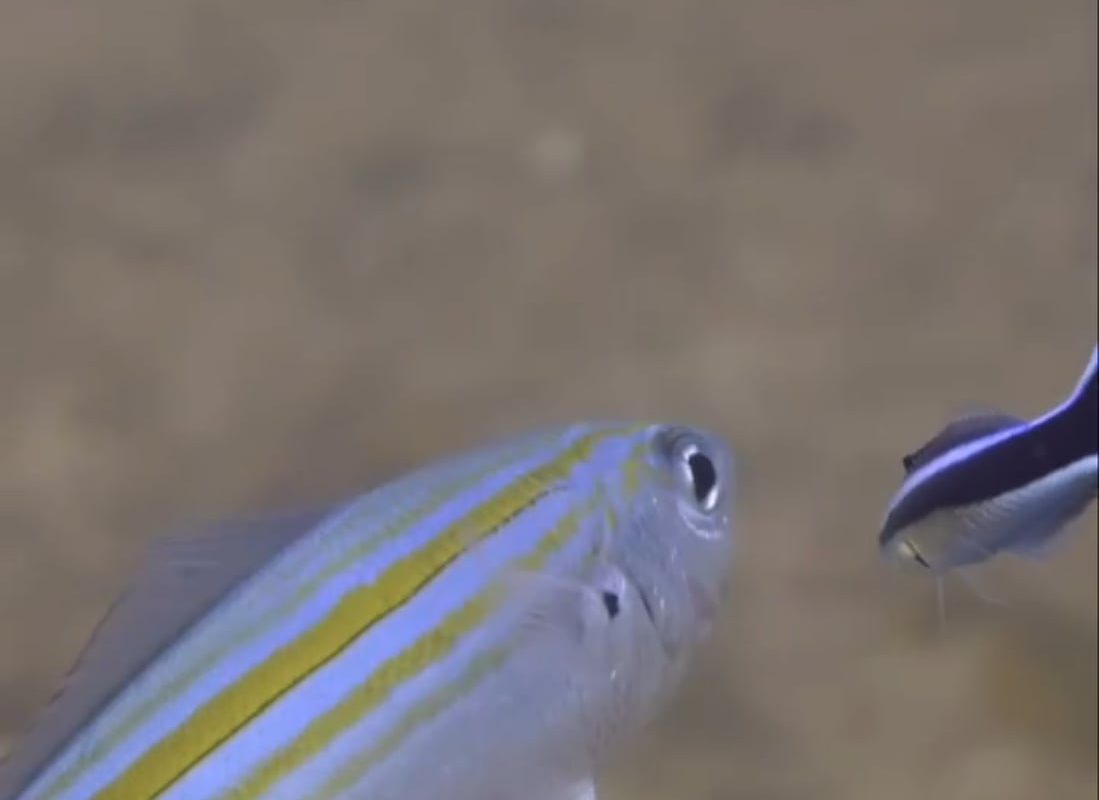
The bluestreak cleaner wrasse is a small fish that lives on coral reefs from East Africa to the Red Sea and all the way to French Polynesia. It eats tiny parasites and dead skin off bigger fish. Both sides benefit: the wrasse gets food and safety, and the bigger fish stay clean and healthy.
Title: The Bluestreak Cleaner Wrasse: Nature’s Tiny Dentist of the Coral Reefs
Meta Description: Discover the bluestreak cleaner wrasse—a small fish with a big role in coral reef health. Learn how its cleaning symbiosis keeps marine ecosystems thriving.
Introduction
Coral reefs are bustling underwater cities teeming with life, and one of their most fascinating residents is the bluestreak cleaner wrasse (Labroides dimidiatus). This tiny, colorful fish might be small in size, but it plays an outsized role in maintaining the health of coral reef ecosystems. Found in warm tropical waters from the Red Sea to French Polynesia, the cleaner wrasse acts like a dentist for larger marine species, offering a vital survival service in exchange for food and protection. Let’s dive into the remarkable life of this unsung reef hero.
What is a Bluestreak Cleaner Wrasse?
The bluestreak cleaner wrasse is a slender, vibrant fish rarely longer than 4 inches (10 cm). Its most striking feature is the electric blue horizontal stripe running from its snout to the tip of its tail, complemented by a yellow or white underside. This coloration isn’t just for show—it’s a universal “advertisement” to larger fish that says, “I’m here to help!”
Geographic Range:
This species inhabits coral reefs across a vast territory, stretching from:
- East Africa (including the coasts of Tanzania and Mozambique)
- The Red Sea
- Across the Indian and Pacific Oceans to French Polynesia and the Great Barrier Reef.
Symbiosis in Action: The Cleaner-Client Relationship
The bluestreak cleaner wrasse is famous for its mutualistic relationship with larger reef fish. Here’s how it works:
-
The Cleaning Service:
The wrasse feeds on parasites, dead skin, mucus, and even algae clinging to the scales, gills, and mouths of larger fish (its “clients”). Common clients include groupers, eels, parrotfish, and even intimidating predators like sharks and barracuda. -
Benefits for Both Sides:
- For the Wrasse: This diet provides a steady source of food. Plus, cleaner wrasses operate from fixed “cleaning stations” on the reef, where they enjoy relative safety—most predators avoid eating them due to their valuable role.
- For the Client Fish: Regular cleanings reduce infections, remove harmful parasites, and promote healthier skin and gills. This can even extend the lifespan of larger reef dwellers.
-
The “Dance” That Starts the Interaction:
To attract clients, cleaner wrasses perform a distinctive rocking motion—a “dance” that signals their services. Larger fish often pose obligingly, opening their mouths or flaring their gills to give the wrasse full access.
Why This Relationship Matters for Coral Reefs
Cleaner wrasses are ecological linchpins. Their work has cascading benefits:
- Disease Control: By removing parasites, they prevent outbreaks that could devastate reef fish populations.
- Stress Reduction: Healthier fish mean stronger reefs. Fish free of parasites can focus energy on growth, reproduction, and sustaining the ecosystem.
- Biodiversity Support: Over 100 fish species visit cleaner wrasses, creating intricate interactions that stabilize reef communities.
Without cleaner wrasses, reefs could see declines in fish health, leading to imbalances that ripple through the food web.
Threats to the Bluestreak Cleaner Wrasse
Despite their importance, cleaner wrasses face mounting challenges:
- Habitat Loss: Coral bleaching and reef degradation destroy their cleaning stations.
- Overfishing: Though not a food target, they’re collected for aquariums, disrupting wild populations.
- Climate Change: Warming oceans and acidification threaten the reefs they rely on.
Conservation efforts like marine protected areas (MPAs) and sustainable tourism are critical to their survival.
Fun Facts About Cleaner Wrasse Behavior
- No Appointment Needed: Client fish often line up at cleaning stations, waiting their turn like patients in a doctor’s office.
- Honest vs. Dishonest Cleaners: Most wrasses stick to parasites, but some “cheat” by nipping healthy tissue. Offended clients may chase them away!
- Territorial Nature: Cleaner wrasses defend their stations aggressively, ensuring no rival cleaners steal their business.
Conclusion
The bluestreak cleaner wrasse is a tiny titan of the coral reefs, proving that size doesn’t define impact. By fostering partnerships with species hundreds of times larger, it upholds the delicate balance of marine ecosystems. Protecting these industrious little fish—and the reefs they call home—is essential for the future of our oceans.
Keywords: bluestreak cleaner wrasse, coral reef fish, mutualism in marine life, cleaner fish symbiosis, Labroides dimidiatus, reef ecosystem roles, marine biodiversity, Red Sea marine life, French Polynesia wildlife.
By highlighting the bluestreak cleaner wrasse’s ecological importance and captivating behavior, this article aims to inspire appreciation for one of the ocean’s most ingenious survival strategies. Share it to spread the word—this little fish deserves a big spotlight!