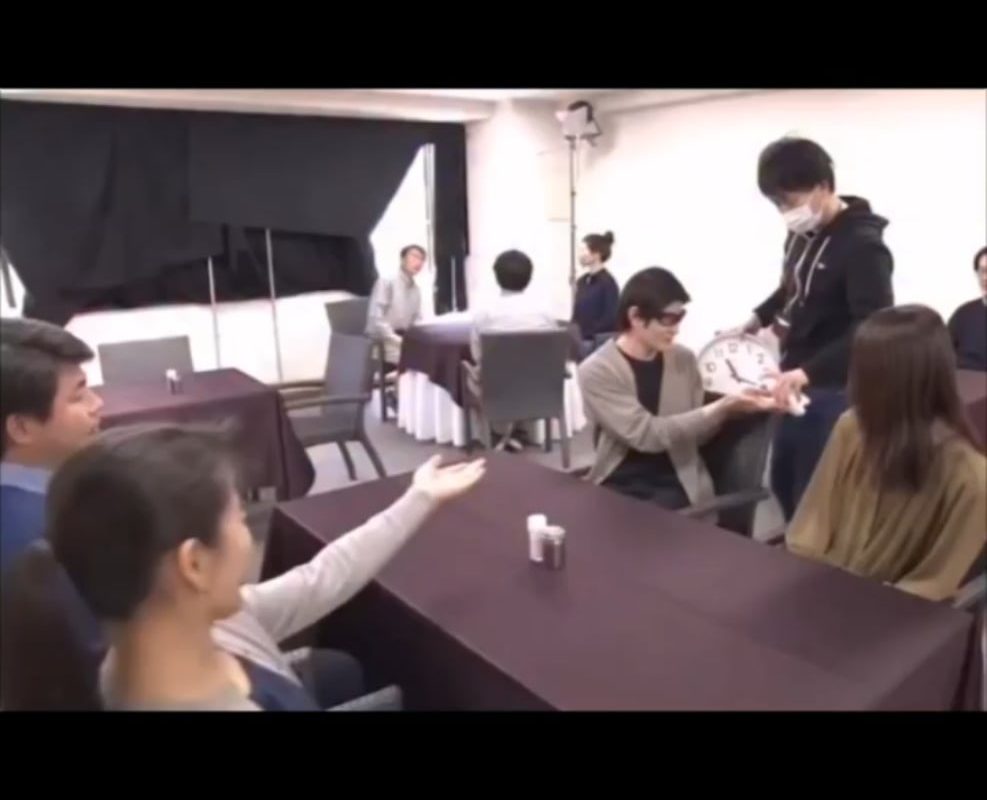
A restaurant in Japan did an experiment to show how fast virus spreads.
Title: Shocking Japanese Restaurant Experiment Reveals How Fast Viruses Spread (And What It Means For You)
A chilling experiment conducted in a Japanese restaurant vividly demonstrated how rapidly viruses and bacteria can spread in everyday settings – especially where people gather to eat. This eye-opening simulation, orchestrated by public health experts, offers crucial lessons for post-pandemic hygiene awareness. Here’s what happened, why it matters, and how you can protect yourself.
The Experiment: A Buffet Turned into a “Virus Zone”
Working with infectious disease specialists, Japan’s public broadcaster NHK staged a realistic scenario at a buffet-style restaurant with 10 participants. Unbeknownst to them, one person (“Patient Zero”) was given fluorescent paint to simulate a “virus” on their hands. This invisible paint glowed under UV light, acting just like germs would in the real world.
Participants were free to serve themselves food, share utensils, chat, and move about the buffet for 30 minutes. The results? Alarming proof of cross-contamination:
- Within 30 minutes, the “virus” (paint) spread to every participant’s hands, plates, and utensils.
- High-touch surfaces became hotspots: Drink dispensers, food tongs, and table edges glowed under UV inspection.
- 50% of participants ended up with the “virus” in their mouths, highlighting infection risk from touching the face.
The experiment concluded with a startling visual: UV lights revealed glowing paint everywhere, from napkins to smartphones to water glasses.
Key Takeaways: Why This Matters for Public Health
This simulation wasn’t just dramatic – it underscores critical realities about disease transmission:
- Buffets and shared food spaces are high-risk zones. Commonly touched surfaces act as silent culprits.
- Hand hygiene is non-negotiable. Even brief contact spreads pathogens.
- “Invisible” contamination is everywhere. Just because surfaces look clean doesn’t mean they’re germ-free.
- Face-touching accelerates infection. Participants unknowingly transferred paint to lips, noses, and eyes.
The Science Behind the Spread
Microbiologists emphasize that the experiment mirrors real-world virus behavior:
- Norovirus and influenza spread similarly through surfaces and hand-to-face contact.
- Respiratory droplets (like those carrying COVID-19) could spread even faster in crowded settings.
- Survival times vary: Some viruses thrive for hours or days on hard surfaces like metal or plastic.
“People don’t realize how quickly their hands become vectors,” explains Dr. Hiroyuki Kunishima, an infectious disease specialist. “This visual proof changes how we perceive risk.”
Protect Yourself: Lessons from the Experiment
Here’s how to minimize your risk in restaurants or crowded spaces:
- Wash hands rigorously before eating. Scrub for 20+ seconds, including under nails.
- Avoid touching your face until hands are sanitized.
- Use hand sanitizer after touching shared items like menus, tongs, or condiment bottles.
- Skip the buffet when sick – or choose packaged/pre-portioned options.
- Disinfect personal items like phones that you handle frequently.
For businesses, experts recommend enhanced cleaning protocols, touchless payment systems, and single-use utensils to reduce transmission points.
The Global Impact of Japan’s Viral Experiment
Footage of the experiment went viral globally during the COVID-19 pandemic, emphasizing universal hygiene principles often overlooked. Restaurants worldwide have since adopted:
- Staff health screening
- Increased sanitization of high-touch zones
- Improved ventilation systems
- Smaller buffet servings with lids
Final Thought: COVID-19 may have heightened awareness, but this Nagoya-based experiment proves viruses were always spreading faster than we realized. Staying vigilant with hand hygiene isn’t just pandemic protocol – it’s a lifelong health essential. Next time you reach for shared ketchup or a serving spoon, remember: your next move could stop a virus in its tracks.
Want to see the shocking viral spread for yourself? Search for “NHK Japan virus buffet experiment” to watch the original footage.