SpaceX: The Complete Story
From Near-Bankruptcy
to Dominating Space
How Elon Musk’s audacious bet on reusable rockets transformed a near-failed startup into the most disruptive force in the history of spaceflight — and why the biggest chapter is still unwritten.
“When I started SpaceX, I thought the odds of success were less than 10%. I just accepted that I would probably just lose everything.” — Elon Musk, 2013. This is the story of how a tech billionaire with zero aerospace experience, an army of skeptics, and three catastrophic failures nearly destroyed his dream — before making it the most consequential rocket company on Earth.
The Origin: A Billionaire Asks a Simple Question
In 2001, Elon Musk had just pocketed $180 million from the sale of PayPal and was already obsessed with a question most people never ask seriously: Why hasn’t humanity become a multi-planetary species? He visited NASA’s website looking for a Mars mission plan and found nothing. No budget. No roadmap. No timeline.
His first idea wasn’t to build a rocket company. It was a publicity stunt — the “Mars Oasis” project, where he’d send a small greenhouse to Mars with seeds and nutrients to grow a plant and reignite public passion for space exploration. He flew to Moscow twice to buy refurbished ICBMs for cheap. The Russians famously laughed at him and quoted a price of $8 million per rocket.
“If the Russians won’t sell me a rocket at a reasonable price, maybe I should just build one myself.”— Elon Musk, after his second Moscow trip, 2002
On the flight home, Musk opened a spreadsheet and started calculating the fundamental cost of rocket components. What he found was revelatory: the raw materials — aluminum alloys, titanium, copper, carbon fiber — cost only about 2% of the price of an assembled rocket. The rest was pure inefficiency, government overhead, and contractor markup. The aerospace industry was overcharging because it had no competition.
On May 6, 2002, Musk incorporated Space Exploration Technologies Corp. — SpaceX — in El Segundo, California. He put in $100 million of his own money and recruited a team of engineers willing to work insane hours for below-market salaries in exchange for equity in what most of the industry considered a suicide mission.
Three Failures, One Last Chance: The Falcon 1 Saga
SpaceX’s first rocket, the Falcon 1, was designed to be the world’s first privately developed liquid-fueled rocket to reach orbit. It was also supposed to be cheap, reliable, and fast. The first three attempts would be none of those things.
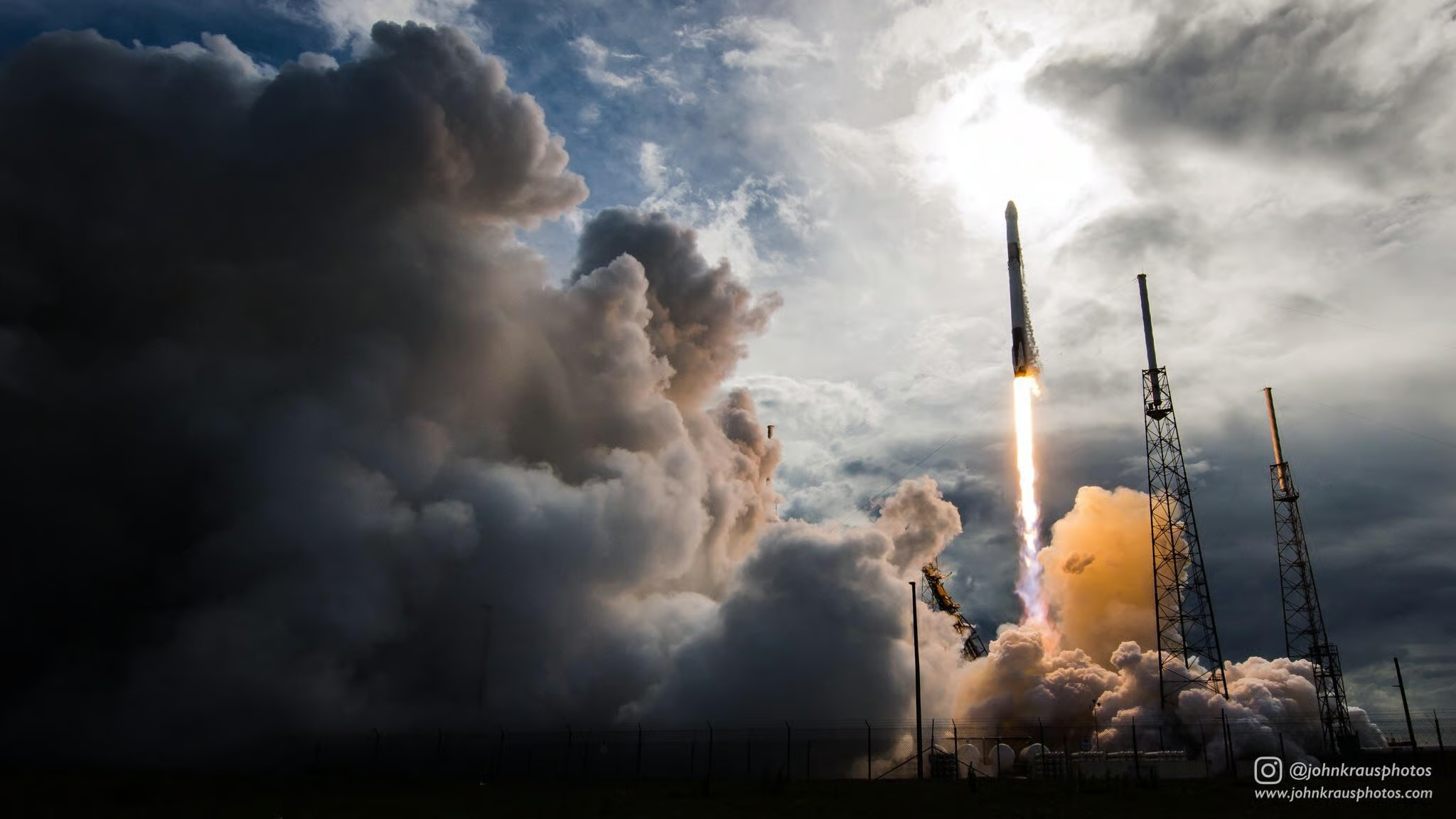
Falcon 1 exploded 33 seconds after liftoff from Kwajalein Atoll. A fuel leak caused a fire in the engine bay. Musk’s $30M investment began burning — literally.
Falcon 1 made it to 289 seconds before a fuel slosh oscillation caused the engine to shut down prematurely. The rocket nearly made orbit — but “nearly” doesn’t count.
The most devastating blow: a staging error caused the first and second stages to collide. Three customer payloads were destroyed. SpaceX had enough money for one more attempt.
Falcon 1 Flight 4 became the first privately built liquid-fueled rocket to reach Earth orbit. 21 employees watched and wept in Hawthorne, California. SpaceX had survived.
The emotional weight of that fourth launch cannot be overstated. By August 2008, Musk was simultaneously running Tesla through its worst cash crisis. He was going through a divorce. He had three attempts remaining across both companies. At one point, a close friend recalled that Musk was sleeping on a friend’s couch and had less than $1 million liquid cash to his name.
The NASA Deal That Changed Everything
Three months after Falcon 1’s historic success, SpaceX signed a $1.6 billion contract with NASA to deliver cargo to the International Space Station (ISS). NASA, reeling from the Space Shuttle Columbia disaster and facing the 2010 shuttle retirement, had decided to outsource low-Earth orbit logistics to private companies. The establishment was outraged. Congress was skeptical.
But the contract gave SpaceX the runway it needed. The company used the NASA funds to accelerate development of a far more powerful rocket: the Falcon 9, named for its nine Merlin engines arranged in an octagonal pattern.
Falcon 9 Engine Config
9 Merlin engines in an octaweb pattern — 1.7M lbf thrust at sea level
Cost Per Launch
~$67M vs. United Launch Alliance’s $225M+ per Atlas V mission
Payload to LEO
22,800 kg (50,265 lb) in expendable configuration
Reusability
First stage boosters recovered and reflown up to 19+ times
On June 4, 2010, Falcon 9 launched successfully on its very first attempt. The space industry’s jaw dropped. By contrast, it took Boeing’s Delta IV and Lockheed’s Atlas three and two tries, respectively, to reach orbit on their debuts.
The Reusability Revolution: Landing Rockets on Legs
Every rocket ever launched had one thing in common: after use, they were thrown away. Each $50–200 million vehicle used for eight minutes and then splashed into the ocean or burned up in the atmosphere. Elon Musk considered this insane.
SpaceX began secretly working on vertical landing technology as early as 2011 through a testbed program called Grasshopper. Most engineers thought landing a rocket back on its tail was physically impossible at orbital velocities.
“A fully reusable vehicle has never been done before. That’s the fundamental breakthrough that’s needed to revolutionize access to space.”— Elon Musk
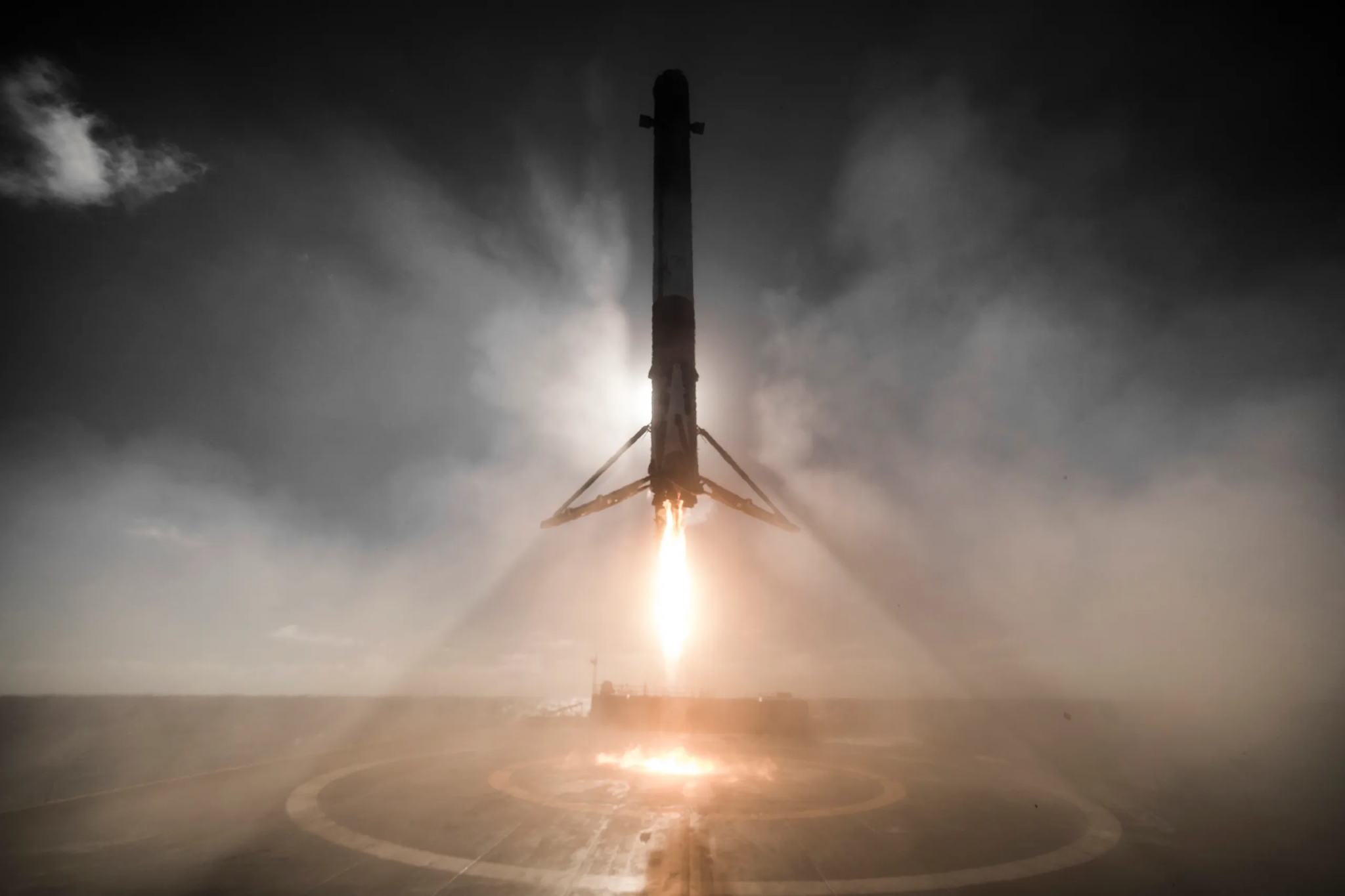
On December 21, 2015, SpaceX did what most aerospace veterans said was impossible: the Falcon 9 first stage returned from space and landed vertically at Landing Zone 1 at Cape Canaveral. Three days earlier, Jeff Bezos’s Blue Origin had landed their New Shepard suborbital rocket, prompting a rare public dispute.
But SpaceX kept going. On April 8, 2016, they landed a Falcon 9 on an autonomous drone ship in the Atlantic Ocean. Then they began re-flying boosters. The rocket that was once a $60M single-use vehicle became a $6M per-use asset. The economics of space changed overnight.
Crewed Spaceflight Returns to America
After the Space Shuttle retired in 2011, the United States had no way to send astronauts to space. For nine years, NASA paid Russia up to $90 million per seat on Soyuz capsules. NASA’s Commercial Crew Program was supposed to fix this.
On May 30, 2020, NASA astronauts Bob Behnken and Doug Hurley rode SpaceX’s Crew Dragon capsule “Endeavour” to the ISS — the first crewed orbital launch from American soil in nine years.
- Demo-2 (2020): First crewed orbital launch from US soil in 9 years
- Crew Dragon: 4 operational missions to ISS per year under NASA contract
- Inspiration4 (2021): First all-civilian orbital mission in history
- Polaris Dawn (2024): First private spacewalk, 1,400 km above Earth
- 23+ Astronauts transported to and from the ISS safely
Starlink: The Accidental Cash Machine
Building rockets is expensive. Even with reusability, SpaceX needed a consistent revenue source that didn’t depend on government contracts. The answer was audacious: build the world’s largest satellite constellation and provide global broadband internet from space.
Starlink began as a side project around 2015. Hundreds (eventually thousands) of small satellites in low Earth orbit (LEO) at roughly 550 km altitude could provide low-latency, high-speed internet to anywhere on Earth. The network would generate billions in recurring subscription revenue to fund SpaceX’s Mars ambitions.
Starlink Becomes a Geopolitical Force
When Russia invaded Ukraine in February 2022, Starlink terminals flooded into the country within days. Ukrainian military units used Starlink for drone coordination and frontline communications. SpaceX, a private company, had become a de facto player in a major European war.
The Journey
Key Milestones That Shaped SpaceX
From a rented office and a single engine on a test stand to operating the world’s most advanced launch system.
SpaceX Founded
Elon Musk founds Space Exploration Technologies Corp. with $100M of his own money.
Falcon 1 Reaches Orbit
After three devastating failures, Falcon 1 Flight 4 becomes the first privately developed liquid-fueled rocket to reach Earth orbit.
$1.6B NASA Contract
NASA awards SpaceX the Commercial Resupply Services contract to deliver cargo to the ISS.
First Rocket Landing
Falcon 9’s first stage returns from orbit and lands vertically at Cape Canaveral.
Crew Dragon to ISS
NASA astronauts launch from American soil for the first time in 9 years aboard Crew Dragon.
Starship Integrated Test
Starship completes its first successful orbital-class integrated flight test.
Revenue Engine
Starlink: Funding the Mars Dream
What started as a bold bet to bridge the digital divide has become SpaceX’s fastest-growing business unit — and the financial foundation for everything else the company wants to achieve.
- Provides 200–300 Mbps speeds with 20–40ms latency
- Used by airlines, cruise ships, military, and remote communities
- Deployed in Ukraine, disaster zones, and maritime routes globally
- Plans to expand to 42,000+ satellites in the coming decade
- Projected to generate $30B+ in annual revenue by 2030
Starship & the Mission to Mars
Everything SpaceX has built — the Falcon 9, the reusability tech, Starlink’s revenue engine — was always in service of one goal: making humanity multiplanetary. Starship, a fully reusable 120-meter tall vehicle with 33 Raptor engines generating 16 million pounds of thrust, is the most powerful rocket ever built. It’s designed to carry 100 people or 150 tonnes to Mars per mission. SpaceX’s target for the first uncrewed Mars landing is the late 2020s. The first human boots on Mars: 2030s. Most experts still think it’s impossibly ambitious. SpaceX has made a habit of doing those things anyway.
The Bigger Picture
Why SpaceX’s Story Is Far From Over
SpaceX didn’t just build a better rocket. It rebuilt the entire philosophy of how aerospace companies operate: move fast, accept failure as data, iterate relentlessly, and never accept that something is impossible just because it hasn’t been done before.
That philosophy has forced NASA, ESA, JAXA, and every established player to rethink their playbooks. New startups — Rocket Lab, Relativity Space, RocketLab, Stoke Space — have been birthed in SpaceX’s shadow. China has accelerated its own reusable rocket programs explicitly in response to Falcon 9’s dominance. The competitive landscape of space has been permanently altered.
