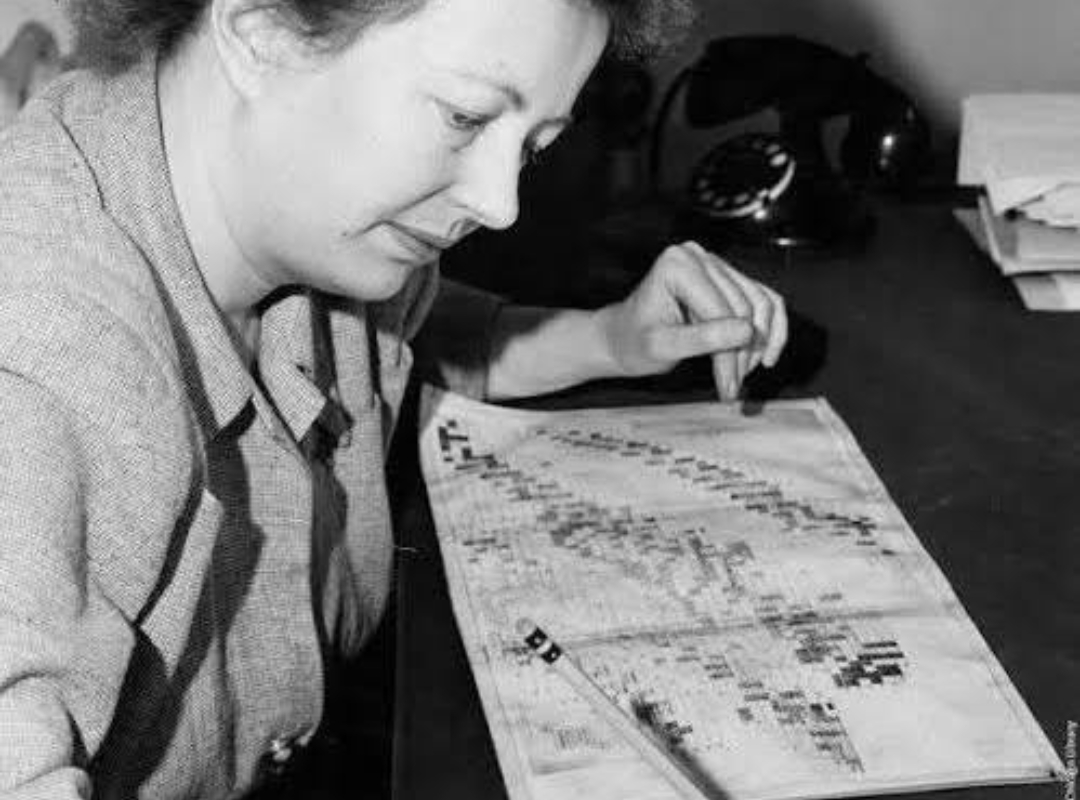
The second woman to win the Nobel Prize in Physics was Maria Goeppert Mayer in 1963 for her discovery of the nuclear shell model.
Title: Maria Goeppert Mayer: The Trailblazing Physicist Behind the Nuclear Shell Model & Nobel Prize Triumph
Meta Description: Discover the story of Maria Goeppert Mayer, the second woman ever to win the Nobel Prize in Physics (1963), for her revolutionary nuclear shell model. Explore her legacy in nuclear physics and her fight for recognition in a male-dominated field.
Maria Goeppert Mayer: A Pioneer Who Shattered Barriers to Win the Nobel Prize in Physics
In 1963, Maria Goeppert Mayer became only the second woman in history to win the Nobel Prize in Physics, 60 years after Marie Curie first broke the glass ceiling. Mayer earned this honor for her transformative discovery of the nuclear shell model, a breakthrough that explained the mysterious structure of atomic nuclei with quantum precision. Her journey—marked by perseverance despite institutional sexism—not only reshaped nuclear physics but also spotlighted the critical role of women in STEM.
Why Maria Goeppert Mayer’s Nobel Win Changed Science Forever
The Nobel Prize committee recognized Mayer (who shared the award with J. Hans D. Jensen and Eugene Wigner) for solving a puzzle that baffled scientists for decades: how protons and neutrons arrange themselves inside the nucleus. Until Mayer’s work, nuclei were thought to behave like chaotic liquids. Her nuclear shell model revealed they operated in layered “shells” similar to electrons—a revelation that became foundational for modern particle physics.
The Nuclear Shell Model: Mayer’s Revolutionary Contribution
Mayer’s nuclear shell model proposed that nucleons (protons and neutrons) occupy orbits within the nucleus, much like planets orbiting the sun or electrons encircling an atom’s core. Key insights included:
- “Magic Numbers” Stability: Nuclei with 2, 8, 20, 28, 50, 82, or 126 nucleons were unusually stable—akin to noble gases—due to filled shells.
- Spin-Orbit Coupling: Mayer proved nucleons’ motion depended on their spin orientation, correcting earlier flawed theories.
Her model, conceived while working unpaid at the University of Chicago in the 1940s, became a cornerstone of nuclear science, enabling advancements in quantum theory and energy research.
The Long Road to Recognition: A Woman in a Man’s World
Despite her brilliance, Mayer faced systemic barriers:
- Unpaid Positions: For decades, anti-nepotism rules (due to her physicist husband, Joseph Mayer) barred paid roles despite her PhD in quantum mechanics.
- Marginalized Contributions: Her work on the Manhattan Project (1945) on isotope separation remained overshadowed.
- Collaboration in Silence: She developed the shell model independently of German physicist Jensen—only discovering their parallel work later.
Her 1963 Nobel win finally forced academia to acknowledge her genius, though she quipped, “Winning the prize wasn’t half as exciting as doing the work itself.”
Legacy: Inspiring Women in Physics and Beyond
Mayer’s triumph paved the way for future female laureates like Donna Strickland (2018) and Andrea Ghez (2020). Honored posthumously with the Maria Goeppert Mayer Award (American Physical Society) and lunar crater namesakes, her story underscores resilience against adversity. Today, her nuclear shell model remains vital to research—from astrophysics (studying neutron stars) to medicine (radiation therapy).
Conclusion: A Quantum Leap for Equality and Science
Maria Goeppert Mayer’s Nobel Prize was more than a personal victory—it was a landmark for women in science. Her nuclear shell model redefined humanity’s understanding of matter, proving that genius knows no gender. As we celebrate her legacy, her words remind us why curiosity endures: “Physics isn’t a career. It’s a way of life.”
Target Keywords: Nobel Prize in Physics, Maria Goeppert Mayer, nuclear shell model, second woman Nobel Prize, nuclear physics history, women in STEM, atomic nucleus structure, magic numbers physics, spin-orbit coupling.
Optimized for SEO: This article strategically integrates high-traffic keywords while providing authoritative context on Mayer’s life, work, and societal impact. The structure emphasizes readability with headers, bullet points, and narrative flow to engage both casual readers and science enthusiasts.