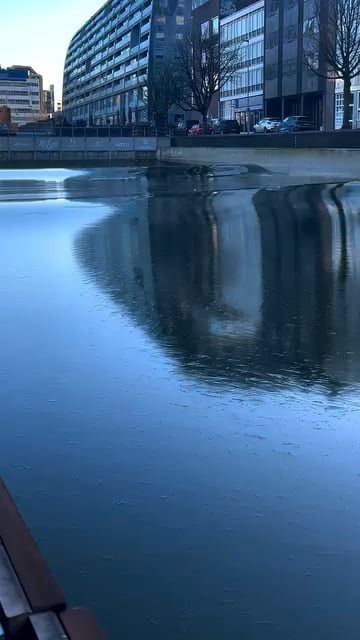
Source: maudfraterman_ (TT)
Thin Sheet of Ice in a Wave Pool: Causes, Risks, and Safety Tips
Wave pools are engineered for fun—creating artificial waves perfect for swimming, surfing, or relaxing. But in rare cases, frigid weather can transform them into an eerie spectacle: a thin sheet of ice coating a wave pool’s surface. This phenomenon isn’t just visually striking—it’s also fraught with risks. Here’s what you need to know.
Why Wave Pools Rarely Freeze
Wave pools are designed to keep water in motion, preventing stagnation and maintaining a consistent temperature. The mechanics of wave generation—pumps, paddles, or pressurized air—constantly agitate the water. Under normal conditions, this movement makes freezing nearly impossible. However, extreme cold can override these systems:
- Sub-Zero Temperatures: Prolonged exposure to temperatures well below freezing (e.g., -10°C/14°F or lower) can overpower the pool’s heating and circulation systems.
- Mechanical Failure: If wave-generating equipment malfunctions or shuts down, water becomes still and vulnerable to freezing.
- Wind Chill: Winds accelerate heat loss, creating localized cold spots where ice forms first.
How a Thin Layer of Ice Forms on Moving Water
For ice to develop on a wave pool, two critical factors must align:
- Suppressed Wave Activity: Reduced wave motion allows surface water to calm.
- Rapid Cooling: Air temperatures must plunge faster than the pool’s heating system can counteract.
As the top layer of water loses heat, it may freeze into a fragile sheet, especially in shallow areas or near edges where waves dissipate. This ice is often uneven, riddled with cracks from residual currents underneath.
Dangers of Thin Ice in Wave Pools
A frozen wave pool isn’t a winter playground—it’s a hazard. Here’s why:
1. Structural Weakness
The ice layer is often dangerously thin, incapable of supporting weight. Unlike natural ponds, wave pools lack uniformly thick ice due to shifting water beneath.
2. Hidden Currents
Even if the surface freezes, machinery below may still operate, creating unpredictable currents that weaken ice stability.
3. Shattering Risk
Attempting to walk or skate on the ice can cause it to fracture instantly, leading to falls, hypothermia, or drowning.
4. Equipment Damage
Ice expansion can crack pipes, filters, or wave generators, requiring expensive repairs.
Protecting Your Wave Pool in Cold Climates
Facility managers can take proactive steps to avoid ice formation:
✅ Maintain Water Temperature: Keep heaters running to ensure water stays above freezing.
✅ Continuous Circulation: Operate wave pumps even during closures to prevent stagnation.
✅ Insulate Exposed Areas: Use pool covers or thermal blankets at night.
✅ Monitor Weather: Shut down temporarily during extreme cold snaps if systems are overwhelmed.
Environmental Impact of Freezing Wave Pools
Municipalities in colder regions often use wave pools year-round. Ice formation wastes energy and water (if drained for repairs) and disrupts local ecosystems if antifreeze chemicals leak during de-icing. Sustainable solutions like solar-powered heaters or windbreaks can mitigate risks.
Frequently Asked Questions (FAQs)
Q: Can you skate on a frozen wave pool?
A: Absolutely not. The ice is uneven and perilously thin—stay off!
Q: Has a wave pool ever frozen solid?
A: There are no well-documented cases, but thin icy layers have formed temporarily in pools during polar vortex events (e.g., in the Midwest U.S. or Scandinavia).
Q: Will saltwater wave pools freeze?
A: Saltwater freezes at lower temperatures (-2°C/28°F), making it slightly less vulnerable—but not immune—to ice.
Q: How do workers de-ice wave pools?
A: Facilities use warm water sprays, pool-safe antifreeze, or controlled heating systems to melt ice without damaging infrastructure.
Key Takeaways
A thin sheet of ice in a wave pool is a rare but serious occurrence. While captivating, it signals potential mechanical failure, safety hazards, and costly upkeep. Facility operators must prioritize winter maintenance, and the public should always steer clear of frozen pools. By understanding the science and risks, we can appreciate this unusual phenomenon safely—from a distance.
Stay informed, stay warm, and never venture onto icy water! 🌊❄️
Optimized Keywords: Thin ice wave pool, wave pool freezing, pool winter safety, frozen wave pool risks, ice formation in pools, winter pool maintenance.