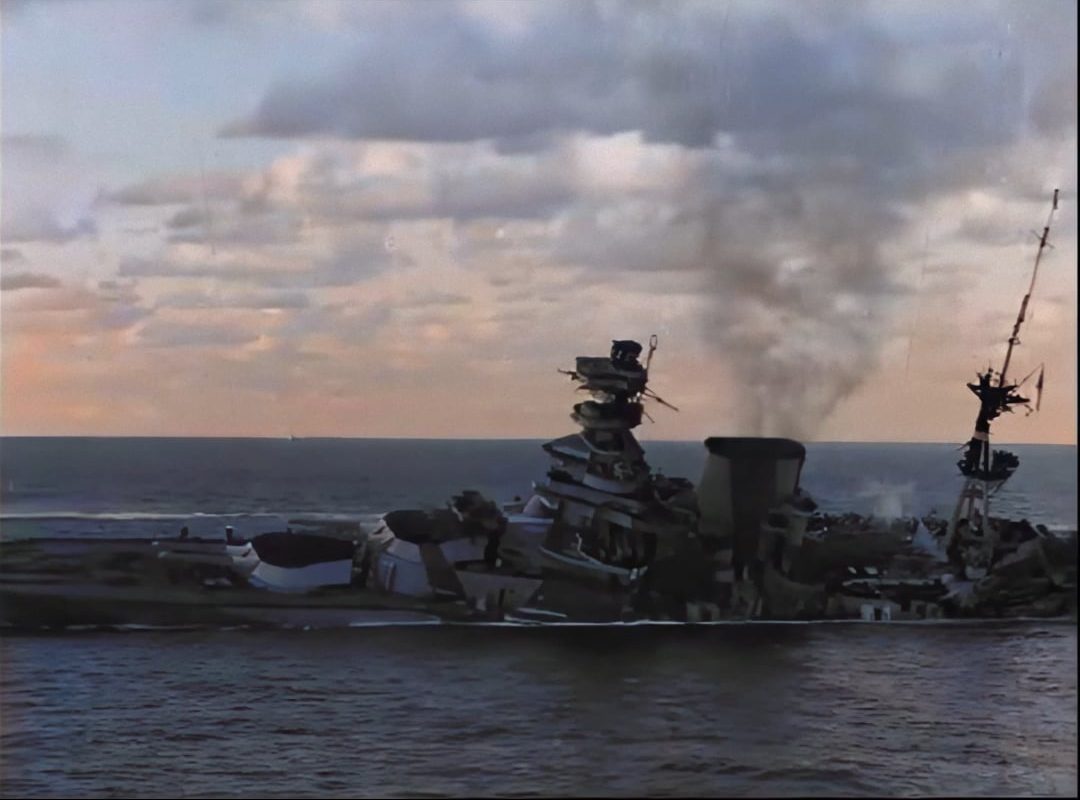
WW2 Colorization — The Sinking of HMS Barham, 1941
Title: WW2 Colorization Brings HMS Barham’s Dramatic 1941 Sinking to Life
Meta Description: Discover how modern colorization revitalizes the haunting 1941 sinking of HMS Barham, a WWII tragedy immortalized in rare footage. Explore the history, impact, and significance of this naval disaster.
WWII Colorization: The Sinking of HMS Barham, 1941 – A Tragedy Brought Back to Life
In the vast chronicles of World War II naval history, few events are as visually arresting—or as tragic—as the sinking of HMS Barham in November 1941. For decades, grainy black-and-white footage of the British battleship’s catastrophic demise served as a stark reminder of the war’s human cost. Today, thanks to digital colorization, this historic moment has been revitalized, offering modern audiences a vivid, emotionally charged window into the past.
In this article, we’ll explore the story of HMS Barham’s sinking, the groundbreaking colorization of its infamous footage, and why this event remains a poignant symbol of WWII’s Mediterranean theater.
HMS Barham: A Queen Elizabeth-Class Battleship
Launched in 1914, HMS Barham was one of five Queen Elizabeth-class battleships, renowned for their speed and firepower. By WWII, the Barham had already survived the Battle of Jutland in 1916 and served critical roles in the Atlantic and Mediterranean. In late 1941, it was stationed with the British Mediterranean Fleet, tasked with disrupting Axis supply lines to North Africa.
The Attack: November 25, 1941
At 4:25 PM on November 25, 1941, the Barham was cruising near Egypt’s coast alongside battleships HMS Queen Elizabeth and HMS Valiant. Unbeknownst to the crew, German submarine U-331, commanded by Lieutenant Hans-Diedrich von Tiesenhausen, had slipped past British destroyer screens.
The U-boat fired four torpedoes at point-blank range. Three struck the Barham’s port side in quick succession, triggering catastrophic explosions. The battleship listed violently, capsizing within minutes as onboard ammunition detonated in a series of fireballs.
Of the 1,184 crew aboard, 862 perished, making it one of the Royal Navy’s most devastating single-ship losses of the war.
The Iconic Footage: Capturing Tragedy on Film
Miraculously, the sinking was captured on film by a Pathé News cameraman aboard HMS Valiant. The 60-second clip shows the Barham tilting catastrophically before a massive explosion sends debris flying skyward—a haunting sequence that became emblematic of naval warfare’s brutality.
Originally in black and white, the footage was widely circulated in wartime newsreels as propaganda to steel Allied resolve. Decades later, digital colorization has transformed it into a visceral, immersive historical record.
Why Colorization Changes Everything
Modern colorization techniques breathe new life into historical footage, humanizing events that might otherwise feel distant. Here’s how it enhances the Barham’s story:
-
Emotional Resonance:
The deep blue of the Mediterranean, the orange fireballs, and the khaki uniforms of fleeing sailors make the tragedy feel immediate and raw. -
Historical Context:
Color highlights details like ship camouflage, weather conditions, and smoke plumes, offering clues about the naval strategies of the era. -
Educational Value:
For younger generations accustomed to high-definition media, colorized footage bridges the gap between past and present.
The Legacy of HMS Barham
The sinking remained classified for months to protect morale. Families of the dead received no official confirmation until January 1942, adding another layer of tragedy.
Today, the wreck lies 3,000 meters deep off Egypt’s coast, designated as a protected war grave. Annual remembrance ceremonies honor the crew, while colorized footage ensures their story remains unforgotten.
Viewing the Colorized Footage
The restored Barham sequence appears in documentaries like WWII in HD Colour and online archives like Imperial War Museums. These projects use advanced AI and historical research to ensure color accuracy—down to the battleship’s distinctive wartime paint scheme.
Conclusion: Why the Barham’s Story Still Matters
The sinking of HMS Barham is more than a historical footnote. It’s a testament to the bravery of sailors, the horrors of war, and the enduring power of visual storytelling. Through colorization, modern audiences can witness this pivotal moment with newfound clarity, ensuring that the lessons—and lives lost—of November 1941 are never forgotten.
For historians, educators, and WWII enthusiasts, the revitalized footage is a compelling reminder: even in our digital age, the past remains vividly alive.
“Suddenly, she was gone. One moment she was there—a great fighting ship. The next, an explosion, smoke, and debris.”
—Eyewitness account from HMS Valiant
Keywords for SEO:
WW2 colorization, HMS Barham sinking 1941, WWII naval disasters, U-331 submarine, WWII Mediterranean battles, colorized historical footage, Queen Elizabeth-class battleship, Royal Navy losses, WWII documentaries, Hans-Diedrich von Tiesenhausen.
Image Alt Text Suggestions:
- “Colorized footage of HMS Barham exploding during WWII sinking.”
- “HMS Barham battleship in Mediterranean Sea before torpedo attack.”
- “German submarine U-331, responsible for sinking HMS Barham in 1941.”