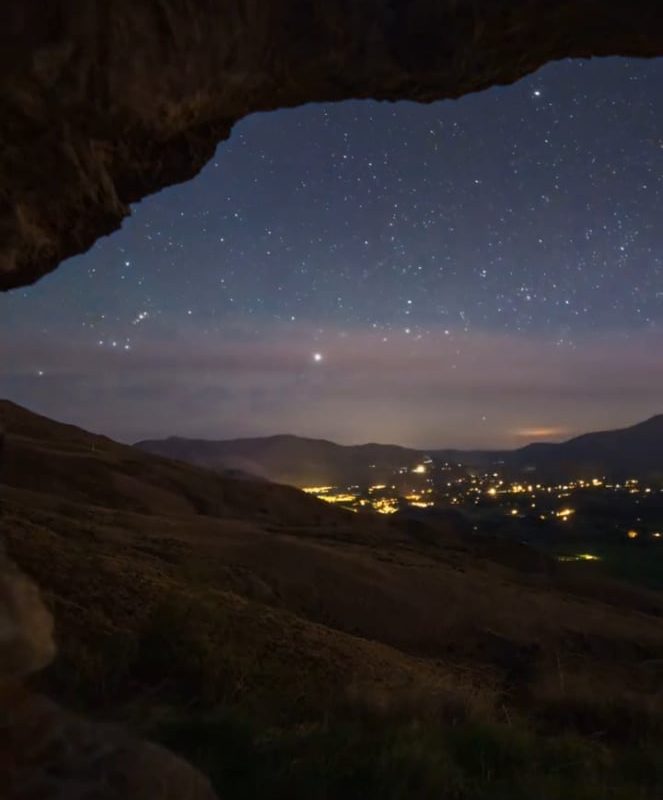
Stars standing still… but we’re the ones rotating
Title: Why Do Stars Stand Still While We’re the Ones Rotating? Unveiling Earth’s Celestial Dance
Introduction
Gazing up at a clear night sky, the stars seem like timeless, unchanging sentinels—fixed in their positions while the world turns below. But the truth is far more captivating: we’re the ones in motion. Earth’s relentless rotation creates the illusion of a static celestial canvas, hiding a cosmic ballet that has fascinated humans for millennia. In this article, we’ll explore why stars appear stationary despite Earth’s ceaseless spin, and how this phenomenon shapes our view of the universe.
The Illusion of Stillness: Earth’s Spin in Motion
Stars do move—just not in the way we perceive. Earth rotates on its axis once every 24 hours, turning west to east. This motion makes the stars appear to drift east to west across the night sky, much like the Sun and Moon. But because stars are so distant (the closest, Proxima Centauri, is 4.24 light-years away), their movement is imperceptible to the naked eye over short periods. A star’s position shifts by less than a fraction of a degree in a human lifetime, making them seem “fixed” relative to our whirling planet.
The Celestial Sphere: Humanity’s Ancient Map of the Sky
Ancient astronomers imagined the stars embedded in a giant rotating “celestial sphere” surrounding Earth. While science has since revealed that stars are scattered across vast space, this model still helps us visualize their apparent motion:
- Polaris (The North Star): Located almost directly above Earth’s north rotational axis, Polaris remains nearly stationary in the night sky, serving as a guiding beacon.
- Circumpolar Stars: Stars near Polaris never dip below the horizon, tracing constant circles around the pole.
- Seasonal Stars: Stars farther from the poles rise and set as Earth orbits the Sun, creating the shifting constellations of spring, summer, fall, and winter.
Time-Lapse Proof: Capturing Earth’s Rotation Through Star Trails
Modern photography reveals the truth behind the illusion. A long-exposure shot of the night sky shows stars as streaks of light (star trails), curving around Polaris like brushstrokes on a cosmic canvas. Each streak traces Earth’s rotation—proof that we’re the ones spinning, not the stars. Similarly, time-lapse videos compress hours of motion into seconds, turning the sky into a dizzying carousel of light.
Why Some Stars “Stand Still” More Than Others
- Polar Alignment: The closer a star is to Earth’s rotational axis (marked by Polaris), the less it appears to move.
- Distance Matters: Ultra-distant stars, like those in other galaxies, barely shift even over centuries.
- Cultural Landmarks: Ancient monuments like Stonehenge and the Pyramids align with “fixed” stars, proving humans have long relied on their steady positions for navigation and mythmaking.
Earth’s Spin vs. Cosmic Reality
While stars look stationary nightly, they do move over vast timescales:
- Galactic Motion: Our solar system orbits the Milky Way’s center at 514,000 mph!
- Proper Motion: Nearby stars like Barnard’s Star subtly shift position over decades.
- Cosmic Expansion: Distant galaxies race away from us due to the universe’s expansion—but this won’t alter the “fixed star” illusion in our lifetime.
How to Experience Earth’s Rotation
- Stargaze on a Clear Night: Track how stars rise in the east and set in the west—a direct effect of Earth spinning beneath you.
- Spot the North Star: Find Polaris in the Little Dipper and watch how other stars revolve around it.
- Photograph Star Trails: Use a camera with a bulb setting to capture Earth’s spin in action.
- Visit a Planetarium: Interactive shows simulate the sky’s motion across eras.
Conclusion: We’re the Dancers in a Celestial Waltz
Next time you marvel at the “still” stars, remember: you’re witnessing Earth’s grand rotation from a front-row seat in space. The galaxies, nebulae, and constellations may seem eternal, but their apparent steadiness is a testament to our planet’s tireless motion—and humanity’s endless quest to unravel the cosmos. So step outside tonight, look up, and feel the thrill of knowing you’re the one spinning in a universe full of wonders.
Call to Action
Share your star trail photos or stargazing stories with us on social media! For more cosmic insights, explore our guides on Earth’s axial tilt and how constellations change over time.
SEO Keywords
- Why do stars look still
- Earth rotation night sky
- Fixed stars explained
- Celestial sphere movement
- Polaris and star trails
- Time-lapse star photography
- Circumpolar stars
- Ancient astronomy myths
By weaving science, history, and practical observation tips, this article demystifies the nocturnal illusion of “fixed” stars while optimizing for search engines—inviting curious minds to explore Earth’s place in the cosmos. 🌌✨