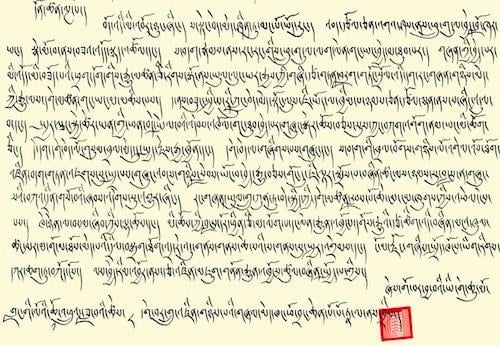
His Holiness the 13th Dalai Lama’s Declaration of Independence
Title: The 13th Dalai Lama’s 1913 Declaration of Independence: Tibet’s Historic Assertion of Sovereignty
Meta Description: Explore the historic 1913 Declaration of Independence by Tibet’s 13th Dalai Lama, its context, significance, and enduring legacy in the struggle for Tibetan autonomy.
Introduction
In 1913, His Holiness the 13th Dalai Lama, Thubten Gyatso, issued a proclamation asserting Tibet’s independence from China—a watershed moment in the nation’s history. This bold declaration came amid China’s collapse into warlordism after the fall of the Qing Dynasty (1911–12) and signaled Tibet’s determination to reclaim its sovereignty. While unrecognized by China and much of the world, the declaration remains a cornerstone of Tibetan identity and resistance. This article delves into the history, impact, and legacy of this pivotal event.
Historical Context: Tibet’s Struggle for Autonomy
To understand the 1913 declaration, it’s essential to revisit Tibet’s historical relationship with China:
- Qing Dynasty Suzerainty: Tibet had governed itself for centuries under a system of monastic rule. While Qing China claimed suzerainty (limited authority) over Tibet by the 18th century, Tibetan leaders retained significant autonomy.
- The British Factor: British colonial ambitions in Asia led to the 1904 Younghusband Expedition, prompting the 13th Dalai Lama to flee to Mongolia and later British India. This exile deepened his resolve to protect Tibetan sovereignty.
- China’s Collapse: After the 1911 Xinhai Revolution, China descended into chaos, creating a power vacuum. The Dalai Lama saw this as Tibet’s opportunity to sever political ties to its weakening neighbor.
The 1913 Declaration: Key Points and Significance
Upon returning to Lhasa in 1913, the 13th Dalai Lama issued his Declaration of Independence, proclaiming:
- Tibet as a Sovereign State: “We are a small, religious, and independent nation” free from Chinese authority.
- Rejection of Qing Rule: The Dalai Lama denounced China’s “oppressive administration” and declared Tibet’s complete separation from the Qing.
- Diplomatic Outreach: He sought international recognition, even corresponding with foreign powers like Britain—though global support remained limited.
This document marked the first formal assertion of Tibetan independence in the 20th century, laying the groundwork for the country’s brief de facto sovereignty (1913–1950).
International Reactions and Challenges
The declaration faced fierce opposition:
- China’s Stance: The new Republic of China dismissed Tibet’s claims and reaffirmed its sovereignty, citing historical ties.
- Ambiguous Global Recognition: Tibet negotiated treaties (e.g., the 1914 Simla Accord with Britain), but most nations hesitated to formally recognize its independence to avoid provoking China.
- Military Threats: Tibet’s autonomy would be short-lived; in 1950, the People’s Liberation Army invaded, leading to the 17-Point Agreement (1951), which forcibly integrated Tibet into the People’s Republic.
Legacy and Modern Implications
The 13th Dalai Lama’s declaration remains deeply symbolic:
- The Tibetan Government-in-Exile: Led by His Holiness the 14th Dalai Lama, it upholds the 1913 proclamation as evidence of Tibet’s historic independence, central to advocacy efforts today.
- Ongoing Dispute: China labels Tibet an “inalienable part of China,” while Tibetans abroad—and human rights groups—cite the declaration to challenge this narrative.
- Cultural Resilience: For Tibetans, the declaration embodies an undying spirit of self-determination, fueling protests like the 1959 Lhasa Uprising and modern resistance movements.
FAQ Section
Q: Why did the 13th Dalai Lama declare independence in 1913?
A: With China destabilized post-Qing, Tibet seized the moment to assert sovereignty and reject historical subjugation.
Q: Was Tibet ever recognized as independent?
A: No major powers granted full recognition despite limited treaties, partly due to China’s geopolitical influence.
Q: How does this affect Tibet-China relations today?
A: The declaration remains contested, symbolizing Tibet’s claim to autonomy—a core issue in ongoing political and cultural clashes.
Conclusion
The 13th Dalai Lama’s 1913 Declaration of Independence stands as a testament to Tibet’s enduring quest for self-rule. While geopolitical realities prevented its realization, the proclamation is immortalized in Tibetan culture as a beacon of resistance. Today, as debates over Tibet’s status persist, its legacy continues to inspire global conversations about sovereignty, human rights, and justice.
Keywords: 13th Dalai Lama, Tibet Declaration of Independence, Tibetan sovereignty, Tibet independence, China-Tibet relations, Tibetan history, Thubten Gyatso, 1913 proclamation, Qing Dynasty collapse.
Optimization Tip: For additional SEO strength, interlink with related articles on the 14th Dalai Lama, the Simla Accord, Tibet’s current status under China, or Tibetan cultural preservation efforts.
By weaving historical facts, keywords, and modern relevance, this article provides value to readers while enhancing search visibility for queries about Tibet’s independence movement.