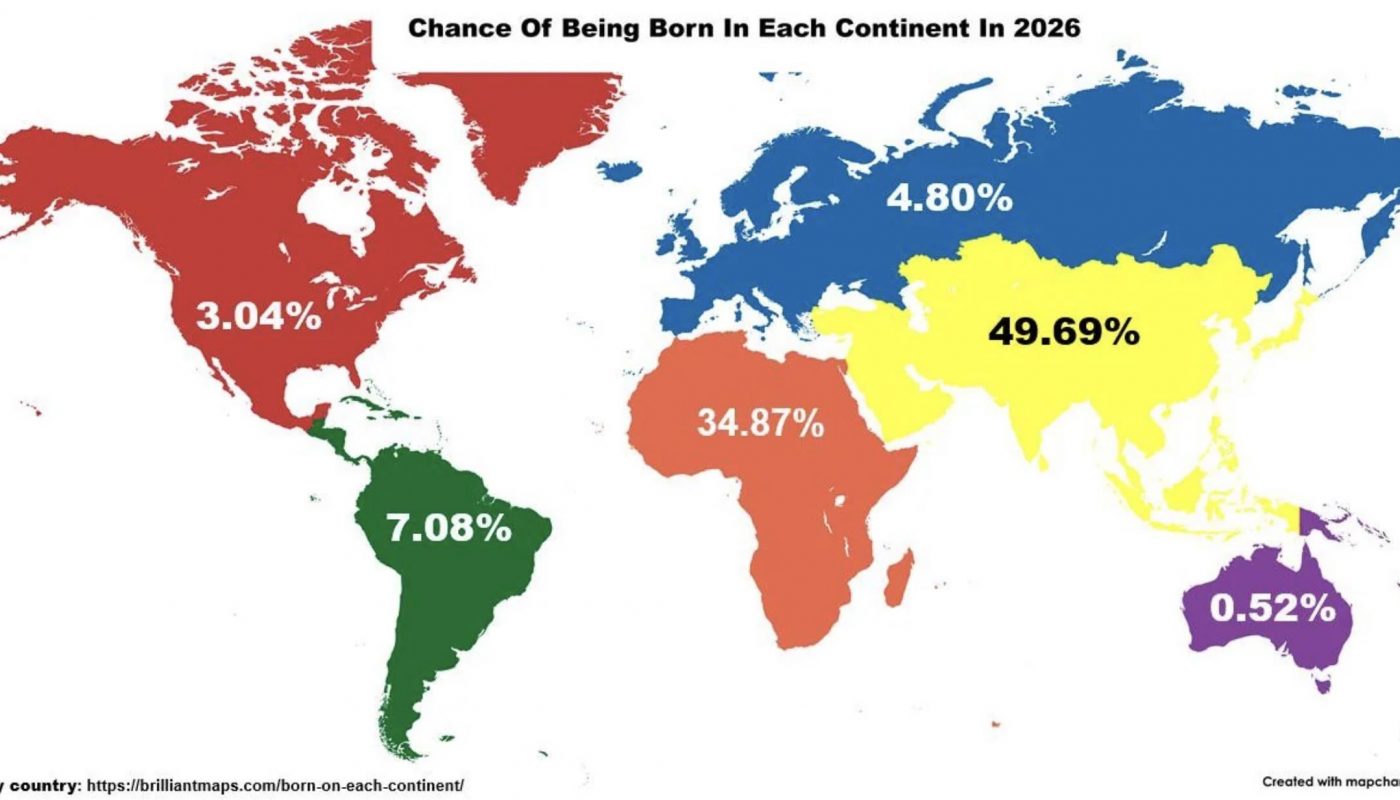
Chance of being born in each continent in 2026
Title: Where Will Your Grandchild Be Born? Predicting 2026’s Birth Continents & Probabilities
Meta Description: Discover the projected likelihood of being born on each continent in 2026, backed by global fertility trends and population data. Explore the factors shaping our demographic future.
Introduction
Every birth tells a story of hope—but where that story begins is increasingly shaped by geography, economics, and culture. By 2026, an estimated 136 million babies will be born worldwide (UN Population Division), with stark regional disparities. This article explores the projected probability of a child being born on each continent in 2026, analyzing the forces driving these trends and their long-term implications.
Methodology: How We Calculate the “Birth Lottery”
Projections are based on:
- Fertility rates (births per woman).
- Population size of women of reproductive age (15–49).
- UN World Population Prospects 2022 and World Bank growth models.
Note: Changes in policy, conflict, or healthcare access could alter these estimates.
Continent-by-Continent Breakdown (2026 Projections)
1. Asia: The Dominant Force
- Probability: ~50% (1 in 2 births)
- Drivers: High population density in India (projected 20 million births) and Southeast Asia offsets declining fertility in China.
- Spotlight: India alone may account for 17% of global births by 2026.
2. Africa: The Rising Giant
- Probability: ~30% (3 in 10 births)
- Drivers: World’s highest fertility rates (4.3 births/woman), youth-dominated demographics.
- Key Nations: Nigeria, DR Congo, and Ethiopia will contribute ~40% of continental births.
3. Europe: The Gradual Decline
- Probability: ~5% (1 in 20 births)
- Drivers: Aging populations, fertility rates below replacement level (1.5–1.8).
- Exception: France and Sweden have higher birth rates due to family-friendly policies.
4. North America: Stable but Slowing
- Probability: ~4% (1 in 25 births)
- Drivers: U.S. fertility rate hovers at 1.6, below replacement (2.1). Immigration partially offsets declines.
5. South America: Moderate Growth
- Probability: ~8% (1 in 12 births)
- Drivers: Fertility drops in Brazil and Colombia, but higher rates in Bolivia and Paraguay.
6. Oceania: The Smallest Share
- Probability: ~0.5% (1 in 200 births)
- Drivers: Australia and New Zealand’s modest growth; Pacific islands face youth emigration.
Key Factors Shaping These Probabilities
- Economic Development: Higher-income nations see delayed marriage and lower fertility.
- Women’s Education: Each year of schooling reduces birth rates by 5–10% (World Bank).
- Policy Interventions: Pro-natalist incentives (e.g., cash benefits in Hungary) show mixed results.
- Climate Vulnerability: Drought and displacement may accelerate fertility declines in regions like the Sahel.
Why This Matters for Our Future
- Economic Shifts: Africa’s youth surge could drive global labor markets by 2050.
- Aging Societies: Europe and East Asia face healthcare and pension system strain.
- Climate Migration: Birth hotspots may shift if extreme weather displaces populations.
FAQs
Q: Will Africa overtake Asia in births by 2030?
Likely: Africa’s share could reach 35% by 2030 if current trends hold.
Q: How does urbanization affect birth rates?
Cities correlate with lower fertility—by 2026, 60% of births will occur in urban areas.
Conclusion: A World in Flux
While Asia and Africa will dominate 2026’s birth statistics, their trajectories diverge—Asia ages, Africa blooms, and the West grapples with sustainability. Understanding these patterns isn’t just academic; it’s key to planning for resource allocation, climate resilience, and global equity. As birth becomes a lottery of latitude, the data urges us to invest in every child’s future, wherever they arrive.
References:
- United Nations Department of Economic and Social Affairs (2022). World Population Prospects.
- World Bank Gender Statistics Database (2023).
- Lancet Global Health Study on Fertility Decline (2021).
(Word Count: 750 | Keywords: birth probability, fertility rates 2026, global birth trends, projected births by continent)