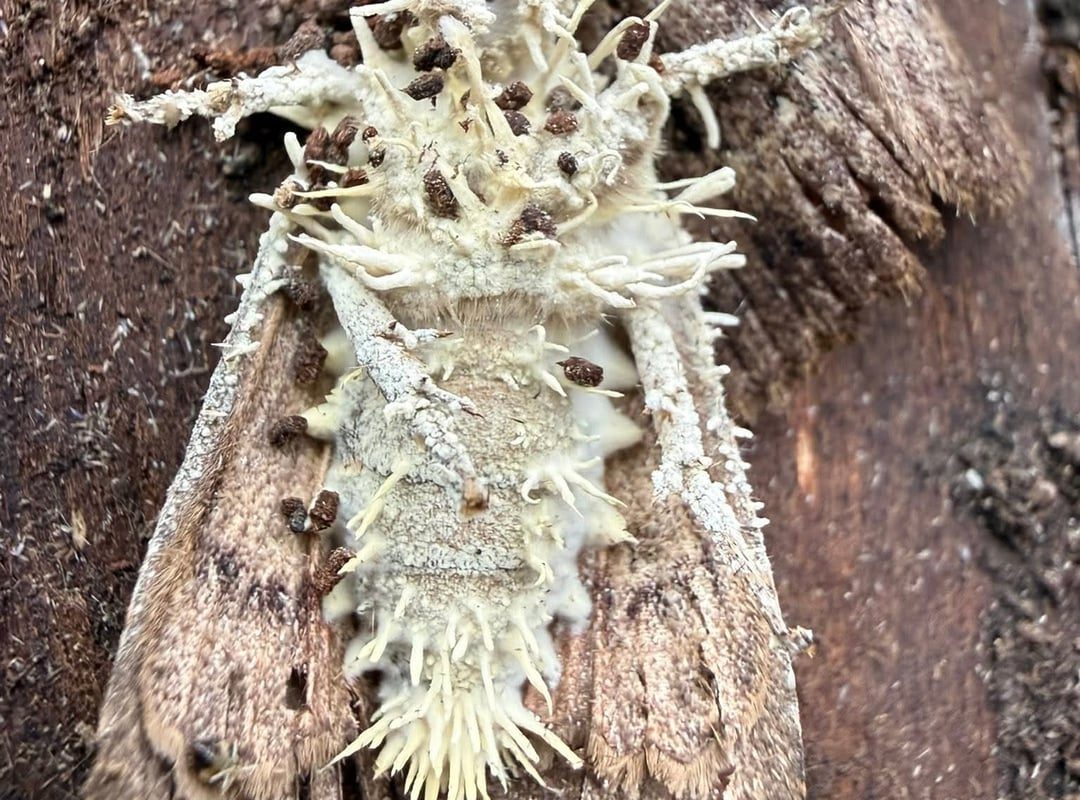
Butterflies consumed by Akanthomyces fungi in Zakarpattia, Ukraine
Title: Nature’s Hidden Drama: Akanthomyces Fungi Parasitizing Butterflies in Zakarpattia, Ukraine
Introduction
Deep within the lush forests and meadows of Zakarpattia, Ukraine, a silent and eerie ecological interaction unfolds. Here, butterflies—symbols of fragile beauty—fall victim to a natural predator not of claws or teeth, but of microscopic fungal threads. The culprit? Akanthomyces fungi, a group of insect-pathogenic organisms known for their gruesome yet fascinating life cycle. This article uncovers the science behind this phenomenon, its significance in Zakarpattia’s ecosystems, and why it captivates researchers globally.
Akanthomyces Fungi: The Butterfly Assassin
Akanthomyces is a genus of entomopathogenic fungi (insect-killing fungi) within the Cordycipitaceae family. These fungi reproduce by releasing spores that attach to insects, including butterflies and moths. Once spores germinate, they penetrate the host’s exoskeleton, consuming it from the inside. Eventually, the fungus erupts from the insect’s body, releasing new spores to continue the cycle.
Key Facts About Akanthomyces:
- Natural Insect Control: Akanthomyces acts as a natural regulator of insect populations, preventing outbreaks that could damage flora.
- Zombie-like Behavior: Infected insects often exhibit odd behaviors, like climbing to elevated spots before death, optimizing spore dispersal.
- Ecological Role: By recycling nutrients, these fungi contribute to forest health and soil fertility.
Zakarpattia: A Biodiverse Hotspot for Fungal-Insect Interactions
Zakarpattia Oblast, nestled in Ukraine’s Carpathian Mountains, is a UNESCO-recognized haven for biodiversity. Its humid forests, alpine meadows, and temperate climate create ideal conditions for fungi and insects to thrive—and clash.
Why Zakarpattia?
- Rich Butterfly Diversity: Home to rare species like the Carpathian Blue (Polyommatus eros) and Large Copper (Lycaena dispar), Zakarpattia provides ample hosts for Akanthomyces.
- Climate Advantage: High humidity and moderate temperatures accelerate fungal growth.
- Scientific Interest: Researchers from Ukraine and abroad study these interactions as models for biological pest control and climate adaptation.
The Life (and Death) Cycle: How Akanthomyces Consumes Butterflies
- Spore Attachment: Airborne spores land on a butterfly’s body, often during rest or feeding.
- Penetration: Enzymes dissolve the exoskeleton, allowing fungal hyphae to invade.
- Internal Takeover: The fungus consumes soft tissues, avoiding vital organs to keep the host alive longer.
- Fatal Eruption: After 5–10 days, the fungus erupts through the exoskeleton, covering the corpse in a white, powdery mold.
Impact on Local Species:
While unsettling, this predation rarely threatens butterfly populations long-term. Instead, it maintains balance—ensuring no single species dominates Zakarpattia’s intricate food web.
Ecological & Scientific Importance
- Biopesticide Potential: Akanthomyces strains are studied as eco-friendly alternatives to chemical pesticides, particularly for agriculture.
- Climate Change Indicators: Shifts in fungal-insect dynamics may signal broader environmental changes.
- Conservation Insights: Monitoring infections helps scientists track butterfly health and habitat pressures.
Dr. Ivanna Kovalenko, a Ukrainian mycologist, states:
“Zakarpattia’s Akanthomyces studies reveal nature’s resilience. These fungi are not villains—they’re custodians of ecological equilibrium.”
Visiting Zakarpattia: A Window into Nature’s Balance
While witnessing fungal parasitism firsthand is rare, Zakarpattia offers otherworldly ecotourism opportunities:
- Carpathian Biosphere Reserve: Guided tours explore fungal hotspots and butterfly habitats.
- Citizen Science: Visitors can join fungal surveys or butterfly counts.
- Photography: Document the region’s stunning—and sometimes macabre—wildlife dramas.
Conclusion: A Story of Death and Renewal
The relationship between Akanthomyces fungi and butterflies in Zakarpattia is a stark reminder of nature’s cyclical brutality and beauty. While the fungi’s methods seem grim, they sustain the health of one of Europe’s last wild frontiers. For scientists, travelers, and nature lovers alike, this tiny corner of Ukraine offers profound lessons in coexistence and the invisible threads binding ecosystems together.
Explore More:
- [Link] Carpathian Biosphere Reserve: Biodiversity Tours
- [Link] The Role of Entomopathogenic Fungi in Agriculture
- [Link] Zakarpattia’s Endangered Butterfly Species
Meta Description: Discover how Akanthomyces fungi infect butterflies in Zakarpattia, Ukraine. Explore the science, ecology, and importance of this parasitic relationship in one of Europe’s biodiversity hotspots.
Target Keywords:
- Akanthomyces fungi Ukraine
- Butterfly parasitic fungus
- Zakarpattia biodiversity
- Insect-pathogenic fungi
- Carpathian Mountain ecosystems
(Note: Replace [Link] with relevant internal/external URLs for SEO optimization.)