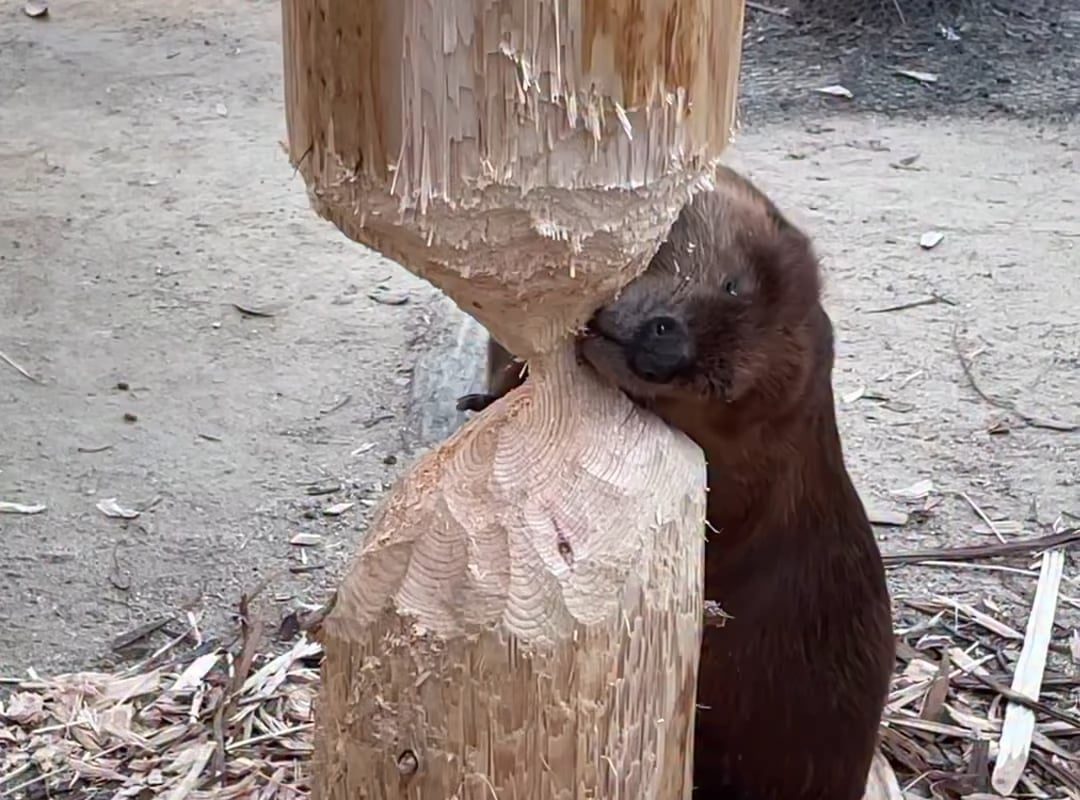
This beaver nibbling on wood
Title: Why Do Beavers Nibble Wood? The Secret Lives of Nature’s Engineers
Meta Description: Discover why beavers nibble wood relentlessly, how their unique biology helps them transform forests, and why their gnawing benefits entire ecosystems.
H1: Why Do Beavers Nibble Wood? Unraveling the Mystery
Picture a serene pond at dusk. Suddenly, you hear a rhythmic gnaw-gnaw-gnaw—a beaver, sitting upright, steadily chipping away at a tree trunk. This iconic behavior isn’t random destruction; it’s a survival strategy perfected over millennia. But why exactly do beavers nibble wood, and how does this activity shape the world around them? Let’s dive into the fascinating science behind nature’s most industrious lumberjacks.
H2: More Than Nibbling: A Beaver’s Tool for Survival
Beavers (Castor canadensis in North America, Castor fiber in Eurasia) are obligate herbivores with a woody twist. They nibble wood for two critical reasons:
-
Food Source:
- Inner Bark (Cambium): Beneath the tough outer bark lies the nutrient-rich cambium layer, packed with sugars, minerals, and carbohydrates. Beavers peel this layer off fallen branches like a natural energy bar.
- Winter Preparation: In colder climates, beavers store piles of twigs underwater near their lodges. This submerged pantry provides food when ice seals the pond’s surface.
-
Construction Material:
- Beavers are master builders, using logs, branches, and mud to create dams and lodges. Their dams create deep ponds that protect them from predators and provide easy access to food.
H2: Anatomy of a Nibble: How Beavers Cut Down Trees
A beaver’s ability to fell trees—sometimes as wide as 3 feet in diameter—relies on remarkable biological adaptations:
- Self-Sharpening Teeth: Beaver incisors grow continuously (up to 4 feet per year!). The front enamel contains iron, making them orange and incredibly hard, while the softer backside wears down faster, creating a chisel-like edge.
- Powerful Jaw Muscles: Beavers can exert 180 PSI of bite force—strong enough to slice through hardwood like willow, birch, and maple.
- Eyes, Nose, and Ears: Special valves close underwater, allowing them to gnaw submerged wood without drowning.
Fun Fact: A single beaver can fell a 5-inch tree in under 10 minutes!
H2: From Gnawing to Engineering: How Beavers Reshape Habitats
Every nibble is a step toward ecosystem transformation. When beavers fell trees and build dams, they:
✅ Create Wetlands: Their ponds become hotspots for biodiversity, attracting birds, fish, frogs, and insects.
✅ Prevent Erosion: Slow-moving water reduces soil runoff and traps sediment, improving water quality.
✅ Store Carbon: Beaver wetlands sequester carbon at rates exceeding tropical rainforests.
✅ Reduce Wildfires: Wet floodplains act as natural firebreaks.
H2: The Hidden Challenges of Beaver Nibbling
While vital to ecosystems, beaver activity can conflict with humans:
- Flooded Roads & Fields: Dams may redirect water into farmland or infrastructure.
- Tree Loss Near Homes: Landscape trees often fall victim to hungry beavers.
Solutions:
- Install flow devices (pipes that regulate pond levels).
- Protect trees with wire mesh barriers or apply taste deterrents.
- Relocate problem beavers to wilderness areas where possible.
H2: Beavers in Culture & Conservation
Beavers have long been symbols of diligence and teamwork—even appearing on Canada’s five-cent coin. After near-extinction from fur trapping in the 19th century, conservation efforts have revived populations. Today, they’re hailed as “ecosystem engineers” for their role in restoring degraded habitats.
H2: FAQs About Beavers and Wood Nibbling
Q: Do beavers eat the whole tree?
A: No! They only eat the inner bark, leaves, and twigs. The remaining wood is used for building.
Q: How much wood can a beaver gnaw in a day?
A: A single adult beaver can chop down ~200 trees per year and moves up to 1 ton of wood annually.
Q: Why don’t beavers’ teeth wear down?
A: Their iron-rich enamel and continuous growth mean teeth stay sharp despite constant gnawing.
H1: Final Thoughts: Celebrating Nature’s Architects
Next time you spot a beaver nibbling wood, remember: this isn’t mere chewing. It’s an act of creation. These tireless rodents don’t just survive; they engineer entire habitats, proving that even the smallest creatures can leave an outsized legacy. By understanding and protecting beavers, we safeguard wetlands, biodiversity, and the health of our planet—one gnawed log at a time.
Call to Action:
Spotted a beaver in action? Share your stories or photos in the comments below! For more wildlife insights, subscribe to our newsletter or follow us on social media 🌿🦫.
SEO Keywords: Beaver nibbling wood, why beavers chew trees, beaver teeth adaptations, beaver dam benefits, ecosystem engineers, beaver habitat, wildlife conservation, wetland creation.