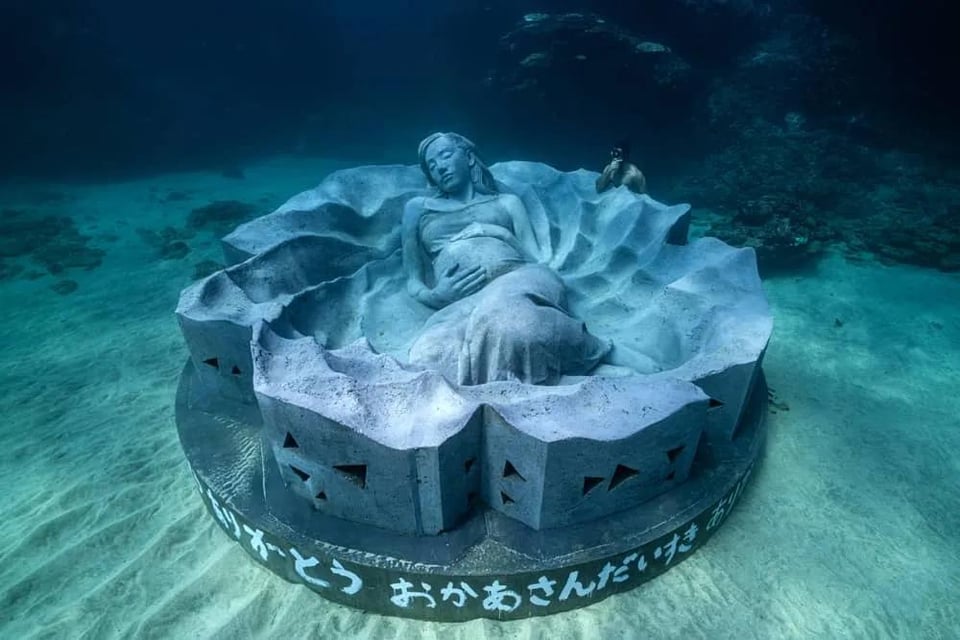
“Ocean Gaia”, Japan’s first underwater sculpture, weighing over 45 tons and 5.5 meters wide, created by British sculptor Jason deCaires Taylor, featuring Japanese model Kiko Mizuhara, resting 5 meters below the surface off the island of Tokunoshima, Japan, installed on October 14, 2025
Title: “Ocean Gaia: Dive Into Japan’s First Underwater Sculpture Featuring Kiko Mizuhara”
Meta Description: Discover Ocean Gaia, Japan’s monumental underwater sculpture by Jason deCaires Taylor. Weighing 45 tons and modeled after Kiko Mizuhara, it’s a must-see eco-art marvel off Tokunoshima Island.
Japan’s Ocean Gaia: A Submerged Masterpiece Merges Art, Ecology & Culture
In a groundbreaking fusion of art and marine conservation, Japan unveiled its first-ever permanent underwater sculpture, Ocean Gaia, on October 14, 2025. Created by world-renowned British eco-sculptor Jason deCaires Taylor, the colossal installation rests just 5 meters below the surface off the pristine shores of Tokunoshima Island in Kagoshima Prefecture. Weighing over 45 tons and spanning 5.5 meters wide, Ocean Gaia isn’t just a visual spectacle—it’s an engineered reef designed to rejuvenate ocean life while honoring Japanese heritage.
The Vision Behind Ocean Gaia
Jason deCaires Taylor, celebrated for his submerged artworks in Mexico, the Maldives, and Australia, partnered with Japanese model and actress Kiko Mizuhara to bring Ocean Gaia to life. Mizuhara, a cultural icon and environmental advocate, served as the muse for the sculpture’s central figure: a serene female form inspired by “Gaia”, the Greek goddess of Earth. The piece represents harmony between humanity and nature—echoing Japan’s reverence for the ocean (umi no sato).
Crafted from pH-neutral marine-grade concrete, Ocean Gaia is designed to attract corals, sponges, and fish, transforming into a thriving artificial reef over time. Taylor’s work highlights the urgency of marine conservation, especially in Japan’s biodiverse waters, which face threats from climate change and pollution.
Why Tokunoshima Island?
Tokunoshima, part of the Amami Islands UNESCO World Heritage candidate site, was chosen for its crystal-clear waters, vibrant coral reefs, and commitment to sustainable tourism. Locals hope Ocean Gaia will draw eco-conscious divers globally, boosting the island’s economy while promoting ocean stewardship.
Diving Into the Experience
Accessible to snorkelers and divers alike, Ocean Gaia sits in shallow waters near Tokunoshima’s Inabu Beach. Visitors can swim alongside Mizuhara’s likeness as she “rests” atop a circular base adorned with tidal motifs. The sculpture’s strategic depth ensures it’s visible even under mild currents, creating an ethereal photo opportunity illuminated by natural light.
Local dive operators now offer guided tours, combining the sculpture with nearby coral gardens and sea turtle habitats. As Taylor explains: “The ocean is the gallery, and the artwork evolves with every season. It belongs to the marine life now.”
Environmental Impact & Legacy
- Reef Regeneration: The sculpture’s textured surface accelerates coral larval settlement, aiding biodiversity.
- Carbon Footprint: Materials were sourced locally to minimize transport emissions.
- Community Engagement: Tokunoshima schools participated in workshops on marine ecology tied to the project.
Ocean Gaia joins Taylor’s global network of underwater museums, including Museo Atlántico (Spain) and The Coral Greenhouse (Australia). However, its integration of Japanese aesthetics—such as subtle nods to Jōmon pottery patterns—sets it apart as a cultural landmark.
Visit Ocean Gaia: What You Need to Know
- Location: Inabu Coast, Tokunoshima Island, Kagoshima Prefecture.
- Best Time to Visit: Year-round, but visibility peaks April–October.
- Nearby Attractions: Tokunoshima’s mangroves, traditional shima-uta folk music performances, and the island’s famed bullfights (tōgyū).
The Future of Underwater Art in Japan
Ocean Gaia heralds a new era for Japan’s creative and ecological ambitions. Taylor has hinted at future collaborations in Okinawa and Hokkaido, aiming to expand the country’s “blue gallery” while raising awareness of oceanic fragility.
For travelers, artists, and environmentalists alike, this submerged masterpiece is a powerful reminder: beauty can be a force for rebirth.
Keywords for SEO:
Jason deCaires Taylor Japan, Ocean Gaia sculpture, Kiko Mizuhara underwater, Tokunoshima diving, eco-art Japan, artificial reef Japan, sustainable tourism Kagoshima, Japanese underwater museum, marine conservation art.
Internal Links Suggestion:
- “10 Best Eco-Dive Sites in Japan”
- “The Legacy of Jason deCaires Taylor: Art That Heals the Ocean”
- “Tokunoshima Island Travel Guide: Beyond the Beaches”
External Links:
- Jason deCaires Taylor’s official portfolio
- Tokunoshima Tourism Board
- UNESCO Amami Islands page
Dive deeper into Japan’s ocean renaissance—Ocean Gaia awaits. 🌊🗿