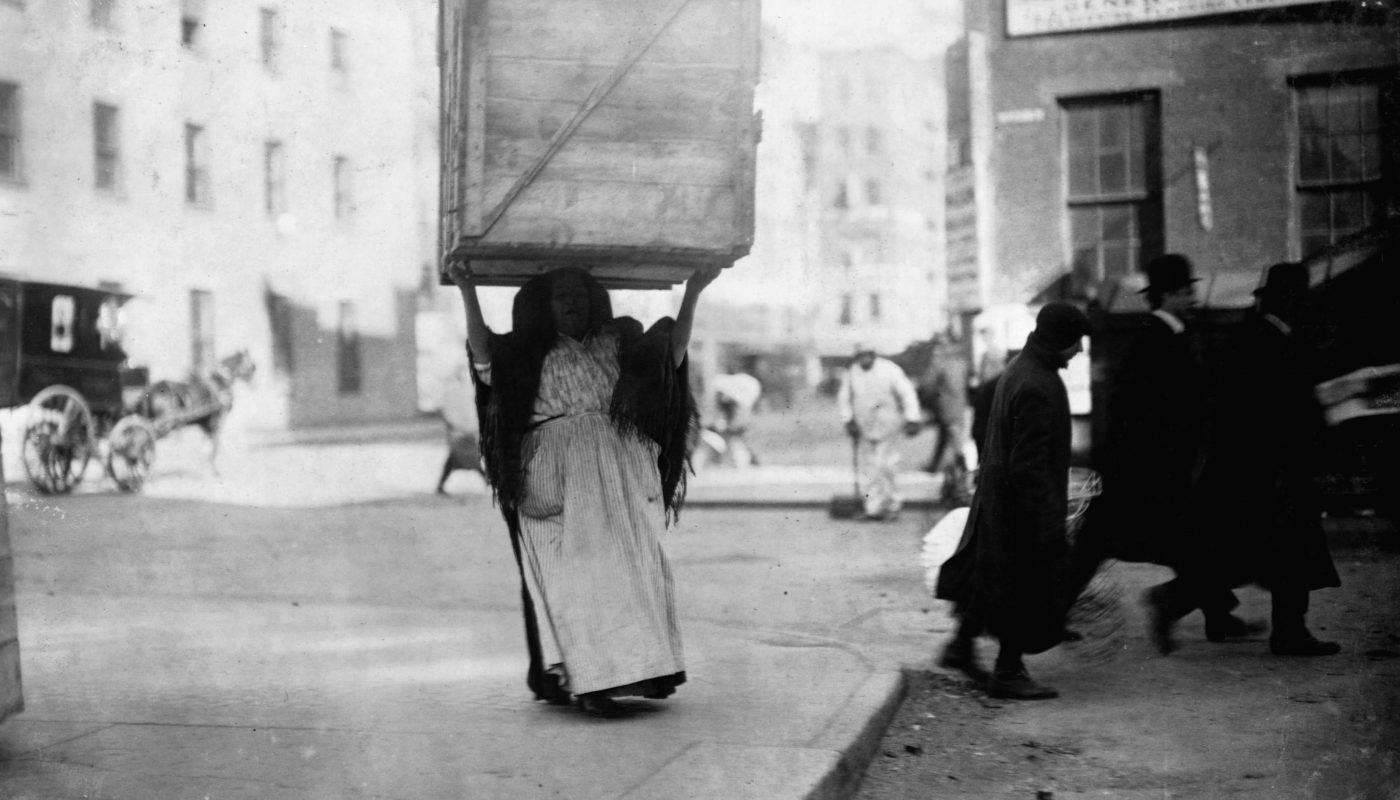
Italian woman carring box of dry goods in New York, February of 1912. Photo by Lewis Hine.
Title: The Story Behind Lewis Hine’s 1912 Photo: An Italian Woman’s Struggle in New York
Meta Description: Discover the historical significance of Lewis Hine’s 1912 photograph capturing an Italian immigrant woman carrying a box of dry goods in New York City—a poignant glimpse into early 20th-century immigrant life.
A Glimpse into Immigrant Life: Lewis Hine’s 1912 Photograph
In February 1912, renowned social reform photographer Lewis Hine captured a striking image of an Italian immigrant woman balancing a large box of dry goods on her head while walking through the crowded streets of New York City. This photograph isn’t just a snapshot—it’s a window into the hardships, resilience, and everyday realities of immigrant communities during America’s industrial era. Let’s explore the story behind this iconic image and its significance in documenting social history.
The Context: Italian Immigration in Early 20th-Century NYC
By the early 1900s, New York City had become a magnet for European immigrants, particularly Italians seeking economic opportunity. Over two million Italians arrived in the U.S. between 1900–1910, settling in densely populated neighborhoods like Little Italy and the Lower East Side. Many worked grueling jobs in factories, construction, or street vending to survive.
The woman in Hine’s photo likely belonged to this wave of immigration. Her task—carrying dry goods (possibly flour, grain, or produce)—reflects the informal labor many immigrant women undertook to supplement household income. With few protections and exploitative wages, their work often blurred the lines between family duty and economic necessity.
Key Takeaways:
- Urban Survival: Immigrant women frequently performed physically demanding tasks, balancing domestic roles with paid work.
- Dry Goods Trade: Food items like grains, beans, or coffee were often sold door-to-door or at markets, providing a lifeline for families.
- NYC’s Tenement Landscape: Crowded apartments and street markets defined daily life, as seen in Hine’s gritty backdrop.
Lewis Hine: Documenting Social Injustice
At the time this photo was taken, Lewis Hine was deeply involved in exposing labor exploitation through his work with the National Child Labor Committee (NCLC). Though best known for his images of child laborers, Hine also documented adult working conditions, particularly those of marginalized groups like immigrants, women, and the poor.
This 1912 image exemplifies his signature style: candid, empathetic, and unflinching. Hine often framed his subjects with dignity despite their circumstances, humanizing statistics into relatable stories. The Italian woman’s determined posture and focused gaze speak volumes about endurance in the face of adversity.
Decoding the Photo: Symbolism & Details
Hine’s photograph tells a layered story through subtle visual cues:
- The Box of Dry Goods
- Represents both labor and sustenance. Many immigrants relied on food-peddling or piecework to avoid factory sweatshops.
- Her Clothing & Posture
- She wears a weathered shawl and long skirt—typical attire for working-class women of the era. Her steady gait suggests repetition and familiarity with the task.
- The Urban Environment
- The snow-dusted streets and tenement buildings frame her isolation within a bustling city, highlighting the immigrant experience of invisibility.
Why This Image Matters Today
Lewis Hine’s photograph serves as a critical historical artifact, shedding light on:
- Gender Roles: Women’s often overlooked contributions to household economies.
- Immigrant Struggles: The intersection of cultural identity and survival in America.
- Labor Reform: Hine’s work fueled movements to improve working conditions and child labor laws.
For modern viewers, the image is a reminder of the deep roots of immigration narratives in the U.S.—themes that still resonate today.
Where to Find Lewis Hine’s Original Work
Many of Hine’s photographs, including this one, are preserved in the Library of Congress and the National Archives. Digitized collections allow viewers to explore his groundbreaking visual activism.
Conclusion: An Enduring Legacy
The Italian woman carrying a box of dry goods in 1912 New York embodies resilience, sacrifice, and the untold stories of millions who shaped America’s cities. Lewis Hine’s lens immortalized her not as a statistic, but as a symbol of humanity’s relentless pursuit of a better life.
Keywords for SEO:
Lewis Hine photography, Italian immigrants New York, 1912 historical photos, immigrant women labor, dry goods peddler, NYC tenement life, social reform photography, early 20th-century immigration.
Call to Action:
Interested in immigrant history or Lewis Hine’s work? Explore digital archives or visit NYC’s Tenement Museum for a deeper dive into this era!