Magnus Effect Model Aircraft
Title: The Magnus Effect in Model Aircraft: How Spinning Cylinders Generate Lift and Innovation
Meta Description: Discover how the Magnus Effect revolutionizes model aircraft design. Learn the science, applications, and DIY tips for building your own Magnus-effect-powered flyers.
Unlocking Flight: The Magnus Effect in Model Aircraft
The Magnus Effect—a fascinating aerodynamic phenomenon—has transformed how engineers and hobbyists approach model aircraft design. By harnessing the power of spinning cylinders instead of traditional wings, these innovative creations challenge conventional flight principles. In this guide, we’ll explore the science, benefits, and practical applications of Magnus Effect model aircraft, perfect for STEM enthusiasts and hobbyists alike.
What Is the Magnus Effect?
Named after German physicist Heinrich Gustav Magnus, the Magnus Effect occurs when a spinning object moving through a fluid (like air) experiences a force perpendicular to its direction of motion. This effect is often seen in sports—think of a curving soccer ball or baseball—but it also has groundbreaking potential in aviation.
How It Works:
- Spin + Airflow = Lift: As a cylinder spins, it drags surrounding air with it.
- Pressure Differential: Faster air movement on one side creates lower pressure, while the opposite side has higher pressure.
- Lift Generation: The pressure difference produces a force (lift) at a right angle to the airflow direction.
Magnus Effect Model Aircraft: Design & Mechanics
Unlike conventional airplanes that rely on curved airfoil wings, Magnus-effect models use rotating cylinders or discs as their primary lifting surfaces.
Key Components:
- Spinning Cylinders: Replace wings, often powered by small electric motors.
- Streamlined Fuselage: Minimizes drag.
- Stabilizers: Tail fins or canards for balance.
- Power Source: Lightweight batteries or rubber bands for smaller models.
How It Flies:
- The spinning cylinders generate lift via the Magnus Effect.
- Forward thrust (from propellers or launchers) provides airflow across the cylinders.
- Adjusting spin speed and direction controls altitude and stability.
Advantages of Magnus-Powered Aircraft
- Slow-Speed Efficiency:
- Excels in low-speed flight, ideal for lightweight models and drones.
- Simplified Design:
- No complex wing shapes needed—smooth cylinders are easier to fabricate.
- Enhanced Maneuverability:
- Reverse spin direction mid-flight for agile turns.
- Unique Educational Value:
- Demonstrates fluid dynamics and physics in action.
Challenges & Limitations
- Energy Consumption: Spinning cylinders require continuous power.
- Drag Issues: Rapid rotation can increase turbulence and reduce efficiency.
- Limited Scalability: Better suited for small models than full-scale aircraft.
Magnus vs. Traditional Aerodynamics
| Feature | Magnus Aircraft | Traditional Aircraft |
|---|---|---|
| Lift Mechanism | Rotating cylinders | Curved airfoils (Bernoulli principle) |
| Low-Speed Performance | Superior | Limited (stall risk) |
| Complexity | Simpler mechanical design | Advanced wing engineering |
| Noise | Moderate (motor hum) | Less (propeller/wind only) |
DIY Magnus Effect Model Aircraft: A Beginner’s Guide
Materials Needed:
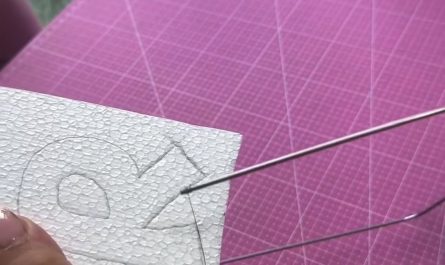
- Lightweight balsa wood or foam board
- Small DC motors (e.g., from toy drones)
- Battery pack (3.7V–7.4V)
- Propeller or hand-launcher mechanism
Steps:
- Build the Fuselage: Design a symmetrical body for balance.
- Attach Rotors: Mount motors and cylinders (e.g., PVC pipe segments) on wings.
- Wire Electronics: Connect motors to batteries via a switch.
- Test & Adjust: Launch outdoors and fine-tune spin speed for optimal lift.
Safety Tip: Use protective gear when testing spinning parts!
Educational & Practical Applications
- STEM Learning: Schools use Magnus models to teach physics and engineering.
- Drone Innovation: Prototypes explore Magnus rotors for quieter, efficient drones.
- Hobby Projects: Competitions for longest flight time or most creative design.
Future of Magnus Technology
Researchers are experimenting with hybrid designs (e.g., combining Magnus rotors with wings) and materials like carbon fiber for efficiency. The effect could also improve wind turbine blades or marine propulsion systems!
Conclusion
Magnus Effect model aircraft merge science and creativity, offering a fresh perspective on flight. Whether you’re a hobbyist building a backyard flyer or an educator sparking curiosity in aerodynamics, these spinning marvels prove that sometimes, thinking outside the (wing) box leads to extraordinary innovation.
Ready to build your own? Start with a small-scale prototype and let the Magnus Effect lift your ideas skyward!
Target Keywords: Magnus Effect model aircraft, rotating cylinder lift, DIY Magnus flyer, aerodynamic principles, STEM model aircraft.
Optimization Tips:
- Use headers (H2/H3) for keyword-rich subheadings.
- Link to authoritative sources (e.g., NASA aerodynamics guides).
- Include high-quality images/videos of Magnus models in action.