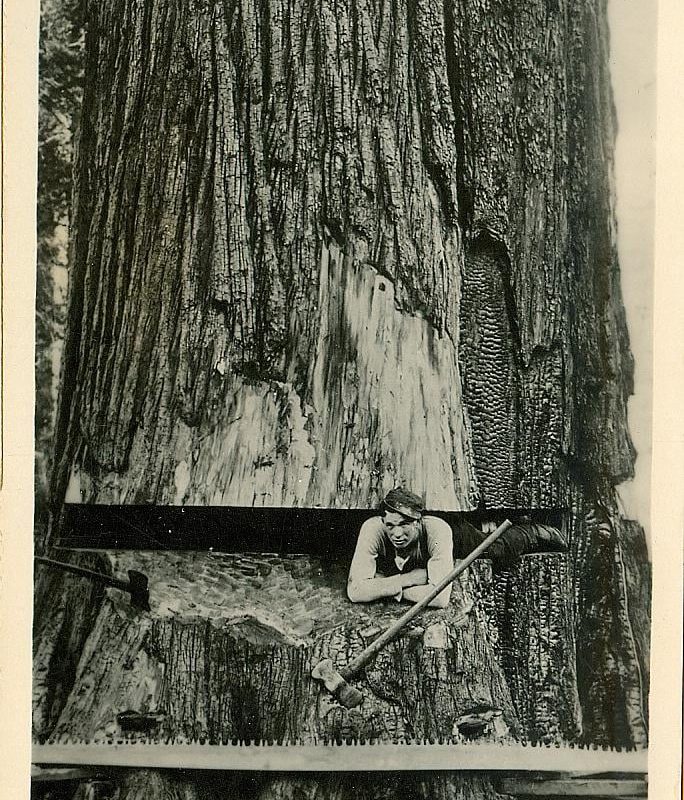
Man wedges himself in the opening to fell a redwood, circa 1900s.
Title: The Stark Reality Behind Logging Giants: A Man Wedged in a Redwood’s Notch (1900s)
Meta Description: Uncover the history behind the gripping 1900s photo of a lumberjack wedged inside a redwood notch. Explore old-growth logging tactics, environmental impact, and the legacy of America’s giant forests.
The Iconic Image: A Snapshot of Early 20th-Century Logging
One of the most striking photographs from America’s industrial logging era shows a man perched precariously inside a massive notch carved into a towering redwood tree. Taken in the early 1900s, this image symbolizes both human ingenuity and the devastating scale of old-growth deforestation. But what’s the story behind this daring act?
The Redwood Gold Rush: Timber Demand in the 1900s
At the turn of the 20th century, old-growth redwoods—some over 2,000 years old and 300 feet tall—were seen as an inexhaustible resource. Their rot-resistant wood fueled construction booms, railroad ties, and housing across the rapidly growing U.S. To fell these giants, lumberjacks used axes, crosscut saws, and brute strength.
Why Wedge Into the Tree? The Logging Technique Explained
The man in the photo is demonstrating a critical step in felling redwoods: cutting a directional notch.
- The “Undercut”: Lumberjacks carved a wedge-shaped notch (often 5–6 feet deep) into the tree’s base to control its fall.
- Human Wedge: Workers sometimes climbed inside to widen the cut manually, ensuring the tree fell precisely. This minimized damage to nearby timber—and their own safety.
- Sheer Danger: One misstep could crush them or send splintering wood flying.
A Symbol of Scale and Human Impact
The photo starkly contrasts the lumberjack’s small frame against the redwood’s immense girth. Toppled redwoods could span 20 feet in diameter, yet crews worked without chainsaws or modern safety gear. Fallen trees were hauled by steam donkeys or floated down rivers to mills.
The Environmental Aftermath: From Exploitation to Conservation
By the 1900s, 95% of California’s original redwood forests had been logged. The surviving groves sparked one of America’s earliest conservation movements.
Key Moments in Redwood Preservation:
- 1918: Save the Redwoods League forms to protect remaining stands.
- 1968: Redwood National Park established after public outcry.
- Today: Just 5% of old-growth forests remain, now fiercely protected.
Legacy of the Photo: Lessons from the Past
This image serves as a sobering reminder of unchecked industrialization. While early loggers saw redwoods as commodities, modern conservationists revere them as climate-critical carbon sinks and biodiversity hubs. Organizations like Save the Redwoods League continue restoring logged areas and educating the public.
Call to Action: Visit Northern California’s redwood parks to witness these ancient giants firsthand—and support efforts to preserve what’s left.
Keywords for SEO:
1900s redwood logging, vintage lumberjack photo, old-growth deforestation, historical logging techniques, redwood conservation history, man in tree notch, early 20th-century logging, Save the Redwoods League, environmental impact of logging, giant sequoia logging.
Alt Text (for image): “Early 1900s black-and-white photo of a lumberjack standing inside a large wedge notch cut into a massive redwood tree, demonstrating historic logging techniques.”
By weaving history, ecology, and gripping visuals, this article honors the past while advocating for the future of Earth’s tallest trees. 📜🌲