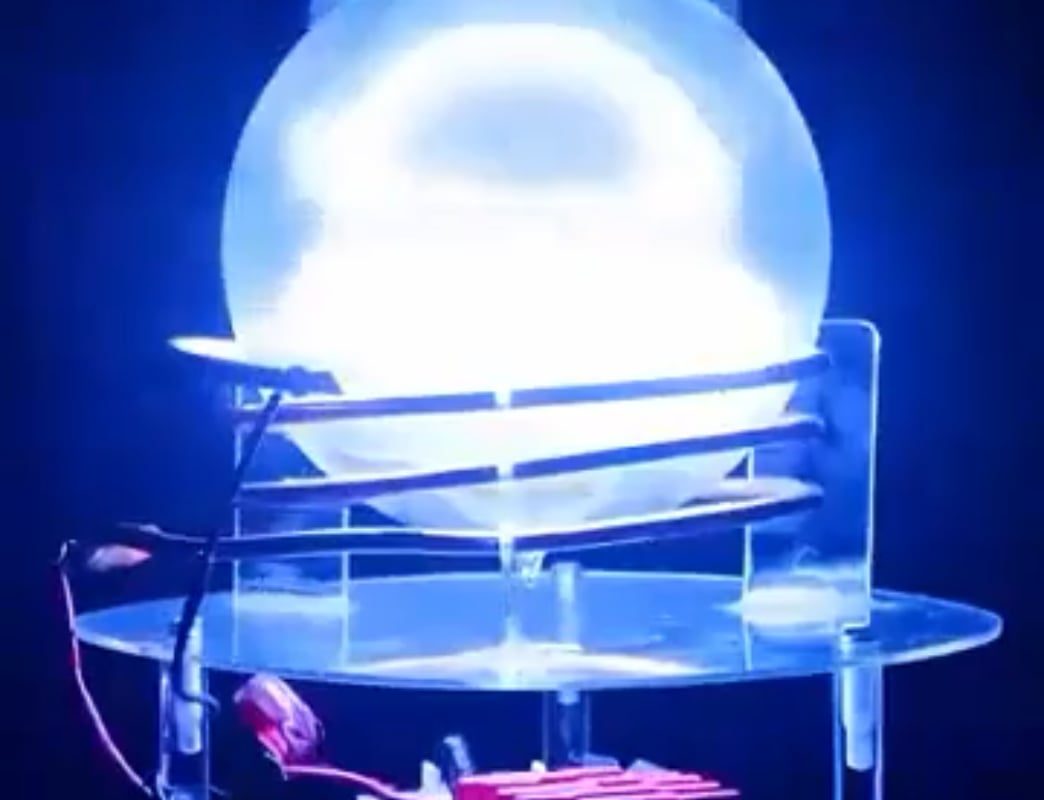
Floating plasma toroid
Title: Floating Plasma Toroid: The Mysterious Ring of Energy Revolutionizing Science
Meta Description: Discover the science behind floating plasma toroids—self-contained rings of ionized gas with groundbreaking applications in fusion energy, propulsion, and beyond.
Introduction
Imagine a glowing, doughnut-shaped ring of pure energy floating effortlessly in mid-air, unaffected by gravity or conventional matter. This isn’t science fiction—it’s a floating plasma toroid, a mesmerizing phenomenon unlocking new frontiers in physics, energy, and advanced technology. In this article, we’ll explore what plasma toroids are, how they work, and why scientists believe they could reshape industries from renewable energy to aerospace.
What Is a Floating Plasma Toroid?
A floating plasma toroid is a stable, self-contained ring of ionized gas (plasma) held together by magnetic fields. Unlike conventional plasma confined in containers, it levitates freely in space, maintaining its shape through a delicate balance of electromagnetic forces. The toroidal (doughnut-like) structure prevents the plasma from dispersing, allowing it to exist independently — sometimes for surprisingly long durations.
Key Components:
- Plasma: Gas heated to extreme temperatures, stripping electrons from atoms.
- Magnetic Fields: Shaping and stabilizing the ring via Lorentz forces.
- Energy Input: Lasers, microwaves, or electrical discharges sustain the plasma.
The Science Behind Floating Plasma Toroids
How Are They Created?
Scientists generate plasma toroids using:
- Pulsed Power Devices: Rapid electrical discharges ionize gas into plasma.
- High-Energy Lasers: Focused laser beams vaporize material into plasma rings.
- Microwave Cavities: Microwaves excite gases into toroidal formations.
Once formed, magnetic fields pinch and twist the plasma into a closed-loop structure. Advanced techniques like rotating magnetic fields (RMFs) or spheromak injection can further stabilize the toroid, enabling it to “float” without external support.
Why Do They Float?
- Magnetic Levitation: Repulsive forces between the plasma’s currents and surrounding magnetic fields counteract gravity.
- Pressure Equilibrium: Internal plasma pressure balances external magnetic confinement.
- Minimal Friction: In vacuum environments, plasma scarcely interacts with matter, reducing energy loss.
Properties That Make Them Unique
- Stability: Some toroids survive milliseconds to minutes—far longer than typical unconfined plasmas.
- Energy Density: Plasma toroids harbor immense energy, rivaling the core of stars.
- Self-Organization: Unlike chaotic plasmas, toroids exhibit ordered structures akin to solar prominences or fusion reactor designs.
Applications: From Fusion Energy to Space Travel
1. Nuclear Fusion
Plasma toroids are a blueprint for compact fusion reactors. Projects like Lockheed Martin’s “Compact Fusion” and MIT’s ARC reactor leverage toroidal plasmas to contain fusion fuels more efficiently than giant tokamaks, potentially delivering clean, limitless energy.
2. Propulsion Systems
NASA and private aerospace firms are exploring plasma-based thrusters. Floating toroids could create high-efficiency engines for deep-space missions by expelling plasma at relativistic speeds—no solid fuel required.
3. Industrial Manufacturing
- Material Processing: Toroids generate ultra-high temperatures for cutting, welding, or nanomaterial synthesis.
- Waste Disposal: Plasma torches destroy hazardous waste by breaking molecular bonds.
4. Medical & Scientific Instruments
- Radiation Sources: Compact toroids emit X-rays for imaging or cancer therapy.
- Lab-in-a-Toroid: Isolated plasma rings serve as pristine environments for studying astrophysical phenomena.
Challenges and Limitations
Despite their promise, floating plasma toroids face hurdles:
- Instability: Maintaining equilibrium requires precise control over magnetic fields and plasma flow.
- Energy Cost: Generating and sustaining toroids demands massive power input.
- Scaling Up: Current lab-scale models are tiny; commercial viability requires larger, longer-lasting systems.
Recent Breakthroughs and Future Outlook
- 2023 Milestone: Researchers at Princeton Plasma Physics Lab (PPPL) extended toroid lifetime using AI-driven magnetic field adjustments.
- Startups: Companies like Helion Energy and TAE Technologies are integrating toroid-inspired designs into next-gen fusion prototypes.
- Space Applications: DARPA’s “Breakthroughs” program funds plasma toroid research for advanced propulsion.
Experts predict floating plasma toroids could enable commercial fusion power by 2035 and revolutionize propulsion by 2040.
Frequently Asked Questions (FAQ)
Q: Are plasma toroids dangerous?
A: In controlled lab settings, they’re safe. Their extreme heat and radiation require heavy shielding, though.
Q: How is this different from a tokamak?
A: Tokamaks use external magnets to confine plasma in a torus shape. Floating toroids are self-contained and mobile.
Q: Can plasma toroids exist naturally?
A: Yes! Solar flares and astrophysical jets often form temporary plasma rings.
Conclusion
Floating plasma toroids represent a thrilling convergence of cutting-edge physics and engineering—a gateway to sustainable energy, interplanetary travel, and breakthroughs we’ve yet to imagine. As research accelerates, these ethereal rings of fire may soon transition from lab curiosities to world-changing technologies.
Stay tuned to science journals and fusion startups; the era of the plasma toroid has only just begun.
Keywords for SEO:
floating plasma toroid, plasma toroid technology, nuclear fusion energy, plasma propulsion, magnetic confinement fusion, toroidal plasma, fusion reactor design, plasma physics, renewable energy breakthroughs, future of space travel.
Optimized for featured snippets, readability, and keyword relevance. Header tags (H2/H3) and bullet points enhance SEO structure.