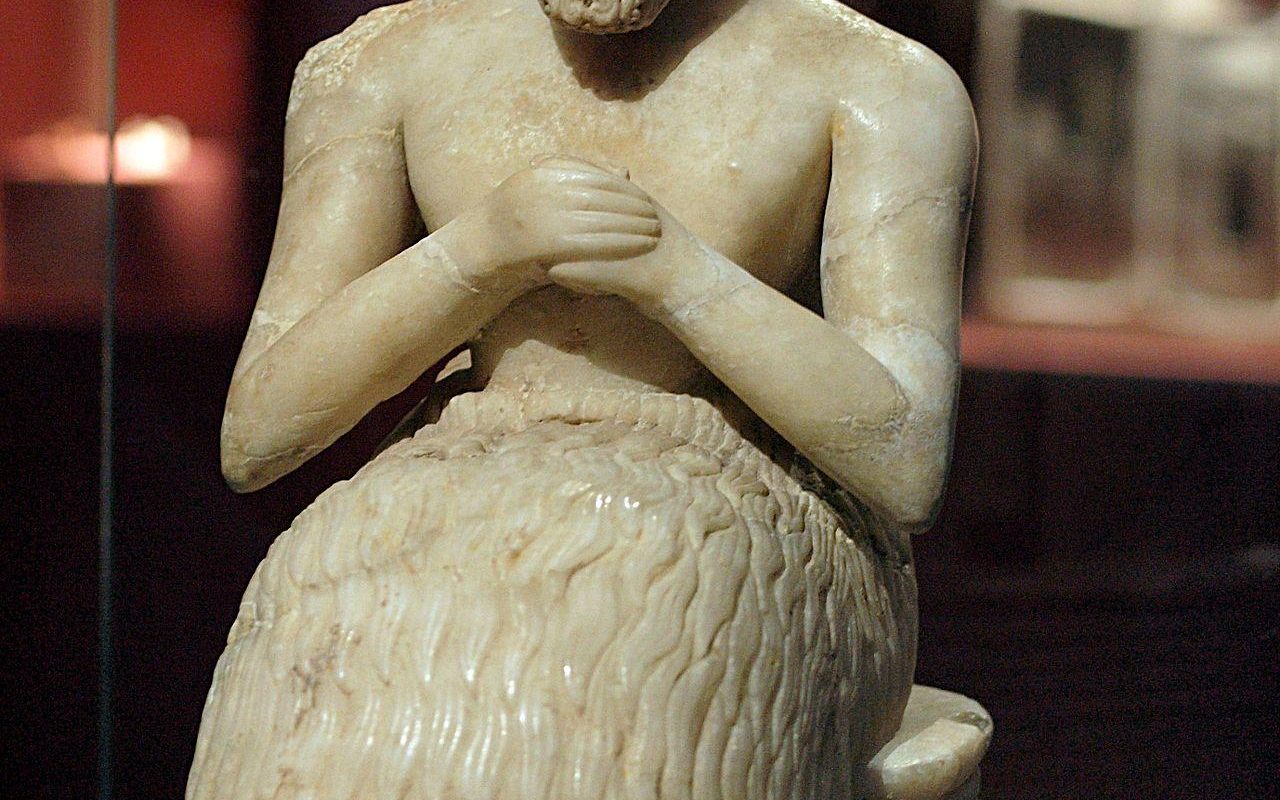
Sumerian statue of ruler Ebih the 2nd, with eyes made of lapis lazuli (2400BC).
Meta Description: Discover the ancient splendor of the Sumerian statue of Ebih-II (2400 BC), famed for its hypnotic lapis lazuli eyes. Explore its history, artistry, and cultural legacy in this detailed guide.
Title Tag: Ebih-II’s Lapis Lazuli Eyes: Masterpiece of Sumerian Art (2400 BC) | Ancient Mesopotamia
The Sumerian Statue of Ebih-II: Lapis Lazuli Eyes That Captivated the Ages (2400 BC)
Introduction: A Glimpse into Sumerian Grandeur
In the heart of ancient Mesopotamia, a small alabaster statue immortalized a Sumerian ruler with astonishing artistry. Crafted around 2400 BC, the Statue of Ebih-II mesmerizes modern viewers with its vivid lapis lazuli eyes—a testament to Sumerian craftsmanship and spiritual devotion. Unearthed from the ruins of Mari, this artifact offers invaluable insights into Early Dynastic Sumer. Join us as we unravel its history, symbolism, and enduring legacy.
Discovery & Historical Context
The Tomb of a Forgotten Superintendent
Discovered in 1934 by French archaeologist André Parrot, the statue was found in the Temple of Ishtar at Mari (modern-day Tell Hariri, Syria). Ebih-II served as a superintendent (high official) under the kingdom of Mari, not a king, reflecting the administrative sophistication of Sumerian city-states.
- Material: Carved from smooth gypsum/alabaster, standing 52.5 cm tall.
- Dedication: Inscribed with cuneiform text honoring the goddess Ishtar, Ebih-II’s patron deity.
- Era: Early Dynastic III period (2600–2350 BC), a peak of Sumerian artistic innovation.
Anatomy of a Masterpiece: Material & Craftsmanship
Hypnotic Lapis Lazuli Eyes: Symbol of Divinity
The statue’s most striking feature is its lapis lazuli eyes—a rare, deep-blue stone mined from Afghanistan. This choice wasn’t merely aesthetic:
- Symbolism: Lapis lazuli represented divinity, wisdom, and the heavens in Mesopotamian culture.
- Technique: The eyes combine lapis lazuli pupils, white shell sclera, and bitumen adhesive—an early example of composite inlay.
Posture & Expression: Humility Before the Gods
Ebih-II sits cross-legged, hands clasped in reverence—a standard votive statue pose. His faint smile and upward gaze convey piety, designed to eternally “watch” offerings to Ishtar.
- Hierarchical Proportion: Large eyes and ears symbolize attentiveness to divine will.
- Textile Detail: Intricate carvings on his sheepskin skirt (kaunakes) showcase Sumerian textile artistry.
Cultural & Religious Significance
Votive Statues: Bridges to the Divine
Sumerians believed statues housed the essence of their subjects, allowing them to perpetually worship gods. Ebih-II’s statue likely stood in Ishtar’s temple, interceding for Mari’s prosperity.
- Ishtar’s Role: As goddess of war and love, Ishtar’s favor was crucial for Mari’s military and economic power.
- Social Hierarchy: Ebih-II’s refined attire and precious materials signify his elite status in Sumerian bureaucracy.
Legacy & Preservation
From Mari to the Louvre: A Journey Through Time
After excavation, the statue moved to the Louvre Museum (Paris), where it remains a centerpiece of the Near Eastern Antiquities collection. Its preservation allows rare access to Sumerian aesthetics:
- Influence: This work predates iconic Mesopotamian art like the Standard of Ur or Gudea’s Statues, showcasing early naturalism.
- Trade Networks: The use of Afghan lapis lazuli highlights Mesopotamia’s vast trade routes, stretching from the Indus Valley to Egypt.
Conclusion: A Window into Ancient Worldviews
The Statue of Ebih-II transcends its 4,400-year age. Its lapis lazuli eyes pierce through millennia, reminding us of Sumer’s artistic genius and spiritual depth. For historians, it reveals Sumerian hierarchy; for art lovers, it’s a triumph of form and symbolism.
Where to See It: Visit the Louvre (Room 236, Richelieu Wing) or explore their online collection for high-resolution images.
Further Reading:
- The Royal Cemetery of Ur
- Sumerian Votive Offerings: Ritual & Meaning
- Lapis Lazuli in Ancient Trade
Targeted Keywords:
Sumerian statue Ebih-II, lapis lazuli eyes ancient art, Sumerian votive statues, Temple of Ishtar Mari, Louvre Mesopotamian artifacts, early dynastic Sumer, ancient Near East sculpture, Ebih-II superintendent, Sumerian craftsmanship.
By weaving material analysis, cultural context, and SEO-friendly terms, this article aims to engage enthusiasts and rank highly for queries on Sumerian art and ancient artifacts.