Incredible Miniature Art: Watching a Tiny 3D Painting Being Created Inside a Clear Bead
Meta Description: Dive into the fascinating world of miniature 3D paintings encased in clear beads—discover how artists create these micro-masterpieces that defy perception.
Title: The Mesmerizing World of Miniature 3D Paintings Inside Clear Beads: A Tiny Universe Captured
Introduction
Imagine a scene so small it fits on your fingertip—a snowy forest, a blooming garden, or a starry night—rendered in vivid detail and suspended inside a glass bead. This is the breathtaking art of miniature 3D reverse painting, where artists defy the limits of scale, patience, and perception to create entire worlds within a transparent orb. For collectors and art lovers alike, these tiny marvels represent the pinnacle of craftsmanship and imagination.
What Are Miniature 3D Bead Paintings?
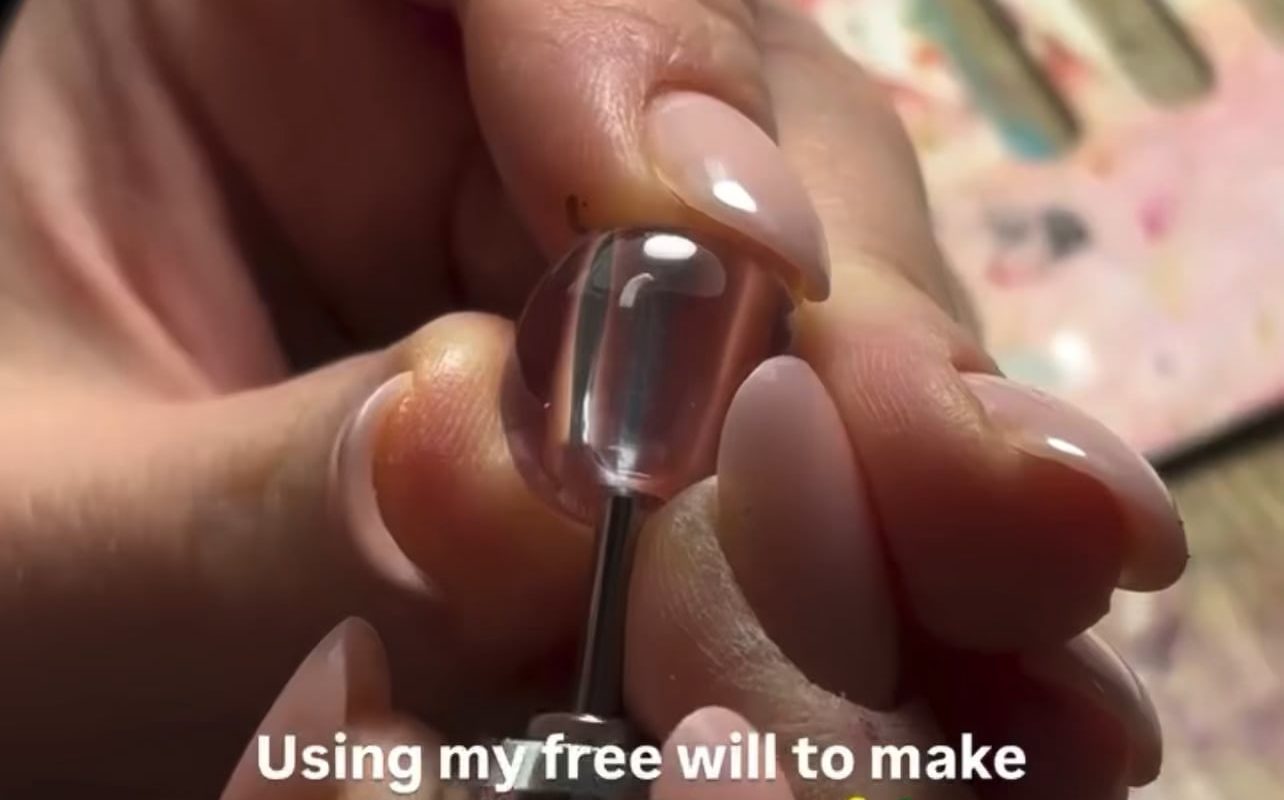
These artworks, often no larger than a marble, involve “reverse painting”—a technique where layers of paint are meticulously applied to the inside of a clear glass or resin bead. Unlike traditional painting, artists start with foreground details (like flowers or animals) and work backward, adding backgrounds last to create depth. The result? A self-contained 3D scene visible from every angle, resembling a magical snow globe without liquid.
Key Features:
- Microscopic Precision: Details are painted using brushes with a single hair or needles.
- Illusion of Depth: Layered paint mimics real-world perspective in a space smaller than a coin.
- Durable & Portable: Encased in glass, these scenes last for decades.
How Are These Tiny Masterpieces Made? A Step-by-Step Glimpse
Creating a 3D bead painting demands years of practice, steady hands, and magnifying tools. Here’s a simplified breakdown:
- Bead Selection: Artists choose high-clarity glass or resin beads (typically 10–30mm wide).
- Reverse Layering:
- Foreground First: A flower’s petals or a bird’s feathers are painted directly onto the bead’s inner surface.
- Midground & Background: Subsequent layers build depth—think distant trees or mountains—with lighter pigments creating atmospheric effects.
- Curing & Sealing: Each layer dries before the next is added. Finally, the bead’s opening is sealed to protect the art.
Tools of the Trade:
- Microscopes or magnifying visors
- Ultra-fine brushes (sable hair or synthetics)
- Acrylics or enamel paints for durability
The History & Evolution of Reverse Bead Art
While miniature art spans centuries (think illuminated manuscripts or ship-in-a-bottle art), reverse bead painting gained prominence in the 20th century. Japanese artists like Kazuhiro Ishii pioneered hyper-detailed floral designs, while Russian miniaturists expanded into landscapes and fantasy scenes. Today, artists on platforms like Instagram and Etsy push boundaries with microscopic portraits, pop-culture homages, and even animated beads lit by LEDs.
Why Does This Art Captivate Us? The Psychology of Tiny Worlds
- Scale Shock: The contrast between minuscule size and intricate detail triggers awe.
- Intimacy & Focus: Viewers lean in, creating a personal, almost meditative connection.
- Nostalgia: Evokes childhood wonder for dollhouses, fairy tales, or hidden treasures.
As one collector notes: “Holding a bead feels like discovering a secret meant just for you.”
Where to Find (or Commission) Miniature Bead Art
- Etsy & Artisan Markets: Search keywords like “reverse bead painting” or “3D glass micro art.” Prices range from $50 (simple designs) to $500+ (custom work).
- Instagram Artists: Follow hashtags like #MiniaturePainting or #BeadArt for creators like @MicroArtMagic.
- Museums & Galleries: Japanese lacquerware exhibits often feature historic bead art.
Pro Tip: To verify authenticity, ask for close-up videos—true 3D layers reveal depth when rotated.
Behind the Scenes: An Artist’s Daily Struggle
We interviewed Elena Petrova, a Ukraine-based bead artist, who shared her process:
“A single bead can take 40+ hours. My hands must stay perfectly still—I avoid coffee and work early mornings. Mistakes can’t be erased; one smudge means starting over. But when light hits the finished piece? It’s like holding a galaxy.”
The Future of Miniature Bead Art: Tech Meets Tradition
Innovations are expanding possibilities:
- UV-Resistant Resins: Art lasts longer without yellowing.
- Nanotechnology Brushes: Allow sub-millimeter details.
- AR Integration: Apps can “unlock” animation in bead scans (e.g., falling snow).
Conclusion: A Testament to Human Ingenuity
Miniature 3D bead paintings remind us that art isn’t defined by size but by vision. These tiny universes challenge our perception of what’s possible, proving that patience and creativity can turn a speck of glass into something timeless. As you scroll through galleries or hold one of these beads, remember: you’re not just seeing art—you’re holding a world.
Internal Links for SEO:
- “5 Mind-Blowing Miniature Artists You Need to Follow”
- “The Science Behind Our Fascination With Tiny Things”
- “How to Start Collecting Micro-Art on a Budget”
Alt Text Suggestions for Images (if included):
- “3D miniature painting inside glass bead showing a forest scene”
- “Artist using a magnifying visor to paint inside a bead”
- “Comparison of 3D bead art next to a coin for scale”
Optimized for keywords: miniature art, 3D bead painting, tiny sculptures, glass microcosm, reverse painting, collectible micro-art.