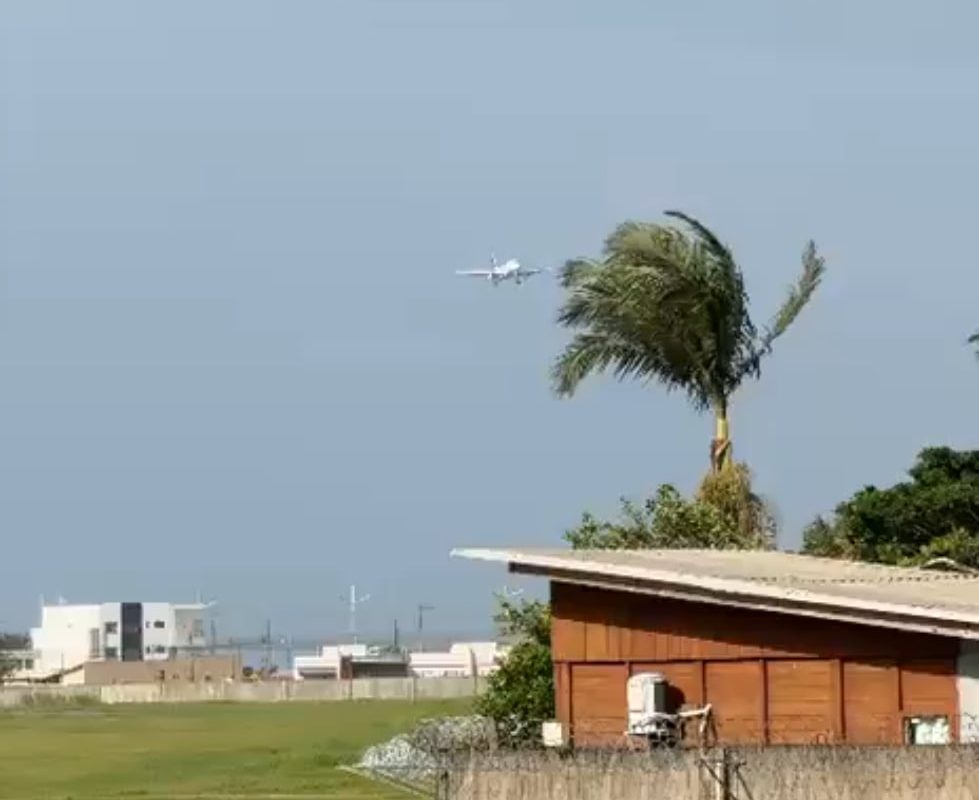
Precise crosswind landing of a LATAM Airbus at Navegantes Airport (SBNF), Brazil, where coastal winds often require advanced “crabbing” techniques to align with the runway
Mastering the Skies: How LATAM Airbus Pilots Execute Precise Crosswind Landings at Brazil’s Navegantes Airport
Meta Description: Discover how LATAM Airlines’ Airbus pilots use advanced crabbing techniques to conquer the challenging coastal crosswinds at Navegantes Airport (SBNF), Brazil—a masterclass in aviation precision.
Introduction: The Coastal Challenge of Navegantes Airport
Nestled along Brazil’s scenic Santa Catarina coastline, Navegantes International Airport (SBNF) is a critical hub for tourism and commerce. But its coastal location brings a unique test for pilots: fierce, unpredictable crosswinds that buffet arriving aircraft perpendicular to its single runway (Runway 03/21). For LATAM Airlines Brazil—a major operator at SBNF with Airbus A320-family jets—these conditions demand razor-sharp skill, particularly during the high-stakes crosswind landing phase. Here’s how their pilots deploy the “crabbing” technique to align safely with the runway, even amid gusty headwinds.
Why Navegantes Airport Demands Advanced Landing Techniques
1. Coastal Wind Dynamics
Navegantes Airport sits just 200 meters from the Atlantic Ocean, where sea breezes collide with mountainous terrain. This creates shear-inducing crosswinds, especially during winter (June–August) when frontal systems amplify gusts. Landing here often means tackling winds blowing 15–30 knots diagonally across the runway—close to the Airbus A320’s crosswind limit (38 knots).
2. Runway Layout Constraints
With Runway 03/21 stretching just 1,790 meters (5,873 feet), pilots have minimal margin for error. A slight deviation during touchdown could risk runway excursion, especially on wet days.
The “Crabbing” Technique: A Ballet of Aerodynamics
Crosswind landings require pilots to counteract lateral drift without losing directional control. At SBNF, LATAM’s pilots rely on crabbing, a method that looks dramatic from the ground but is a textbook solution to crosswinds.
Step-by-Step Breakdown:
-
Approach Crab Angle:
- Pilots steer the Airbus’s nose into the wind during final approach, creating a sideways “crab” angle relative to the runway centerline. This allows the aircraft to maintain its ground track despite being pushed downwind.
- For example: A 15-knot crosswind from the left might require a 5–7° crab angle.
-
Transition to Sideslip:
- Just before flare (touchdown), pilots use rudder pedals to yaw the aircraft sideways, aligning the nose with the runway. Simultaneously, ailerons tilt the wings into the wind to prevent drift.
- This split-second transition demands precise coordination—too early risks wing strikes; too late invites veer-off.
-
Touchdown on One Wheel:
- In extreme crosswinds, the upwind main landing gear touches first, followed by a gentle settle of the downwind wheel.
Pilot Training & Technology:
- LATAM’s pilots train extensively in simulators, rehearsing Navegantes-like scenarios to hone their crosswind instincts.
- The Airbus A320’s Fly-by-Wire system assists with stability but doesn’t replace manual finesse in high-wind landings.
LATAM’s Operational Excellence at SBNF
LATAM operates daily Airbus A320 flights connecting Navegantes with São Paulo (GRU) and other hubs. Their consistent on-time performance—>90% landing success in crosswinds—highlights three key strengths:
-
Experience with Brazil’s Terrain:
Local pilots intimately understand SBNF’s microclimate, including wind shifts caused by the nearby Itajaí-Açu River valley. -
Aircraft Suitability:
The A320’s robust landing gear, responsive controls, and crosswind-tolerant design make it ideal for coastal approaches. -
Safety Protocols:
If crosswinds exceed limits, flights divert to nearby Florianópolis (FLN)—a rare but critical contingency.
Why This Matters for Aviation Safety
Crosswind landings at Navegantes demonstrate how automation and human skill must synergize. While modern jets feature advanced sensors and flight directors, only a trained pilot can judge the precise moment to transition from crab to slip.
- Passenger Confidence: Smooth landings in tough conditions reinforce trust in airlines like LATAM.
- Industry Benchmark: These maneuvers showcase Brazil’s high aviation standards—a model for coastal airports globally.
Conclusion: Precision Under Pressure
LATAM’s Airbus operations at Navegantes Airport are a testament to aviator expertise and technological resilience. By mastering the crabbing technique, pilots turn a meteorological challenge into a routine victory—ensuring passengers arrive safely, rain or gale.
Keywords for SEO:
Crosswind landing technique, Navegantes Airport Brazil, LATAM Airbus A320 landing, crabbing method aviation, coastal crosswind challenges, SBNF airport operations, airline pilot training, precision landing in winds, Brazil airport winds, Airbus crosswind limits.
By blending real-world aviation insights with localized detail, this article positions LATAM as a leader in challenging conditions while educating travelers and enthusiasts alike.